Soju Industry Zero Sugar Soju Craze
Chumchurum 'Saero' Followed by Jinro Renewal
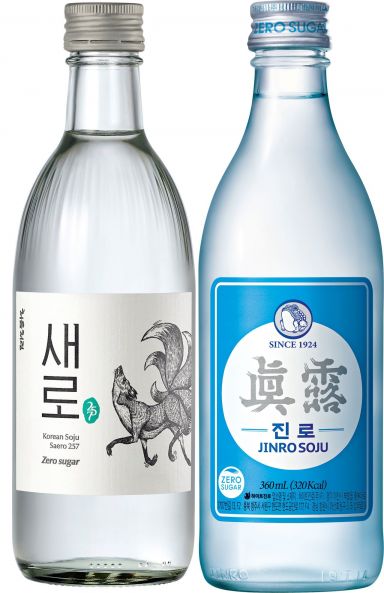 Lotte Chilsung Beverage's 'Cheoeumcheoreom Saero' and Hite Jinro's 'Jinro Is Back'./Photo by each company provided
[Asia Economy Reporter Song Seung-yoon] As Lotte Chilsung Beverage's zero-sugar soju "Cheoeumcheoreom Saero" is creating a sensation in the market, HiteJinro, the number one company in the soju industry, is also entering as a latecomer, intensifying the competition in the unsweetened soju market.
HiteJinro will renew and launch its soju product Jinro Is Back with a zero-sugar concept starting from the 9th of next month. The zero-sugar concept features no use of sugars and maintains the original taste of Jinro through HiteJinro's unique brewing technology. Reflecting consumer needs, the alcohol content has been lowered to 16 degrees to enhance a clean and smooth throat feel. Calories have also been reduced to 320 kcal. Although there is almost no change in the packaging, a zero-sugar mark has been added to the lower left of the label, and calorie information has been applied.
With HiteJinro, the number one company in the soju industry, entering the zero-sugar soju market, a full-scale competition for market share is expected to ignite. The zero-sugar craze in the soju industry was initiated by Lotte Chilsung Beverage. Lotte Chilsung Beverage's Cheoeumcheoreom Saero sold about 14 million bottles within two months of its launch, and as of last month, cumulative sales reached 27 million bottles. Lotte Chilsung Beverage is focusing its marketing of Saero on both the home and entertainment markets, aiming to make it a 100 billion KRW brand by next year.
HiteJinro also plans to focus more on defending its market share in a two-on-two battle where Chamisul and Jinro face off against Cheoeumcheoreom and Saero respectively. In the soju market, estimated to be worth 3 trillion KRW, Chamisul and Jinro hold a combined market share in the 60% range.
The zero-sugar craze in the soju market is analyzed as a result of the "healthy pleasure" trend, which has continued due to the prolonged COVID-19 pandemic. The growing popularity of low-alcohol drinks among younger generations has also contributed. As the number of "home drinking" consumers increases, drinking culture has shifted from excessive drinking to enjoying smooth and flavorful alcohol. Accordingly, it is expected that other zero-sugar soju products will be released one after another next year. The industry anticipates that this trend will accelerate as the voluntary calorie labeling system for alcoholic beverages expands from next year, increasing the number of consumers who pay attention to calorie and nutritional content.
© The Asia Business Daily(www.asiae.co.kr). All rights reserved.












