Salmon 1kg 16,200 KRW... 46% Increase from Last Year
Popularity Remains Despite High Price... Annual Import Volume Rising
Diversification of Consumers and Health Food Awareness Play a Role
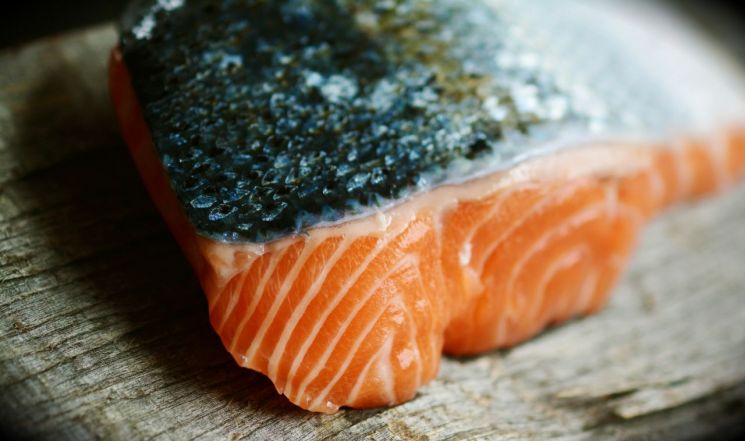
[Asia Economy Reporter Song Seung-yoon] Despite the soaring salmon prices caused by Russia's invasion of Ukraine earlier this year showing no signs of dropping, the popularity of salmon continues to grow steadily in South Korea even at the higher prices.
According to the industry on the 8th, the average price of 1kg of salmon traded at the Noryangjin Fisheries Wholesale Market from the 21st to the 26th of last month was 16,200 KRW, a sharp increase of 46% compared to the same period last year (11,100 KRW). Although this is somewhat lower than the mid-20,000 KRW price reached earlier this year, it still remains at a level similar to that of early March.
Russia's invasion of Ukraine had a significant impact on the price surge. Due to the war, flights passing through Russia were blocked, causing cargo to be concentrated on detour routes, which led to increased air freight costs and consequently raised prices of seafood, including salmon, coming from Europe. For this reason, there was even a 'salmon crisis' at one point, with some sashimi restaurants removing salmon from their menus or reducing portions. Recently, high oil prices and exchange rates have prevented salmon prices from falling. Although logistics costs remain high, the industry expects a gradual stabilization starting next year.
On the other hand, despite these circumstances, salmon imports continue to increase. According to the Korea Agro-Fisheries & Food Trade Corporation's agricultural and food export information, salmon imports from January to October this year reached about 62,000 tons, an increase of approximately 20,000 tons (47%) compared to about 42,000 tons during the same period last year. Domestic salmon imports have increased by 50% over the past three years, from 38,000 tons in 2019, 43,000 tons in 2020, to 57,000 tons last year. Compared to about 18,000 tons in 2013, more than a decade ago, this is more than a threefold increase.
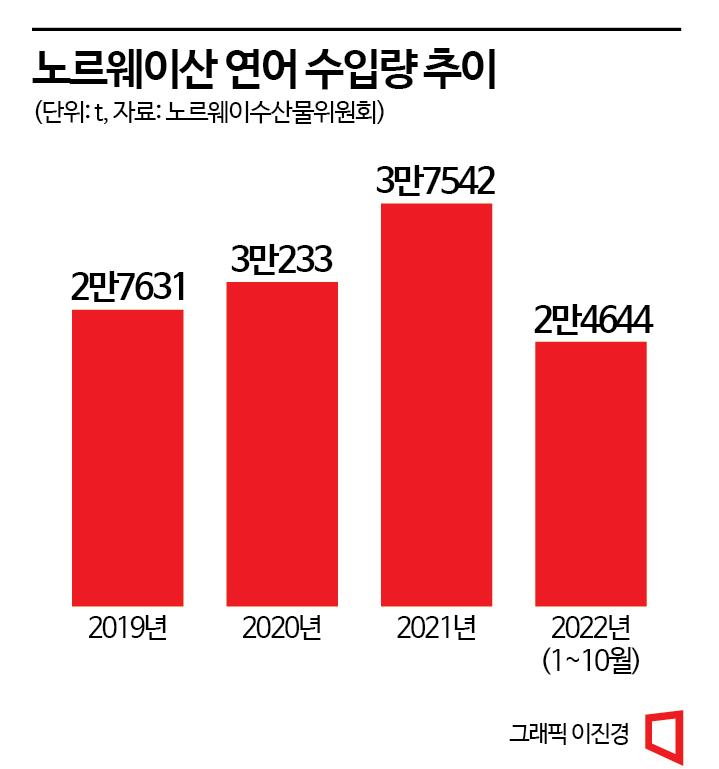
Most of the fresh salmon imported into South Korea is Atlantic salmon from Norway, accounting for about 98% of the market share as of last year. Norwegian salmon imports have also been gradually increasing, rising from 27,631 tons in 2019 to 30,000 tons in 2020, and 37,542 tons last year. Up to October this year, 24,644 tons have been imported.
This is partly due to the continuous rise in salmon's popularity in South Korea. The fact that it has become easily accessible in everyday life through restaurants, large supermarkets, and convenience stores plays a big role. Changing consumer eating habits have transformed salmon into a popular food. The perception of salmon as a healthy food is also a reason for its popularity. Especially during the COVID-19 period, increased interest in health has led to greater demand. Salmon is also known as one of the world's top 10 superfoods. It is rich in vitamins, calcium, and omega-3, and is known to be effective for dieting and dementia prevention.
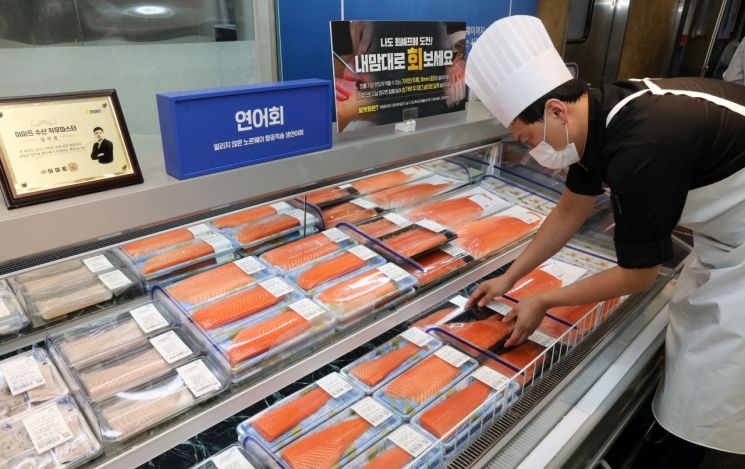
As the year-end, considered the peak season for salmon, approaches, demand is expected to increase further. The distribution industry is making thorough preparations in anticipation. E-Mart is currently selling about 40 tons of fresh Arctic Ocean salmon. For this event, E-Mart directly visited the Arctic Ocean to secure suppliers and directly imported salmon from 'Nordlaks,' which farms salmon in the Norwegian Arctic region between latitudes 68° and 70° north.
An industry official said, "Salmon import and consumption volumes are increasing steadily, and the perception of salmon as a healthy food is spreading, expanding the market. Although factors such as increased logistics costs and rising exchange rates still have an impact, this trend is expected to continue for some time."
© The Asia Business Daily(www.asiae.co.kr). All rights reserved.

![Clutching a Stolen Dior Bag, Saying "I Hate Being Poor but Real"... The Grotesque Con of a "Human Knockoff" [Slate]](https://cwcontent.asiae.co.kr/asiaresize/183/2026021902243444107_1771435474.jpg)
















