400,000 Vulnerable Households in Seoul
Improving Housing Conditions and Reducing Housing Cost Burden
Systematic Framework for Crisis Household Survey, Identification, Support, and Follow-up Management
Ensuring Execution through Public-Private Collaboration Including Local Communities
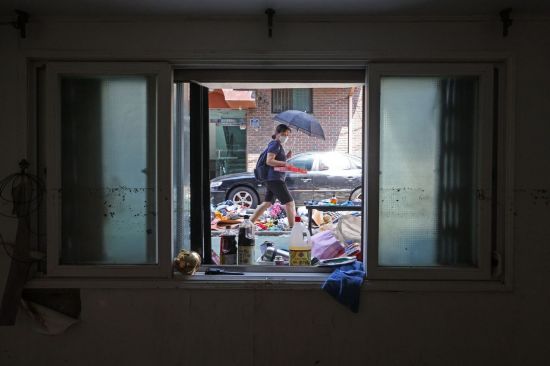
[Asia Economy Reporters Kim Hyemin and Hwang Seoyul] The Seoul Metropolitan Government has unveiled a comprehensive plan to guarantee housing rights for 400,000 households living in poor housing conditions such as 'Jiokgo' (semi-basement, rooftop rooms, and goshiwon), and shantytowns. Semi-basement housing will be gradually reduced, and old goshiwons will be purchased and transformed into 'Seoul-style public dormitories' on sites contributed by the public sector. To enhance implementation, a public-private collaboration system involving corporations and non-profit organizations (NPOs) will also be established.
On the 30th, Seoul Mayor Oh Se-hoon held a press conference at Seoul City Hall to announce the 'Comprehensive Housing Safety Net Plan' centered on these measures.
The core of this plan is a shift from the 'application-based' approach, which provides fragmented support whenever there is social demand, to a 'proactive housing welfare' approach. To this end, an organic system will operate from the investigation and identification of at-risk households to support and follow-up management. Specifically, a 'Housing Vulnerable Population Housing Status Sample Survey' will be conducted every two years, and the results will be registered in the Comprehensive Architecture and Housing Information System for integrated management. A housing safety net map will also be created to check semi-basement housing by autonomous district, years elapsed, and flood history.
Based on this, the housing environment of 'Jiokgo,' which is exposed to risks such as flooding and fire, will be improved. First, semi-basement housing will be gradually reduced through purchase or renovation. Existing ground floors will be converted to non-residential use, and residents of semi-basement units will be assisted in relocating to the ground floors of their current homes or to public rental housing. The goal is to supply 16,400 households by 2026 using this method. Instead of eliminating semi-basements in existing homes, incentives such as floor area ratio relaxation will be provided, and a 'semi-basement housing joint development' project will be promoted, where the increased volume resulting from these incentives will be preferentially purchased as public rental housing.
An 'Anshim Goshiwon' certification system will be introduced. This certification will be granted to privately owned goshiwons that meet safety standards such as sprinklers and secured evacuation routes, as well as minimum housing standards like minimum area. Remodeling costs will be supported to encourage certification. Seoul-style public dormitories will also be built on sites acquired through the purchase of old goshiwons or public contributions from redevelopment projects. Remodeling of old goshiwons in Sillim-dong will begin as early as next year. From 2024, construction of Seoul-style public dormitories will be promoted on sites secured in university-dense areas such as Bukahyeon 3 District and the Kwangwoon University station area.
For rooftop rooms inhabited by people with disabilities, elderly living alone, and households with children, repair costs meeting architectural safety standards such as structure, insulation, and evacuation will be supported. After repairs, these will be operated as long-term safe housing, providing part of the jeonse deposit as interest-free support. Starting with 50 locations next year, the goal is to refurbish a total of 350 locations over the next four years. Assistance will also be provided for the relocation of housing-vulnerable groups living in shantytowns and vinyl greenhouses to public rental housing. It is estimated that about 1,500 households still live in shantytowns and vinyl greenhouses in areas such as Guryong, Seongdui, and Jaegun villages.
Additionally, the city will expand the scope of home repair subsidies, previously limited to 'Housing Performance Improvement Support Zones,' to vulnerable residential facilities throughout Seoul, and raise the support limit for 'long-term safe housing,' which provides interest-free support for jeonse and monthly rent deposits, to a maximum of 60 million won.
To ensure sustainable implementation of the comprehensive plan, active public-private collaboration will be pursued. Centered on the Seoul Housing and Communities Corporation (SH) Housing Safety Comprehensive Center, partnerships will be established with private companies, non-profit organizations, and local communities to cooperate throughout the entire process. Incentives such as Social Impact Bonds (SIB) to encourage private participation and the development of Seoul-style ESG (Environmental, Social, and Governance) indicators will also be considered.
© The Asia Business Daily(www.asiae.co.kr). All rights reserved.












