September Service Inflation Rate at 4.2%, Highest in 21 Years
Electricity and Gas Prices Also Rise...Increased Burden on Low-Income Households Ahead of Winter
Cabbage Prices Ease but Agricultural Product Prices Remain Above Average
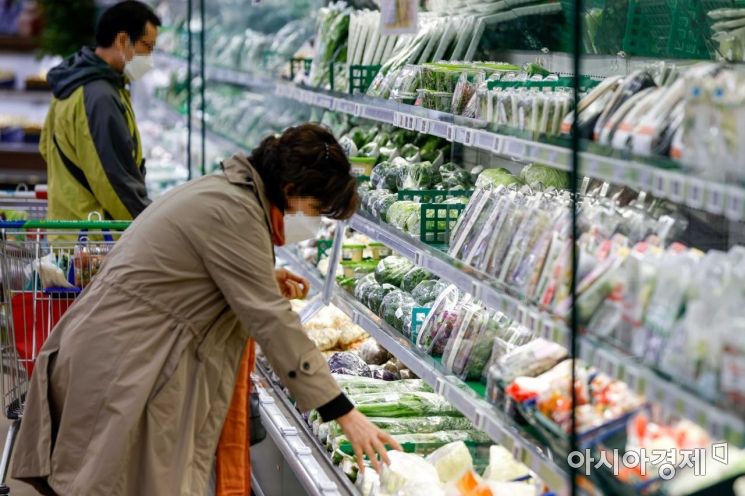 On the 11th, amid high inflation and ongoing economic slowdown, customers are shopping at the Nonghyup Hanaro Club Yangjae branch in Seocho-gu, Seoul. Photo by Jinhyung Kang aymsdream@
[Asia Economy Reporter Kim Jung-wan] Although the soaring consumer price inflation rate has slowed down for two consecutive months recently, the service price inflation rate has reached its highest level in 21 years, leaving the 'high inflation worries' of ordinary citizens still ongoing. With electricity and gas rates as well as agricultural product prices all rising, concerns are growing as the winter season approaches. The government maintains its forecast that domestic inflation will peak this month.
According to the National Statistical Office's National Statistical Portal (KOSIS) on the 11th, the service price index for September was 106.53 (2020=100), marking a 4.2% increase over the past year. This is the highest level in 21 years since October 2001 (4.3%), and the service price inflation rate, which was in the 0% range in 2020, rose to 2.0% in July last year and has reached 4.0% since July this year, climbing into the 4% range.
By item, personal service prices rose 6.4%, the highest increase since April 1998 (6.6%). Among personal services, dining-out prices increased by 9.0%, marking the highest level in 30 years and 2 months since July 1992 (9.0%). Among dining-out items, △hamburgers rose 13.5%, △galbitang (beef rib soup) 12.9%, △gimbap 12.9%, △jajangmyeon (black bean noodles) 12.2%, and △haejangguk (hangover soup) 12.1%.
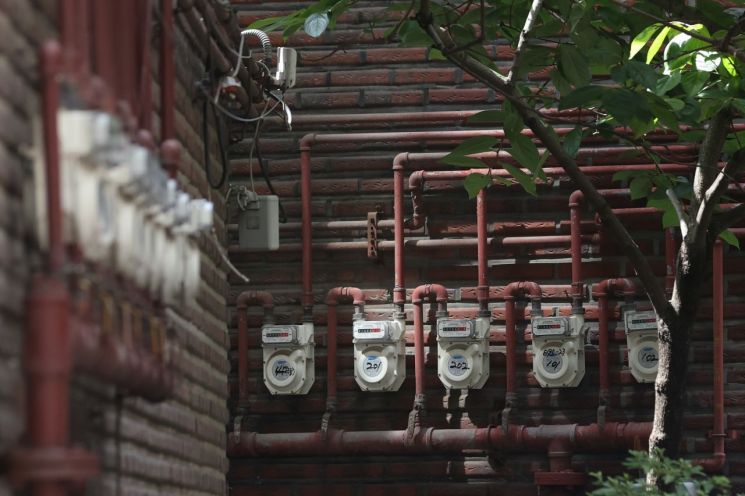 Public utility charges for electricity and gas were both increased simultaneously starting from the 1st. [Image source=Yonhap News]
In addition, due to the sharp rise in electricity and gas rates, ordinary citizens' concerns about inflation continue. According to Korea Electric Power Corporation, from this month, the residential electricity rate for general households increased by 7.4 won per kWh (6.8%), raising the electricity bill by 19.3 won this year. According to the Ministry of Trade, Industry and Energy, residential city gas rates also increased by 2.7 won (15.9%) compared to the third quarter. For a four-person household, electricity bills rose by 2,270 won per month, and gas bills by 5,400 won, increasing the monthly electricity and gas burden by about 7,700 won per household.
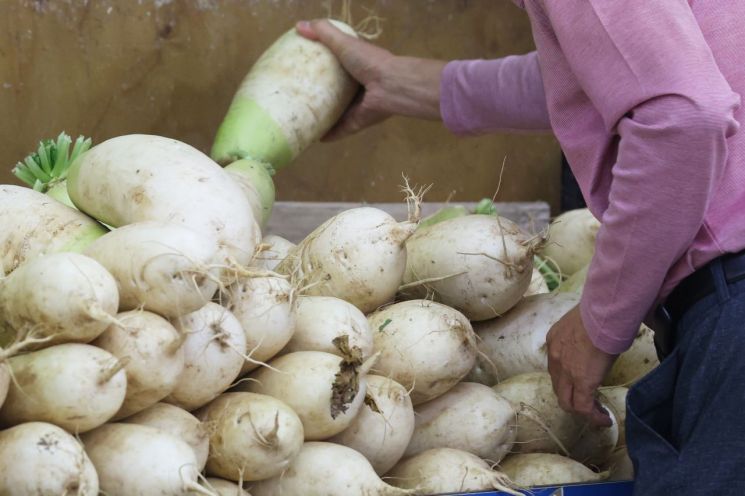
Agricultural product prices are also significantly higher than average, deepening the sighs of those preparing for the kimchi-making season. According to the Korea Agro-Fisheries & Food Trade Corporation (aT)'s Agricultural Product Distribution Information (KAMIS), as of the 30th of last month, the retail price of one radish was 3,934 won, 107.8% higher than the previous year, and 1 kg of onions was 2,641 won, 26.9% higher. However, with the start of the shipment of autumn cabbage from the semi-highland areas, cabbage prices are expected to decline. Kim Jong-gu, Director of Distribution and Consumption Policy at the Ministry of Agriculture, Food and Rural Affairs, said, "The supply of cabbage will gradually increase, and sufficient quantities are expected to be supplied during the kimchi-making season."
As the winter season approaches and inflationary pressures show no signs of easing, some ordinary citizens anticipate a difficult winter. Kim, a worker in his 40s, said, "My income remains the same, but I keep hearing news that prices keep rising, so this winter will also be burdensome," adding, "It seems the best option is to endure carefully without major expenses."
Meanwhile, the government maintains its 'October inflation peak theory,' expecting prices to peak this month and gradually stabilize, but also indicated that high inflation rates will persist until the first quarter of next year. On the 7th, Lee Chang-yong, Governor of the Bank of Korea, said, "I maintain the view that domestic inflation will peak in October," but added, "High inflation in the 5% range is expected to continue until the first quarter of next year." The governor stated, "Domestic inflation remains at a high level, with consumer price inflation significantly exceeding 5% due to the continued rise in personal service prices, and this upward trend of 5-6% is expected to continue for a considerable period. The high exchange rate is also expected to act as an additional inflationary pressure."
© The Asia Business Daily(www.asiae.co.kr). All rights reserved.














