Proposal Delivered to EU Presidency on 28th
9 Additional Regulatory Items in June Amendment
"Application of Exemption Clauses for Bio-Based Production Products"
[Asia Economy Reporter Moon Chaeseok]
"In the initial legislative proposal by the European Union (EU) Parliament's Committee on Industry, Research and Energy, organic chemical products were excluded from regulation, but they were added in the Parliament's amendment in June. In particular, uniformly regulating organic chemicals based on bio-based raw materials is judged to be inconsistent with the carbon neutrality policy goals."
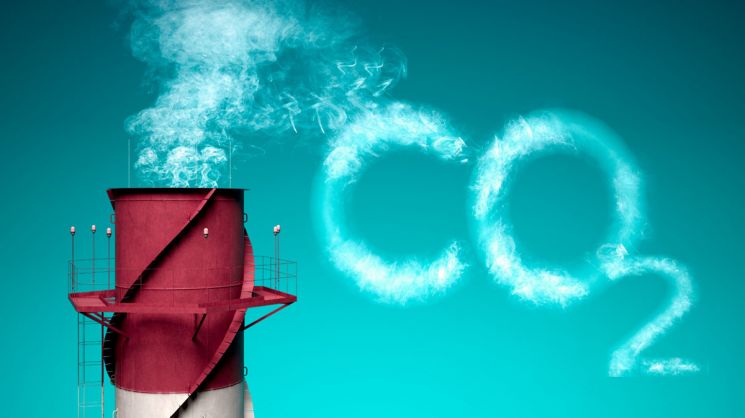
On the 28th, the Federation of Korean Industries (FKI) announced that it delivered a petition to senior EU Parliament officials requesting reconsideration, stating that regulations were rather strengthened in the EU's amended Carbon Border Adjustment Mechanism (CBAM). The petition was delivered to Roberta Metsola, President of the EU Parliament; Cristian-Silviu Busoi, Chair of the EU Parliament's Committee on Industry, Research and Energy; and Pascal Canfin, Chair of the EU Parliament's Committee on Environment, Public Health and Food Safety. CBAM is a system where importers are required to purchase certificates by imposing greenhouse gas reduction costs on imported items subject to regulation by the EU. It is a measure to prevent carbon leakage caused by differences in carbon regulation systems between countries and is sometimes interpreted as a 'trade restriction' policy.
In the amendment made by the EU Parliament on June 22, organic chemicals, plastics, hydrogen, and ammonia were included in the regulated items. The number increased from five items?steel, aluminum, fertilizers, cement, and electricity?specified in the original proposal to nine. Additionally, not only 'direct emissions' (scope 1) emitted during the product manufacturing process but also 'indirect emissions' (scope 2) caused by electricity used in the production process were included in the regulation.
The FKI pointed out to the EU Parliament that "due to the complex global value chain (GVC), it is technically challenging to clearly identify the emissions embedded in imported organic chemical products, requiring more data accumulation and analysis," and added, "It is judged that uniformly regulating organic chemicals derived not only from fossil fuels such as petroleum and gas but also from bio-based raw materials is inconsistent with the carbon neutrality policy goals." Furthermore, it emphasized, "Just as exceptions were applied to ferroalloys and iron scrap among steel products, it is necessary to subdivide the criteria for selecting regulated items by applying exceptions to products made from 'bio-based raw materials and manufacturing methods' among organic chemicals."
CBAM pilot operation is planned to start as early as January next year. The FKI expects that the final CBAM proposal will be confirmed through trilogue negotiations among the Commission, Parliament, and Council as early as next month. Moreover, it reminded that 'green protectionism' is rapidly spreading worldwide, citing that the United States also introduced the 'Clean Competition Act' (CCA) in the Senate in June, imposing a tariff of $55 per ton of carbon on 12 imported items including petrochemical products.
The FKI expressed concern that if legislation such as the EU CBAM and US CCA expands, Korean companies will suffer significant damage. Yuh Hwan-ik, Head of the FKI Industry Division, said, "As major advanced countries are realizing so-called 'green protectionism' under the pretext of carbon neutrality, it is expected to pose a major challenge to Korea's manufacturing and export-oriented economy," and urged, "Since there are limits to responding to 'carbon trade' issues at the level of individual companies and private organizations, the government should also take proactive measures to ensure that Korea's industrial global competitiveness is maintained in the upcoming 'carbon trade era.'"
© The Asia Business Daily(www.asiae.co.kr). All rights reserved.











