[Asia Economy Sejong=Reporter Dongwoo Lee] Our government has decided to participate in all negotiations of the Indo-Pacific Economic Framework (IPEF), which is being conducted with four pillars: trade, supply chains, clean economy, and fair economy. The focus will be on establishing norms and cooperation measures in new trade areas such as the digital economy, supply chains, and climate change response.
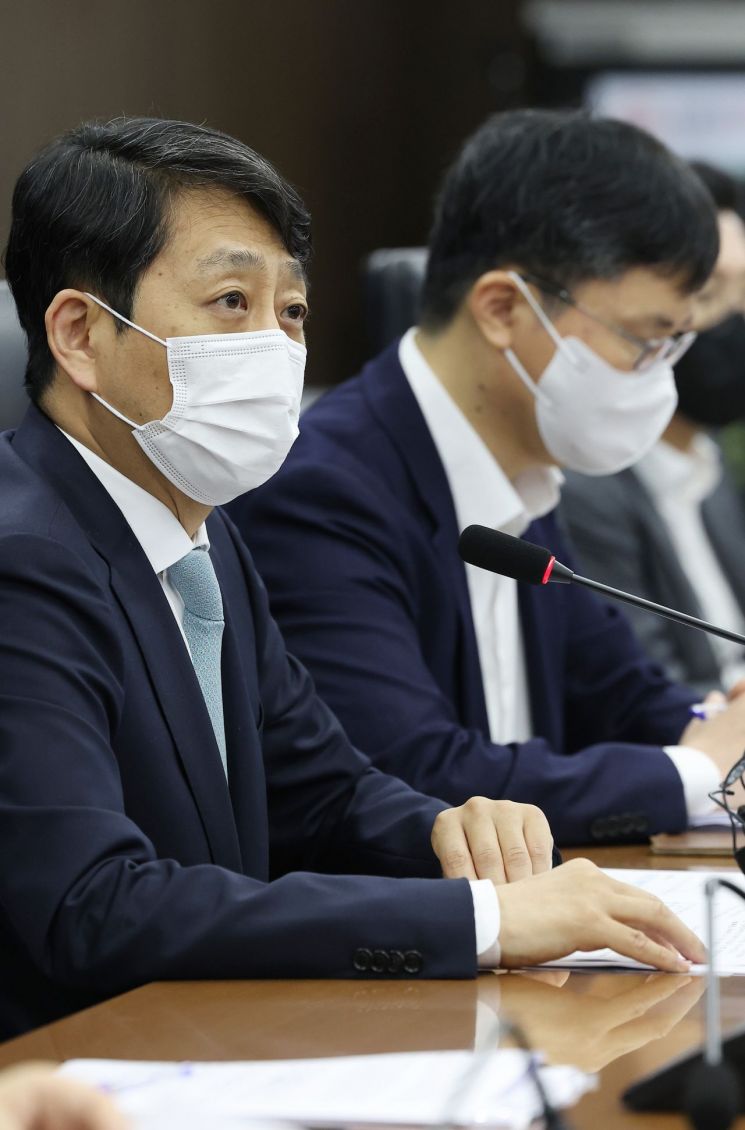
On the afternoon of the 13th, Andeok Geun, Director-General for Trade Negotiations at the Ministry of Trade, Industry and Energy, announced this during a briefing on the results of the IPEF ministerial meeting at the Government Complex Sejong. Earlier, on the 8th and 9th, the government agreed on ministerial declarations in the four areas at the IPEF participating countries’ ministerial meeting held in Los Angeles, USA, and officially declared the start of negotiations.
IPEF is the world's largest economic cooperation body, accounting for about 40% of global GDP and over 30% of the population, larger than RCEP (Regional Comprehensive Economic Partnership) and CPTPP (Comprehensive and Progressive Agreement for Trans-Pacific Partnership). Our government is participating as a founding member of IPEF, and 14 countries, more than initially expected, have decided to participate in the negotiations without any withdrawals.
The government expects IPEF to become a platform to address regional challenges through the participation of advanced countries possessing technology and capital, as well as emerging countries rich in resources and manpower potential. Instead of market opening through tariff reductions, the emphasis is placed on establishing norms and cooperation systems in new trade areas such as the digital economy, supply chains, climate change response, and anti-corruption, which were difficult to address in existing FTAs.
Specifically, in the trade sector, by proactively participating in the establishment of norms related to digital, labor, and environment, the government plans to build a regional trade order favorable to Korean companies. It will expand ASEAN digital market entry for K-content as well as fintech, resolve customs clearance difficulties and reduce costs, support small and medium-sized and export companies’ regional entry, and strengthen food security through food supply chains and agricultural technology cooperation.
In the supply chain sector, it will stabilize supply chains through cooperation mechanisms such as information exchange and early warning, promote supply chain diversification through supply chain infrastructure construction, and investment and technology cooperation in regional industries.
In the clean economy sector, the emphasis was placed on joint climate change response goals based on the Paris Agreement. Since the clean energy transition highlights the creation of commercial opportunities such as markets and investments, the plan is to encourage active participation from the private sector.
Regarding the fair economy, it aims to enhance tax transparency targeting the environment and strengthen the implementation of anti-corruption agreements. It is expected that opportunities for participation such as overseas investment and expansion conditions for Korean companies and procurement markets will be expanded.
Director-General Ahn said, "We will continuously promote IPEF negotiations as one team by collecting opinions from industry and stakeholders through future public-private strategic meetings and sectoral working groups."
© The Asia Business Daily(www.asiae.co.kr). All rights reserved.












