Pharmaceutical Companies Continuing 'Record-Breaking Performance'
Providing Bonuses to Sales Staff and Recovering After Tax Deduction
Introducing 'Special Bonuses'... Suspicions of Fake Payments Too
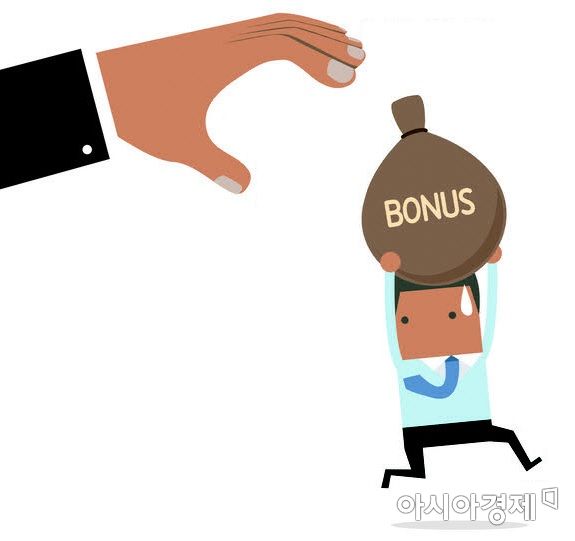
[Asia Economy Reporter Lee Chun-hee] A mid-sized pharmaceutical company, which has been posting record-breaking profits due to the surge in demand for cold medicine amid the COVID-19 pandemic, has become embroiled in a controversy over so-called ‘fake bonuses’?where bonuses are paid to employees and then taken back. There are also suspicions that these illicit funds are being used as illegal rebates to hospitals and pharmacies.
According to industry sources on the 31st, Company A, a mid-sized pharmaceutical firm, saw its sales and operating profit grow by 33.5% and 127.4%, respectively, in the first quarter compared to the same period last year. Both sales and operating profit reached all-time highs in Q1, continuing the company’s strong performance. This growth is attributed to the COVID-19 pandemic and an increase in cold patients, which boosted the popularity of antipyretic analgesics and antitussive expectorants.
However, despite these achievements, employees of Company A are not smiling. Instead, dissatisfaction is growing as they are forced to make illegal payments to the company. According to multiple employees, sales representatives receive a monthly performance bonus (incentive) of 600,000 KRW. However, this bonus is not money the employees can keep. Employee A explained, "About 100,000 KRW is withheld under the pretext of ‘tax compensation,’ and the remaining 500,000 KRW is handed over to the team leader." Employees speculate that this process is used to create slush funds for rebates paid by the company to hospitals and pharmacies. One employee said, "The company provides not only cash but also electronic products, gift certificates, and other valuable items as compensation, and this is approved at the company level, not just individual team leaders acting on their own."
Among employees, the ‘special bonus’ introduced by Company A this year is referred to as a ‘fake bonus.’ Approximately 2% of individual sales are paid as a special bonus, but this money must be returned in full to the managers. Considering that Company A’s domestic pharmaceutical sales exceeded 200 billion KRW in the first half of this year, this means about 4 billion KRW in separate cash funds can be operated semiannually.
One employee stated, "The company’s fake bonus payments have worsened this year, with employees returning millions of won every month. Most sales representatives in the pharmaceutical department have annual salaries of 70 to 80 million KRW on their statements, so they suffer from excessive tax deductions and receive no government policy benefits such as year-end tax adjustments." If Company A has created slush funds through fake bonuses and used them for rebates, it would constitute illegal rebates subject to legal prosecution. There is also a possibility of corporate tax evasion. A tax firm official pointed out, "If bonuses are paid to employees and then returned to be used as expenses, it constitutes fictitious expenses under tax law, which amounts to tax evasion."
It is reported that the performance bonus payments to Company A employees are made under the instructions of managers. There are also testimonies that a coercive atmosphere exists within the company where employees must make payments even without explicit orders. One employee said, "Even if it is a custom, who would voluntarily hand over millions of won? There is no choice, so employees are trapped in a structure where they cannot do anything. There have been no cases of refusal to pay, so we do not know what kind of retaliation might occur. Everyone is afraid, predicting a situation where all company support for sales will be cut off and they will have to conduct sales activities at their own expense."
On the other hand, quarterly performance bonuses promised by the company based on individual results are not being properly paid. These bonuses are not subject to return payments. However, only about half of the promised bonuses are paid, or payments are delayed repeatedly before being made. An industry insider said, "I thought this was a practice that only happened in small companies before rebate regulations were enforced. It is hard to believe that such large-scale incidents are occurring in a mid-sized pharmaceutical company." Company A did not respond to repeated requests for comment from this publication.
© The Asia Business Daily(www.asiae.co.kr). All rights reserved.












