SC First Bank Posts H1 Net Profit of 212.1 Billion KRW, Up 15% YoY
Citibank Korea Records 78.7 Billion KRW, Down 1.7% YoY
Impact of Different Retail Banking Response Strategies
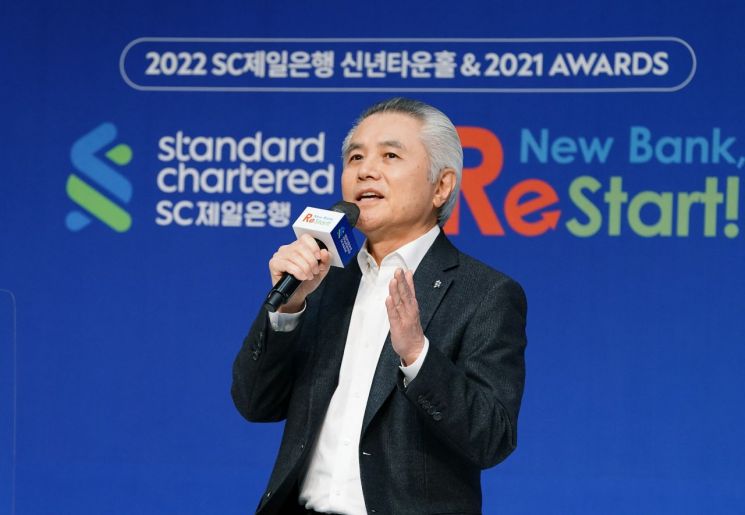
[Asia Economy Reporter Minwoo Lee] The performance of foreign banks in the first half of the year showed mixed results. SC Jeil Bank achieved solid results compared to the first half of last year due to increased interest income, while Korea Citibank showed somewhat sluggish performance. This is interpreted as differences in interest income depending on the presence or absence of retail banking, as well as differences in various cost management.
According to the financial industry on the 19th, SC Jeil Bank recorded a net profit of 212.1 billion KRW in the first half of this year, an increase of 14.8% compared to the same period last year. It has returned to the 200 billion KRW level of net profit before the COVID-19 pandemic. Previously, SC Jeil Bank had posted net profits in the 200 billion KRW range every year since 2016, when current CEO Jongbok Park took office, but net profit sharply dropped to 128 billion KRW last year due to the impact of COVID-19 and one-time voluntary retirement costs (252.7 billion KRW).
Costs also decreased by 9.6% compared to the first half of last year. This is interpreted as the effect of the special retirement program implemented in October last year being reflected from this year. The asset size increased by 13.2286 trillion KRW (15.3%) compared to the end of last year to 99.9429 trillion KRW, approaching 100 trillion KRW.
It is evaluated that the early implementation of a ‘selection and concentration’ strategy in the retail banking sector was effective. SC Jeil Bank has been pursuing a strategy not simply to reduce the number of branches but to convert some bank branches into complex branches and equip new branches with asset management (WM) and private banker (PB) center functions. Complex branches combine banking and securities, serving as the forefront of the WM business. Most of the complex branches promoted by SC Jeil Bank are located in affluent areas such as Gangnam in Seoul and Haeundae in Busan. A senior official at SC Jeil Bank explained, “We have consistently pursued a strategy to provide global brands desired by wealthy customers in banking, like ‘luxury’ products,” adding, “This has prevented the outflow of existing Jeil Bank customers and targeted niche markets that commercial banks cannot reach.”
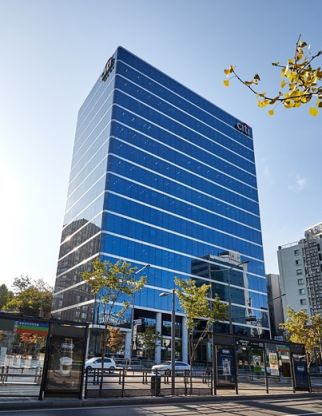
Korea Citibank showed somewhat sluggish performance. Its net profit in the first half of this year was 78.7 billion KRW, down 1.7% from the first half of last year. During the same period, total revenue decreased by 19.7% to 454.5 billion KRW.
The rapid withdrawal from retail banking had a significant impact. While most banks saw a large increase in interest income during the interest rate hike period, Citibank’s interest income only increased by 0.5% year-on-year to 406.9 billion KRW. Customer loan assets also decreased by 16.4%, from 24.4425 trillion KRW in June last year to 20.4339 trillion KRW in the first half of this year. Non-interest income also plummeted, dropping more than 70% year-on-year to 47.6 billion KRW. This is interpreted as a result of decreased revenue from asset management and bond-related income.
The withdrawal from retail banking even affected the credit rating. NICE Credit Rating downgraded Korea Citibank’s credit rating outlook from ‘stable’ to ‘negative’ in early June. This is believed to be due to concerns that the withdrawal from retail banking would weaken lending and deposit functions and lower market position. On the other hand, SC Jeil Bank’s credit rating outlook remained ‘stable.’ This highlights the difference between the ‘withdrawal’ and ‘selection and concentration’ strategies in the retail banking sector.
However, since the withdrawal from retail banking is a policy at the global headquarters level, Citibank is expected to focus more on corporate banking in the future. Yoom Youngsoon, CEO of Korea Citibank, stated, “We are smoothly progressing with the phased closure of the consumer finance business division, prioritizing customer protection and support,” adding, “We will achieve customer growth and sustainable growth of Citibank through focused investment in the corporate banking division.”
© The Asia Business Daily(www.asiae.co.kr). All rights reserved.












