Jongno-gu Builds Total of 7 Traditional Pavilions in the Area Since 2017 Using Hanok Demolition Materials
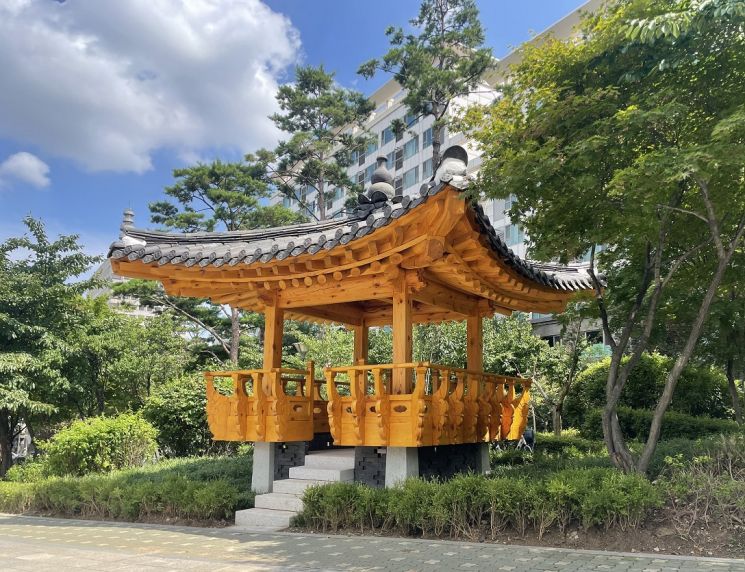
[Asia Economy Reporter Park Jong-il] Jongno-gu (District Mayor Jeong Mun-heon) has completed the construction of Sajikjeong, a resident resting place that fully embodies the wisdom and elegance of ancestors.
Sajikjeong, a traditional pavilion built within the Sajik green space, is the result of the "Traditional Pavilion Construction Project on Public Land" promoted by Jongno-gu. Construction began in January this year and after seven months of work, a beautiful pavilion approximately 6㎡ in size, made of wooden beams and traditional tiled roof, and one story above ground, was completed.
What makes this pavilion construction project special is that Jongno-gu utilized the Hanok Material Bank system, which has been operated since 2015.
The Hanok Material Bank was established to recycle materials unavoidably demolished due to development or new building construction as traditional cultural resources. It is meaningful in that it supplies hanok demolition materials to users for a fee and also provides expert consultation and technical support.
Furthermore, Jongno-gu, aiming to contribute to the preservation and revitalization of hanok culture and to provide residents with a daily life of rest, has consecutively built traditional pavilions on public land since 2017, including ▲Waryongjeong (Waryong Park), ▲Hyehwajeong (Olympic Memorial National Life Center), ▲Songgangjeong (Mugunghwa Hill), ▲Cheongjinjeong (Cheongjin Park), ▲Pyeongchangjeong (rest area behind Pyeongchang-dong Community Center), and ▲Jeokseonjeong (Doryeom Park), in addition to Sajikjeong.
This year, to encourage hanok architectural methods and strengthen the identity of the historic cultural city, the "Public-Private Hanmaeum Traditional Pavilion Construction Project" will be carried out. In this project, the private sector provides land and capital, while the district supplies hanok demolition materials and construction technology to expand resident resting spaces.
District Mayor Jeong Mun-heon stated, “I hope that residents will take time to rest and reflect on the image of their ancestors at Sajikjeong, which was built facing Sajikdan, where rituals were held to the gods of land and grain during the Joseon Dynasty.”
© The Asia Business Daily(www.asiae.co.kr). All rights reserved.











