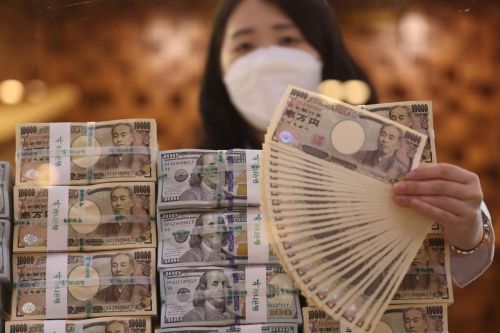
[Asia Economy Reporter Hwang Yoon-joo] Korea Investment & Securities expects the pressure for yen appreciation to gradually increase due to the faster-than-expected cabinet reshuffle in Japan.
Choi Bo-won, a researcher at Korea Investment & Securities, stated on the 13th, "What could be confirmed through this cabinet reshuffle is that although not as much as the opposition party, there is a plan to respond to inflation, and there is an intention to revive and recover the economy through the realization of new capitalism."
Japan conducted a cabinet reshuffle on the 10th. The new cabinet consists of 19 ministers, of which 5 were retained, 9 were newly appointed, and another 5 are individuals who have previously served as ministers.
The reason for the faster-than-expected reshuffle is said to be to expedite the implementation of policies such as 'new capitalism.' However, within Japan, it is also evaluated that this is due to the revelation of ties between Liberal Democratic Party (LDP) ministers and the Family Federation for World Peace and Unification (Unification Church). Since relationships with the Unification Church have been disclosed among 14 newly appointed ministers, political uncertainty in Japan is expected to increase for the time being.
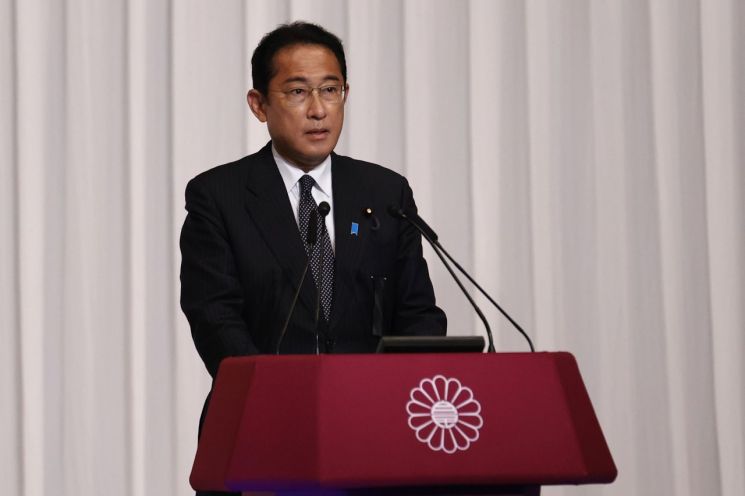
Researcher Choi analyzed, "The possibility of LDP reform centered on Prime Minister Kishida has decreased," adding, "Although slower than expected, the pressure for yen appreciation will increase." This is because the number of Abe faction members was maintained at four in this reshuffle, showing acceptance of the Abe faction, and opposition party checks are also necessary.
Choi explained, "In August, monetary policy meetings were not held in countries such as the U.S. and Japan, weakening the pressure for yen depreciation caused by the widening interest rate differential. However, since there is an emphasis on responding to inflation and realizing new capitalism, the pressure for yen appreciation is expected to increase toward the end of the year."
Choi also predicted that since the pressure for yen depreciation is expected to weaken in August, the potential for appreciation compared to countries like the U.S. and Europe will be limited.
He evaluated, "The increasing pressure for yen appreciation toward the end of the year is expected to act as a factor limiting the rise of Japanese indices, but there are many sectors with high recovery potential," adding, "I maintain a positive stance from a long-term perspective."
He cited sectors with high recovery potential as "retail companies whose performance is recovering due to the mitigation of the impact of COVID-19 resurgence, companies expected to benefit from increased foreign inbound consumption, and companies reflecting benefits from postponed domestic travel support policies."
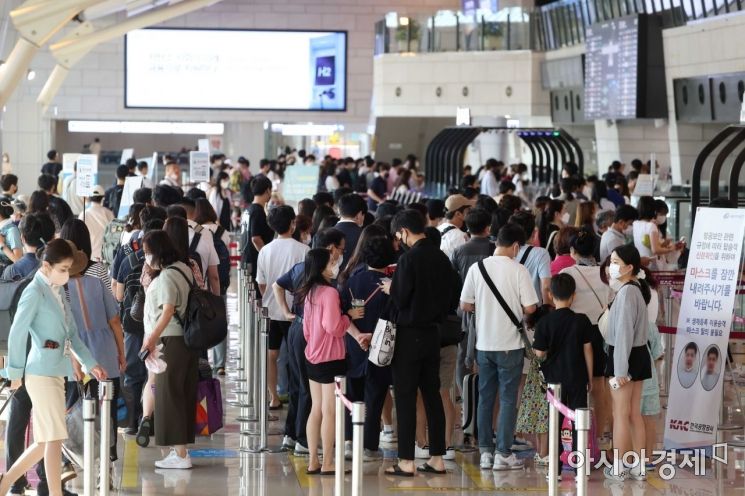 On the 12th, as the spread of COVID-19 continued, the domestic terminal of Gimpo Airport in Gangseo-gu, Seoul, was crowded with travelers. Photo by Moon Honam munonam@
He further emphasized, "There are also industrial and IT companies expected to benefit from industrial automation and the strengthening of the U.S.-Japan supply chain, as well as growth stocks whose price increases were limited despite yen depreciation and the slowdown in Omicron spread."
Researcher Choi also selected beneficiary sectors based on the LDP's key policies.
He explained, "Sectors related to diplomacy/security and COVID-19/earthquake policies include defense, travel, and aviation," adding, "They can also be seen as beneficiary sectors of the resumption of the delayed 'domestic (within Japan) travel support policy."
He also predicted, "Sectors related to yen appreciation include electric power/gas companies, paper manufacturers, and airlines. As digital and startup support are being discussed as part of new capitalism, growth stocks such as platform companies, which have been relatively less highlighted, can also be noted."
He added, "Finally, since decarbonization policies are being emphasized, it is expected that sectors related to eco-friendly and renewable energy can also respond accordingly."
© The Asia Business Daily(www.asiae.co.kr). All rights reserved.














