Biden Worried More About Leadership Decline Than US-China Relations Deterioration
"China's Overreaction" Shows Discomfort
Xi Jinping, Ahead of 3rd Term Party Congress, Also Presses Forward
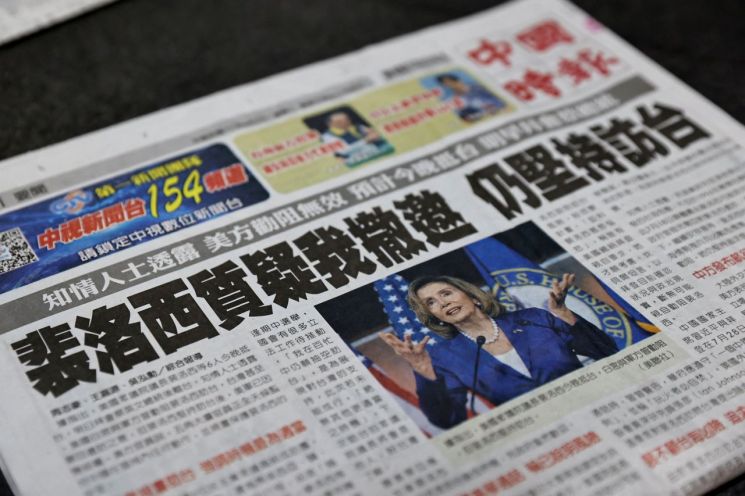
[Asia Economy Reporter Kim Hyunjung, New York=Special Correspondent Jo Seulgina] As Nancy Pelosi, Speaker of the US House of Representatives, prepares to visit Taiwan, tensions between the US and China over the Taiwan Strait are escalating unprecedentedly. China, which considers Taiwan its own territory, has hinted at the possibility of using force, while the US has stated its intention to provide protective measures for Speaker Pelosi. There is also analysis that China might use Pelosi’s visit as a pretext to strengthen its military presence near the Taiwan Strait.
◆Chicken Game... Both Biden and Xi Jinping Face 'No Choice but to Press Forward' = The Biden administration’s stance on Pelosi’s trip to Taiwan is complex. Initially, the Biden administration showed concerns about the deterioration of US-China relations that Pelosi’s visit might cause. However, as the visit approached, the administration shifted to a position of providing full support to ensure Pelosi’s safe visit to Taiwan. The US is instead expressing discomfort, accusing China of overreacting.
On the 1st, John Kirby, White House National Security Council (NSC) Coordinator for Strategic Communications, stated, "The Speaker’s visit has precedents, and the possibility of the Speaker’s visit does not change the status quo," adding, "Beijing’s actions could unintentionally escalate tensions."
For President Biden, facing the midterm elections in November, if Pelosi’s visit to Taiwan is canceled at this point, he would inevitably face criticism that "the US has succumbed to China’s intimidation." There is also analysis that this would signal a decline in US leadership in the Indo-Pacific region. Bob Menendez, Democratic Senator and Chairman of the Senate Foreign Relations Committee, who visited Taiwan in April, criticized, "If China is allowed to decide who can and cannot visit Taiwan, we have effectively handed Taiwan over to China."
Likewise, Xi Jinping, Chinese President, who is set to secure a third term at the 20th National Congress of the Communist Party of China (Party Congress) this fall, cannot back down. President Xi has maintained the position of "aiming for peaceful reunification but not ruling out unification by force" in cross-strait relations. Meanwhile, Taiwan’s Democratic Progressive Party (DPP) government has strengthened cooperation with the US, indirectly pursuing steps toward independence.
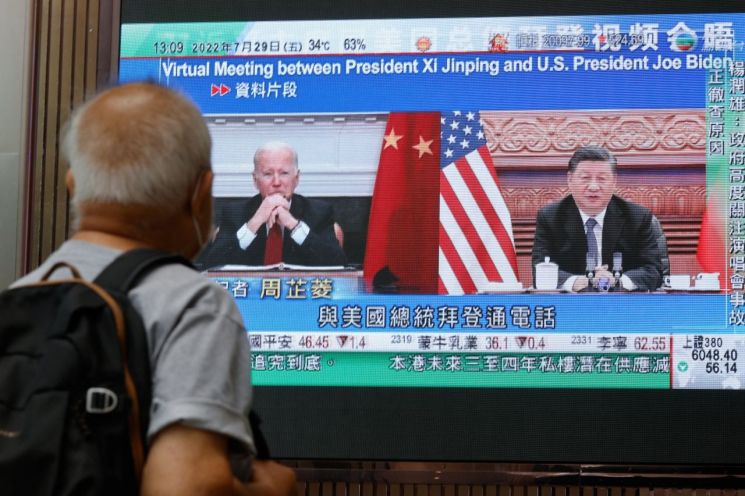
Therefore, Pelosi’s visit, as the third highest-ranking US official, has a high possibility of triggering a physical conflict in this precarious tension. The Taiwan Strait has long been perceived as a powder keg that could explode amid US-China conflicts. In this context, China perceives Pelosi’s visit, as the third highest-ranking official, as a dangerous act that disrupts the current balance.
Prior to this, President Xi has repeatedly displayed military power as a warning and reportedly made harsh remarks during a call with President Biden, such as "playing with fire will lead to burning to death." The New York Times (NYT) recently reported that Xi has made it clearer than any predecessor that Taiwan’s reunification is a major goal of his administration and that he wants to project a strong image on the Taiwan issue.
When former House Speaker Newt Gingrich visited Taiwan in 1997, the Chinese Foreign Ministry only issued a critical statement. However, this time, there is speculation that China might conduct military demonstrations such as missile launches. Nonetheless, some argue that China is unlikely to provoke military actions against the head of the US legislature.
Chinese local media strongly criticize Pelosi’s visit to Taiwan while also targeting Taiwan’s DPP. The state-run Xinhua News Agency published a column by Li Baoming, Associate Professor at Tsinghua University’s Taiwan Research Institute, titled "The 1992 Consensus (recognizing the ‘One China’ principle but using respective names) is the key to the welfare of Taiwan compatriots," stating, "The DPP has increased Taiwan’s financial burden by paying protection money to the US, and infrastructure has deteriorated. For years, the entire island of Taiwan has frequently experienced blackouts, causing loss of life and property."
Pelosi Heads to Taiwan Today... What It Means?
US 3rd Highest Power & Leading China Hawk
Perceived as Disrupting Balance Leading to Physical Conflict
Military Provocation Seems Unlikely
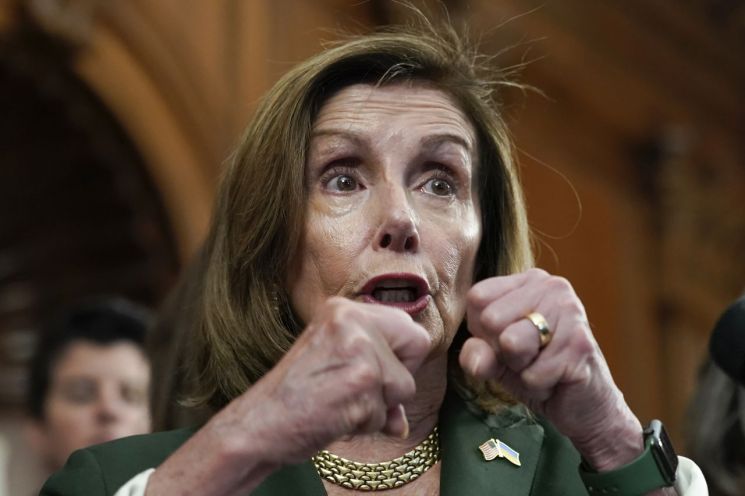
◆Pelosi, a Leading US China Hawk= China’s strong opposition to Nancy Pelosi’s visit to Taiwan is not only because she holds the title of the third highest-ranking US official. Rather, the answer lies in Pelosi’s past actions. Pelosi, a 35-year veteran congresswoman, is regarded as one of the most consistent China hawks in US politics.
Pelosi is well known for an incident in 1991 when, as a newly elected congresswoman, she visited Beijing and held a banner at Tiananmen Square that read "To those who gave their lives for China’s democracy," and read a memorial statement. Without Chinese government approval, she was detained, and during this process, Chinese police were seen protesting harshly against US lawmakers on camera. Pelosi posted related protest videos on her social media in June 2019 to remind people.
Later, in 1997, when Chinese President Jiang Zemin visited Washington, Pelosi protested by calling Jiang a tyrant in front of Blair House, where Democratic Senator Dianne Feinstein hosted a dinner. In 2002, Pelosi delivered a letter urging the release of political prisoners to then Vice President Hu Jintao during his Washington visit, which Hu refused, causing a diplomatic issue.
Pelosi has publicly opposed China’s accession to the World Trade Organization (WTO) and Olympic hosting, and has consistently criticized China’s human rights issues, including those involving the Uyghurs. She has interacted with the Tibetan spiritual leader Dalai Lama and met Hong Kong democracy activist Joshua Wong to express support. For the Chinese government, she is inevitably regarded as a representative ‘persona non grata’ (diplomatically unwelcome person).
© The Asia Business Daily(www.asiae.co.kr). All rights reserved.














