Submitted to City Council on the 13th... ▲Safety and Security ▲Enhancing Urban Competitiveness ▲Accelerating Daily Life Recovery
Securing 200 billion won through expenditure project restructuring... Reducing debt by 222 billion won to improve fiscal soundness
Increasing public meal unit prices for homeless and low-income children
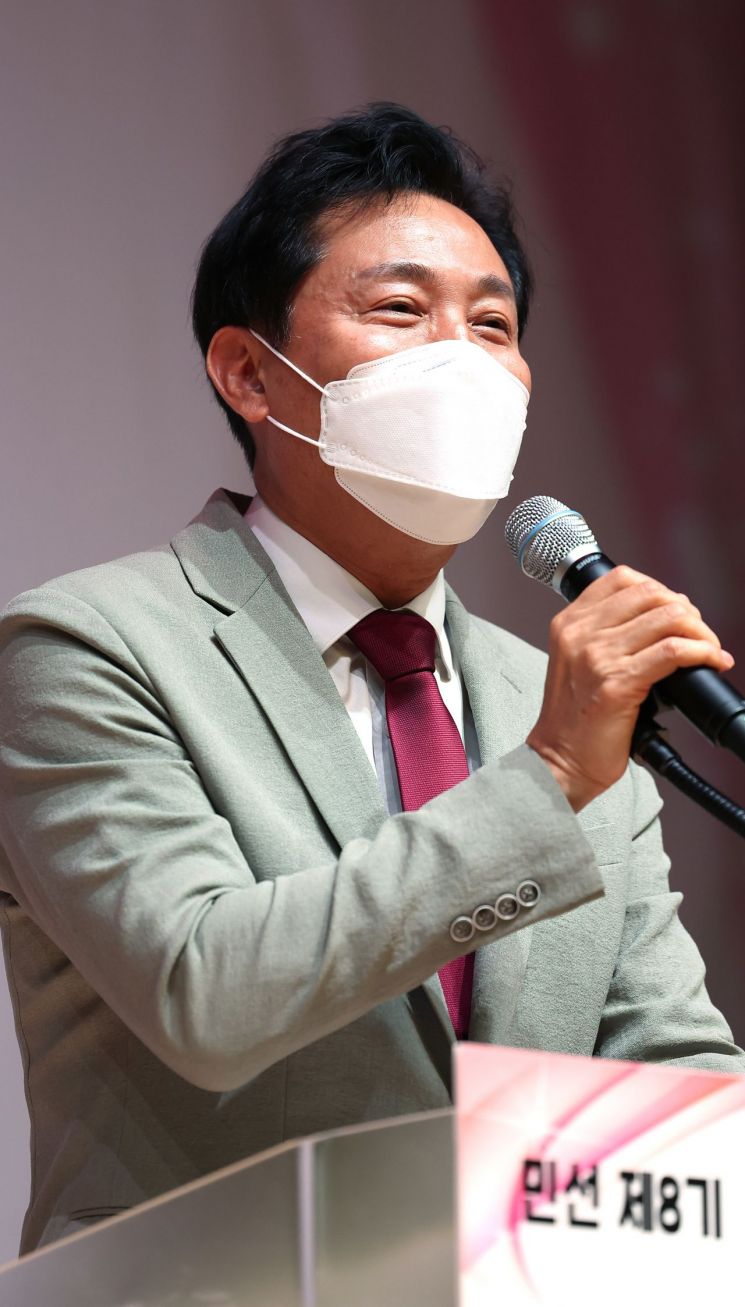
[Asia Economy Reporter Lim Cheol-young] The Seoul Metropolitan Government has urgently allocated 6.3709 trillion KRW to expand seed investments for the ‘Companion and Attractive Special City Seoul’ and to respond promptly to rapidly changing domestic and international conditions such as COVID-19 recovery and inflation.
According to Seoul City on the 13th, this supplementary budget proposal amounts to 52.1841 trillion KRW, an increase of 13.9% (6.3709 trillion KRW) compared to the originally approved budget of 45.8132 trillion KRW for this year. The funding sources include the 2021 fiscal year’s net surplus (5.3753 trillion KRW), national subsidies (319.4 billion KRW), non-tax revenues (92.5 billion KRW), local allocation tax (47.9 billion KRW), reimbursement income and internal transactions (737.7 billion KRW), and local bonds (-201.9 billion KRW).
This supplementary budget is a regular supplementary budget following the 2021 fiscal year settlement and the first supplementary budget of the 8th term of the Seoul mayor. It aims to establish a financial foundation for ‘an attractive Seoul that accompanies the vulnerable,’ emphasized by Mayor Oh Se-hoon in his inaugural speech, and to secure matching funds following the government’s supplementary budget to promptly execute support for socially vulnerable groups.
First, Seoul City will build a dense social safety net to lay the foundation for a safe and secure city. It will invest 401.1 billion KRW as seed money to fully promote the core policy of the 8th term Seoul administration, ‘Companion with the vulnerable,’ strengthen customized care systems for infants, the elderly, and the disabled, and enhance safety infrastructure including major accident prevention.
‘Companion Restaurants’ (50 locations) will be designated and operated for residents of jjokbang (small rooms), and public meal prices for homeless people and low-income children will be raised considering inflation. For young people suffering from high housing costs, the ‘Youth Monthly Rent’ support target will be expanded by 10,000 people this year, and moving cost support up to 400,000 KRW will also begin. Installation of subway platform convenience facilities to guarantee mobility rights for the disabled and other transportation-vulnerable groups will continue, and expansion of ‘Seoul-type Public Healthcare,’ one of the four major policies for vulnerable groups, will also start.
Strengthening customized safe care systems for demanders... Enhancing safety infrastructure including major accident prevention
Seoul City will expand the ‘Seoul-type Kids Cafe’ to guarantee children’s right to play and additionally support 150,000 people with smart bands, a core of the ‘Seoul-type Smart Healthcare.’ For disabled people who have difficulty living independently, support services such as home bathing and nursing will be expanded to prevent care gaps caused by COVID-19. Housing support facilities for women victims of violence will be expanded by 13 locations to a total of 82.
Automatic safety steps will be pilot-installed to prevent safety accidents such as subway platform gaps, and a pilot project to upgrade subway platform safety door systems will also begin. Systematic inspection and maintenance of underground facilities such as aging sewage and heat transport pipes will prevent ground subsidence, and low-interest loans for repairs of aging low-rise houses in housing performance improvement support zones will create a safe residential environment.
Green and waterfront space maintenance, expansion of eco-friendly vehicle infrastructure... Revitalization of local economy and enhancement of growth potential
Seoul City will create a park of about 110,000㎡ on the ground level of Gukhoe-daero by 2025, and maintain waterfront spaces of seven major rivers including Jungnangcheon and Anyangcheon by reducing odors and improving dangerous and aging facilities. A media art exhibition will be held using the exterior wall of Seoul Library, and sports facilities such as jokgu (foot volleyball) courts, futsal fields, and tennis courts will be expanded to promote community sports. An additional 8,471 electric vehicles and 26 hydrogen vehicles will be supplied, and 5,052 electric vehicle chargers will be additionally installed.
To strengthen the self-sustainability of small business owners and revitalize neighborhood commercial districts, Seoul metropolitan and local love gift certificates will be additionally issued worth 212 billion KRW. By the end of this year, four more ‘Youth Employment Academies’ will open (in Yongsan, Gangdong, Dongjak, and Gangseo) to accelerate the cultivation of Seoul-type innovative talents. A new startup support facility will be established on Teheran-ro in Gangnam-gu to activate private investment in startups.
Additionally, Seoul will promote culture, leisure, and tourism, which have seen increased demand after the lifting of social distancing, while continuing to provide damage support for isolation and confirmed COVID-19 patients in preparation for a resurgence. A budget has also been allocated to compensate losses for subway, city buses, and village buses, which have accumulated deficits due to fare freezes and decreased passenger numbers. Seoul will invest a total of 925.2 billion KRW.
Activation of leisure, culture, and tourism... COVID-19 damage support
Seoul City will invest 16.4 billion KRW to revitalize Seoul tourism, which shrank after COVID-19, and to expand opportunities for cultural enjoyment in daily life. It will prepare to welcome overseas visitors by promoting and developing tourism courses for early recovery of the tourism market and support festivals and events in seven tourist special zones including Myeongdong and Itaewon. In connection with the opening of the Blue House, the ‘Car-Free Street to the Blue House’ will be operated, and the ‘Reading Seoul Plaza,’ which received high public response, will be expanded in scale and operating hours.
Economic support for COVID-19 isolation and confirmed patients will also continue. The co-payment for isolation inpatient treatment will be continuously supported so that COVID-19 isolated patients can receive free treatment. The living support fund payment project will also continue to help citizens who were hospitalized or isolated due to COVID-19 but did not receive paid leave under the Infectious Disease Control and Prevention Act maintain their livelihoods during the isolation period.
Furthermore, 498.8 billion KRW has been allocated for temporary support of public transportation such as subways, city buses, and village buses, which face financial difficulties due to accumulated transport deficits caused by decreased passengers and seven years of fare freezes. This aims to reduce accumulated debt and create a safer and more convenient public transportation environment.
Hwang Bo-yeon, Acting Director of the Seoul City Planning and Coordination Office, said, “We have prepared the second supplementary budget this year to embrace socially vulnerable groups who have become more difficult due to prolonged economic recession and deepening polarization, and to lay the groundwork for strengthening global urban competitiveness. We will promptly execute the budget once approved by the city council to lay the foundation for ‘Companion and Attractive Special City Seoul.’”
© The Asia Business Daily(www.asiae.co.kr). All rights reserved.












