[Seoul District News] Yeongdeungpo-gu to Host Dano Festival at Yeongdeungpo Park on June 3 - Diverse Performances by Young Yeonhwi Troupe and Experienced Myeongchang Singers... Jongno Happiness School Recruiting Students... Geumcheon-gu to Operate Children's Ecological Experience Program at Geumnaerae Sky Garden from June 20 to July 20 - From Science Exploration Classes to Solar Observation and VR Experiences!... Nowon Astronomical Science Center Operation... Gangseo-gu Launches ‘2040 Office Worker Smile Project’ Starting June at LG Science Park, Expanding to Small Businesses... Guro-gu,

[Asia Economy Reporter Park Jong-il] Yeongdeungpo-gu will hold the ‘19th Yeongdeungpo Dano Festival’ at Yeongdeungpo Park on June 3rd to celebrate Dano (the 5th day of the 5th lunar month), a traditional Korean holiday.
The Yeongdeungpo Dano Festival has established itself as a representative local traditional festival where residents enjoy and unite together by offering various experiential events that recreate seasonal customs such as the annual Ssireum (Korean wrestling) King Selection Contest, washing hair with iris roots, swing jumping, and archery until 2019.
Following the full cancellation of the festival in 2020 to prevent the spread of COVID-19 and a limited small-scale event last year, this year’s festival is planned to be open to all local residents to attend and enjoy, in accordance with the lifting of social distancing measures.
Sponsored by Seoul City and Yeongdeungpo-gu and hosted by the Yeongdeungpo Cultural Center, this year’s Dano Festival will be held from 9:00 a.m. to 11:30 a.m. at the circular plaza stage in Yeongdeungpo Park (275 Singil-ro, Yeongdeungpo-gu).
The event will begin with a Dano ritual conducted by the officiant. After the ritual, the opening ceremony will be held, hosted by comedian Im Hyuk-pil, the Yeongdeungpo-gu public ambassador, followed by a celebratory performance called Binari Yeonhee, wishing for the health and well-being of the residents.
The theme of the performance is ‘Let Go, Play 2022 Yeongdeungpo Dano GOOD,’ which expresses the residents’ relief and consolation after overcoming the difficult times brought on by the global COVID-19 pandemic.
It embodies the meaning of letting go of all worries, coming together to enjoy and encourage each other, and building a new century for Yeongdeungpo together.
The festival’s performances will be led by the variety performance team led by Lee Seo, a graduate of Korea National University of Arts, the singing duo Cheon Jin Nangrang, and masters of Gyeonggi folk songs.
Notably, traditional musician Jo Dong-eon is directing the performances to ensure residents can fully enjoy the pleasures of Korean traditional music.
Considering that COVID-19 social distancing and quarantine guidelines have only recently been eased, the festival will not include reenactments of seasonal customs games. Also, since the event gathers more than 50 people, all attendees must wear masks outdoors in accordance with government quarantine guidelines.
A district official said, “Although it may be insufficient to fully recreate the atmosphere of previous Yeongdeungpo Dano Festivals, we hope this meaningful occasion will allow residents to gather and reflect on the significance of the traditional holiday Dano and enjoy it together.”
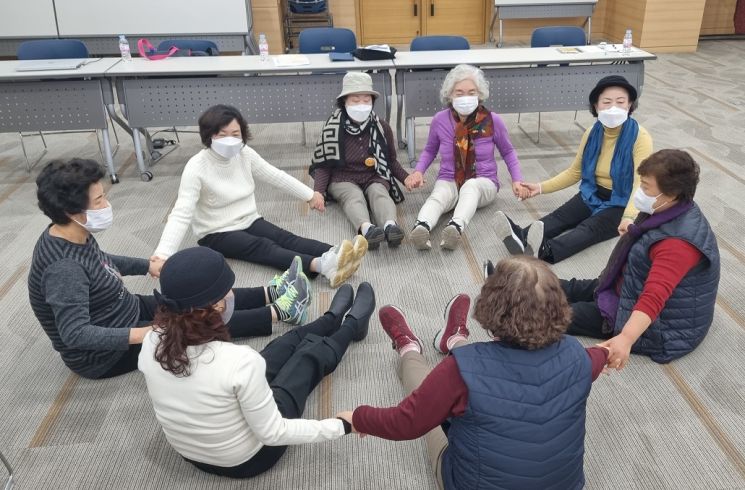
Jongno-gu will operate the ‘Jongno Happiness School Basic Course’ starting July this year.
Based on the belief that happiness, like learning to ride a bicycle, can be acquired through continuous ‘learning’ and ‘practice,’ the program aims to raise the happiness index of the local community and embed the value of ‘happiness’ into residents’ lives.
Starting July 7th and running until September 22nd, classes will be held every Thursday at 3 p.m. in the multipurpose hall of Marronnier Park, covering 12 lectures including ▲Entrance Ceremony ▲Changing Perspectives ▲Savoring ▲Gratitude ▲What is Happiness ▲Not Comparing ▲Strengthening Relationships ▲Immersion ▲Setting Goals ▲Sharing and Giving ▲Forgiveness ▲Graduation Ceremony, providing concrete practical methods for a happy life.
The program targets 30 residents aged 19 or older who can participate diligently in classes and are interested in the happiness of neighbors and the community and can continue activities.
Applications will be accepted on a first-come, first-served basis through the ‘Integrated Application’ page on the Jongno-gu Office website until June 19th, with selection results individually notified via applicants’ mobile phone numbers on June 20th.
For more details and inquiries about various happiness projects and the Happiness School promoted by the district, contact the Happiness Dream Team of the Health City Division at Jongno-gu Office.
Last year, Jongno-gu collaborated with the Happiness Bridge Association and Seoul National University Happiness Research Center to operate the first-ever local government happiness education program, ‘1st Jongno Happiness School.’ The theme was ‘Again (多時), Happiness,’ expressing the wish for much happiness over time and the desire to rediscover happiness.
The program was developed by reorganizing happiness content and textbooks from Seoul National University Happiness Research Center, and experienced professional teachers led the classes, receiving favorable reviews from participants.
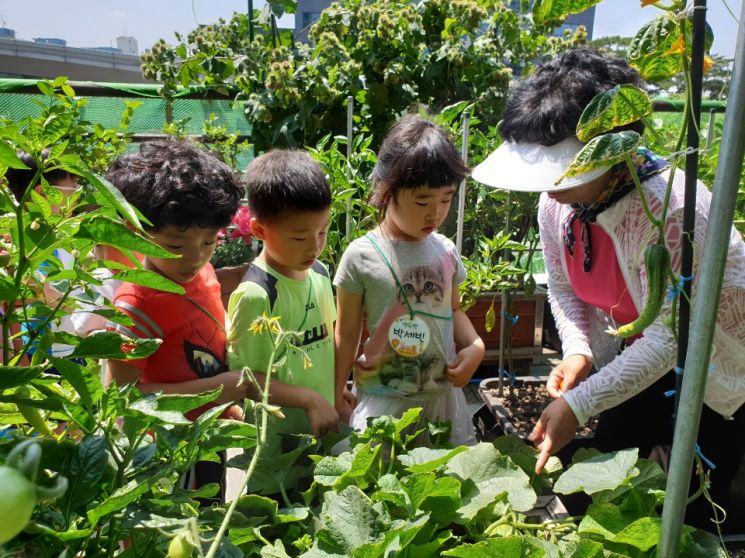
“Observe and experience various crops growing on the rooftop of Geumcheon-gu Office”
Geumcheon-gu will operate an ecological experience program for children at the Geumna-rae Sky Garden, created by utilizing idle space at the district office, from June 20th to July 20th.
The Geumna-rae Sky Garden at the district office consists of a 1st-2nd floor ramp, 2nd-floor ecological rice paddy and Geumna-rae garden, 2nd-3rd floor ramp, and a rooftop garden on the 3rd floor (in front of the council).
The 1st-2nd floor ramp features a corn path, green curtain, and tunnel garden; the 2nd floor has an ecological rice paddy in front of the hydroponic ginseng cultivation room and the Geumna-rae garden in front of the health center and daycare center; the 2nd-3rd floor ramp has a watermelon path; and the 3rd floor has a rooftop garden.
The ecological experience program is held twice daily (20 participants per session on a first-come, first-served basis) from Monday to Friday. Participating children can experience over 60 varieties of crops including corn, bitter melon, loofah, bottle gourd, tomato, cucumber, lettuce, watermelon, oriental melon, and rice.
The program consists of learning crop names, cultivation methods, uses, and ecological education, lasting about 90 minutes. Children will also have the opportunity to harvest crops that are in season.
The program targets families with elementary school children and educational and welfare institutions in Geumcheon-gu. Individuals or institutions wishing to participate can apply from June 7th to 10th via the ‘Integrated Reservation - Other Reservations’ section on the Geumcheon-gu Office website.
Park Nam-hyun, Director of the Parks and Greenery Division, said, “We feel rewarded to provide residents with opportunities to see and learn about various crops in the urban environment where agriculture is hard to access,” and added, “We ask for much interest and participation in the Geumna-rae Sky Garden ecological experience program.”
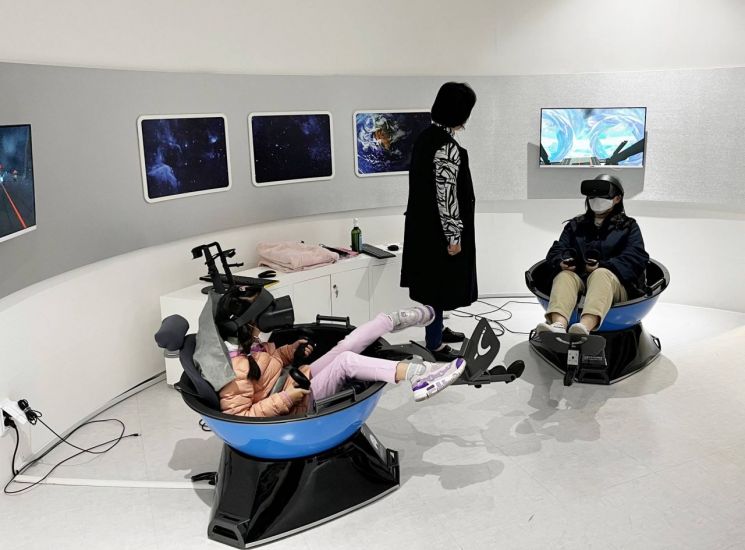
Nowon-gu announced that it will run programs at the ‘Nowon Astronomy and Space Science Center’ to stimulate scientific curiosity and foster imagination about space and astronomy.
First is the Science Exploration Classroom. Previously conducted online due to COVID-19 precautions, the classes will now be held face-to-face, raising expectations.
The education targets elementary school students divided into grades 1-2, 3-4, and 5-6, with classes limited to 10 students per group to enhance concentration. The program runs once a week for six weeks from June 8th to July 19th.
Two subjects are offered: ‘Life Exploration’ and ‘Space Exploration.’ ‘Life Exploration’ covers topics such as seeds, beetles, mosquitoes, bees, wings, and leaves through observation and crafting classes. ‘Space Exploration’ covers the solar system, Mercury, Venus, Mars, Jupiter and Saturn, Uranus and Neptune, including learning about each planet’s characteristics, space probes, and making solar system mobiles.
The tuition fee is 50,000 KRW per subject, and students can apply for multiple subjects according to their grade. Applications are accepted from 10 a.m. on May 26th to midnight on June 2nd via the Nowon Astronomy and Space Science Center website.
Weekend programs are also available. Permanent exhibitions include the ‘Big History Hall,’ which explores the universe, Earth, and life evolution from the Big Bang to the present, and the ‘Cosmos Hall,’ which showcases the history of space observation. These are open from 9:30 a.m. to 5:30 p.m., except during disinfection hours (12 p.m. to 1 p.m.).
Special experiences include solar observation, VR (virtual reality) experiences (photo), and planetarium video screenings.
‘Solar Observation’ uses solar glasses and telescopes to observe the sun, held four times each on Saturdays and Sundays. Observation is not possible during rain. ‘VR Experience’ runs seven times each on weekends, featuring space-related quizzes.
‘Planetarium Videos’ are screened seven times each on weekends. The dome-shaped theater offers a unique experience with a giant hemispherical screen and high-quality sound. Five videos are shown, including ‘Cocomong’s Space Adventure,’ ‘Aurora’ featuring real aurora footage and vivid CG, and ‘Cosmos Odyssey,’ which depicts the 13.8 billion-year journey of the universe.
Special experiences are available with admission only, without additional fees.
Opened in June 2017, the Nowon Astronomy and Space Science Center is a six-story building with one basement floor. It was remodeled and expanded in March last year and reopened. It operates Tuesday through Sunday from 9:30 a.m. to 5:30 p.m. Admission is free for children under 5, seniors over 65, national merit recipients, and persons with disabilities; 1,000 KRW for youth aged 6-19; and 2,000 KRW for adults.
Program schedules may change depending on circumstances. For reservations and more information, contact the Nowon Astronomy and Space Science Center.
A district official said, “We ask for much interest in the exploration classroom that will stimulate children’s scientific curiosity,” and added, “We hope everyone enjoys a fun time exploring and experiencing the history and appearance of the universe at the Nowon Astronomy and Space Science Center.”
Gangseo-gu, Seoul (Mayor Roh Hyun-song) is promoting the ‘2040 Office Worker Smile Project,’ a visiting mental health checkup program targeting office workers in their 20s to 40s.
The project aims to help early detect and alleviate psychological difficulties such as depression and stress among young office workers whose mental health has been at risk since COVID-19.
Although preparations for returning to normal life are underway in many places, psychological aftereffects such as depression, anxiety, and fatigue accumulated during the prolonged COVID-19 pandemic remain prevalent among office workers.
According to the Ministry of Health and Welfare’s ‘2021 COVID-19 National Mental Health Survey,’ the depression risk rate was highest among people in their 30s at 27.8%, followed by 17.3% among those in their 20s. This clearly shows the urgent need for mental health support for young people.
With Magok District becoming one of the top business districts in Korea and various companies such as LG Science Park moving in, the number of young office workers in their 20s to 40s in the district is steadily increasing.
However, many of these workers, due to active social and economic activities, often neglect their important mental health.
Accordingly, the district plans to implement the ‘Smile Project’ centered on the Gangseo-gu Mental Health Welfare Center to provide mental health checkups and customized support for office workers in their 20s to 40s.
The ‘Smile Project’ aims to conduct mental health checkups with goals of ▲Stress relief (‘Seu’), ▲Mental stability (‘Maeum’), and ▲Daily life recovery (‘Il’).
Professional counselors will visit workplaces of 2040 office workers who cannot visit health centers or mental health welfare centers, conducting mental health checkups using mental health questionnaires and autonomic nervous system testing devices (HRV).
Based on the checkup results, customized support such as providing mental prescription kits, counseling linkage, treatment cost support, and mental health promotion education including burnout syndrome prevention will be offered to help restore mental health.
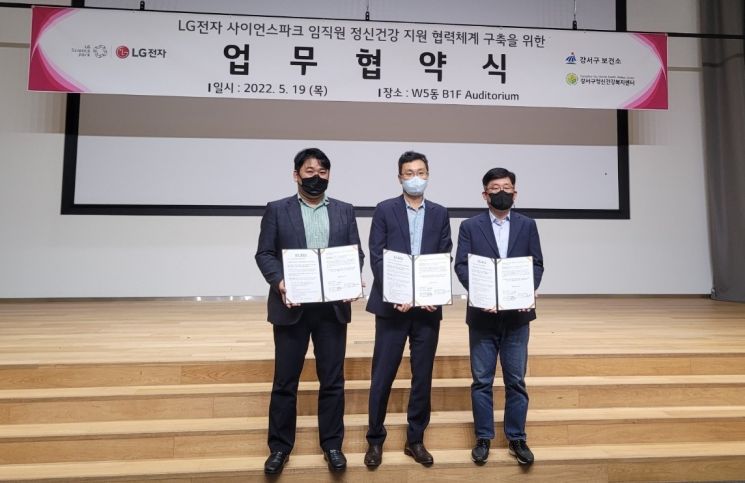
The district selected LG Science Park, located in the area, as the first target site for the ‘Smile Project’ and signed a business agreement on the 19th to promote the project (photo).
Starting in June, mental health checkups will be conducted for 2040 office workers at LG Science Park, with plans to gradually expand the project to small-scale companies.
Companies actively participating in this project will be certified as ‘Mental Health Friendly Companies.’ Mayor Roh Hyun-song said, “We expect the Smile Project to greatly help improve office workers’ mental health and self-esteem, enabling them to lead vibrant work lives,” and added, “Efforts by companies to care for employees’ mental health positively affect organizational trust and performance, so we hope many companies actively participate in this project.”
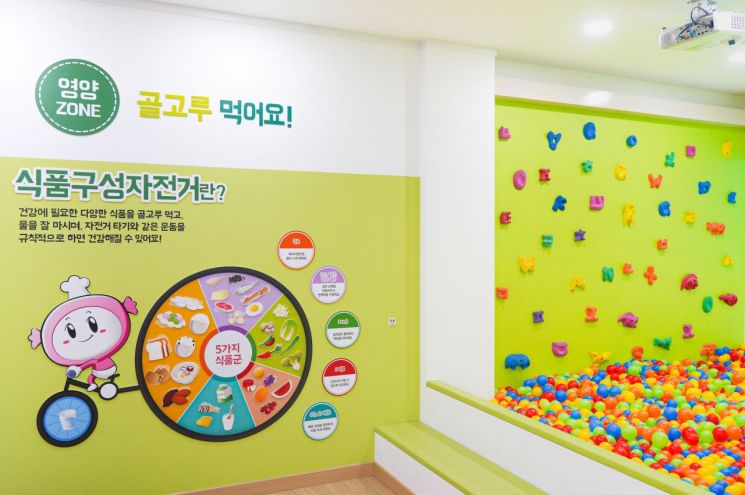
Guro-gu (Mayor Lee Sung) will resume operation of the Children’s Health Experience Center.
Guro-gu announced on the 30th that “the Children’s Health Experience Center, which had been closed due to internal remodeling and COVID-19, will reopen, providing both on-site and non-face-to-face education.”
The Children’s Health Experience Center is a space that offers experiential health education to help infants and children form proper health habits.
On-site education began this month for children aged 3 and older up to 3rd grade elementary school students. The center offers themes such as oral health, hygiene, nutrition, digestion, sexuality, mental health, smoking cessation, and alcohol moderation, with various experiential facilities including a view box experience (educational hand-washing machine), rock climbing, and ball throwing.
The facilities are open twice daily on weekdays from 10:30 a.m. to 11:30 a.m. and 2 p.m. to 3 p.m. Those wishing to participate can apply by submitting an application form through the district office’s integrated reservation website or email.
The Children’s Health Experience Center was established in 2010 by remodeling the old Gaebong 1-dong Community Center on the first floor with a total area of 102.9㎡. The district remodeled the interior two years ago to create a pleasant environment and improve educational quality with new content. Aging facilities were replaced, and new experiences such as lung health, proper mask-wearing, and digestion process education were added.
The district also provides non-face-to-face education on oral health, handwashing, and nutrition. Educational videos including songs and storytelling are offered through the KakaoTalk channel ‘Ontact My Child’s Health Habits Irion,’ using experiential tools such as dental bacteria checkers, felt teaching aids, and stamps.
A Guro-gu official said, “We expect many children to use the Health Experience Center as they can see, touch, and experience various themes,” and added, “We will do our best to operate diverse programs to help children form proper health habits.”
© The Asia Business Daily(www.asiae.co.kr). All rights reserved.














