War-Triggered Supply Chain Crisis Realized ④
Tesla Model Y Price Up 20 Million KRW in One Year
Other Companies Also Raise Prices
COVID-19 and Ukraine Crisis Overlap
Parts Supply to Normalize in Years
Automakers' Competitiveness to Diverge
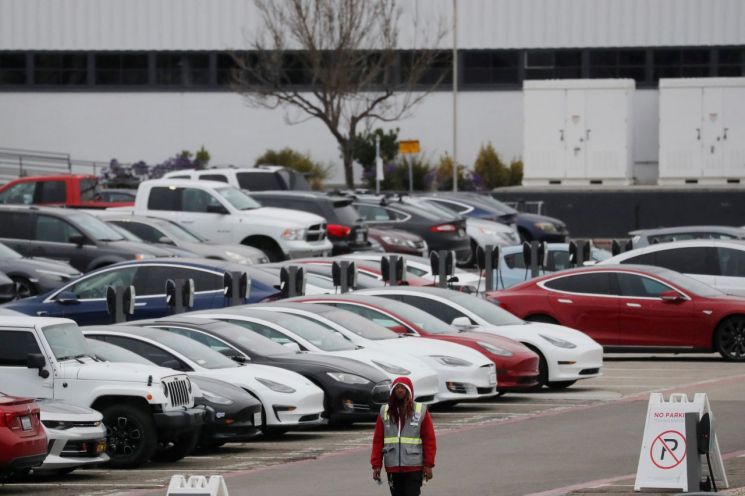
[Asia Economy reporters Choi Dae-yeol and Yoo Hyun-seok] The price of Tesla's Model 3 Long Range, a highly preferred electric vehicle in South Korea, recently increased by 4.5 million KRW to 78.79 million KRW. The cheapest Tesla electric car, the Model 3 Rear-Wheel Drive, rose by 2.3 million KRW to 66.99 million KRW. Most of the relatively expensive Model Y variants have also increased by nearly 20 million KRW compared to a year ago. The Tesla Model 3, which could be purchased for the 40 million KRW range with subsidies at its launch in 2019, now costs over 70 million KRW.
Tesla's frequently changing pricing policy is uncommon in the finished car industry. However, recently other manufacturers have also revised their pricing strategies simultaneously. This is due to the worsening parts supply shortage, centered on vehicle semiconductors, which emerged after COVID-19. The surge in demand for key raw materials across industries is also cited as a factor driving price increases.
Skyrocketing Car Prices Caused by Supply Chain Disruptions
The supply chain disruptions symbolized by the parts shortage in the automotive sector have spread throughout the global finished car industry, intensifying the imbalance between supply and demand. Although new car demand surged due to increased logistics demand from non-face-to-face consumption activities and pent-up demand, the backlog of deliveries caused by parts shortages remains unresolved.
As the 'supplier's market' situation continues, where customers must wait 1 to 2 years after ordering a vehicle, finished car manufacturers have all joined in raising prices. An industry insider said, "From the semiconductor companies' perspective, vehicle semiconductors have low profitability and are not highly preferred, so it takes several months to over a year to receive products after ordering. Although finished car companies are pursuing internalization or joint development, it is difficult to resolve this issue in the short term, so it is unlikely that the problem will be fully resolved next year."
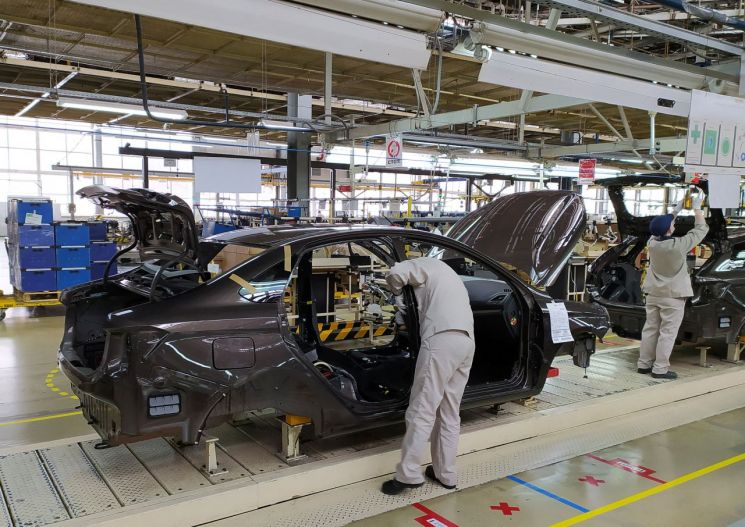
Unexpected variables such as Russia's invasion of Ukraine and lockdowns and factory shutdowns due to the resurgence of COVID-19 in China are also cited as factors hampering the tightly intertwined automotive industry supply chain. The finished car manufacturing process, which involves tens of thousands of parts, must be organically connected under a finely segmented division of labor by country and company to operate normally.
A representative example of supply disruption at the beginning of the COVID-19 outbreak in early 2020 was wiring harnesses. European makers like Volkswagen and Stellantis mainly source from Eastern Europe, while most finished car companies in South Korea and Japan receive supplies from factories in China. A finished car company official diagnosed, "During COVID-19, there were attempts to diversify supply chains across multiple countries and companies for key items, but it is difficult to easily change suppliers during vehicle development, and cost reduction cannot be ignored, so diversification of supply sources has not been widely achieved."
Supply Shortage Sparks Major Upheaval... "The Landscape is Changing"
The problem is that automotive industry supply chain issues are not easily resolved by fixing just one or two areas. Especially, the rapid transition to electric vehicles makes problem-solving even more difficult.
Demand for batteries, a core component of electric vehicles, is surging amid semiconductor shortages, and the prices of key raw materials for batteries are soaring, making securing supply challenging. Lee Hang-gu, senior research fellow at the Korea Automotive Technology Institute, said, "The semiconductor supply issue is likely to continue until 2024, and battery supply instability is worsening due to intertwined issues from mining development to processing facilities. If demand decreases due to interest rate hikes and inflation cooling the economy, it will be a direct blow to the automotive industry."
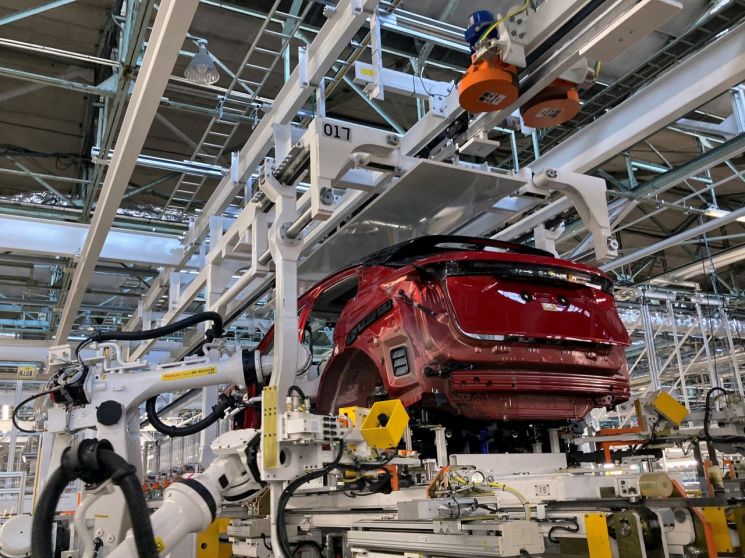
The supply chain issues hitting the automotive industry, combined with the 'period of upheaval' marked by vehicle electrification and the shift toward software-centricity, are expected to completely reshape the global automotive industry landscape. If parts supply normalizes and demand backlogs are resolved, competition among companies will likely be judged based on product competitiveness. An industry insider said, "Although there have been several waves of global finished car company failures and large-scale mergers and acquisitions since the 2000s, these have been rare in the past 2-3 years. New companies that are slow to transition to electric vehicles or lag in technological competitiveness will inevitably be sidelined in the market."
The active U.S. containment of China, which controls the supply chain of future automotive raw materials such as batteries, is also cited as a challenge to be addressed. Professor Kim Pil-soo of Daelim University said, "U.S. President Joe Biden's visit to South Korea to directly oversee future mobility and the electric vehicle industry, including batteries, reflects the considerable concerns about the automotive industry's convergence model. The role of the first mover has become even more important," he emphasized.
© The Asia Business Daily(www.asiae.co.kr). All rights reserved.














