SCMP "Class Providers Consider Payment and Delivery Delays or Possible Sanctions"
Import Value Increased but Import Volume Decreased
Especially Due to Sharp Decline in Domestic Demand in China from COVID-19 Lockdowns
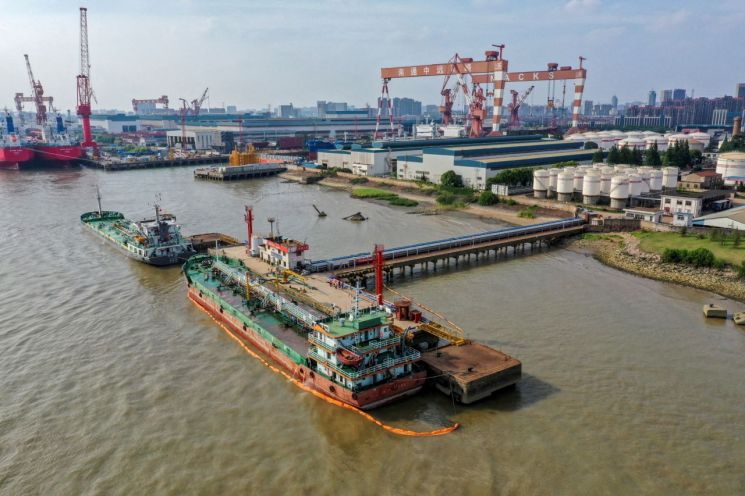
[Asia Economy Reporter Kim Hyun-jung] The Hong Kong South China Morning Post (SCMP) reported on the 23rd that China, which had been favorable to imports, is losing interest as Russian crude oil prices surge.
SCMP stated, "Chinese officials claim that normal trade with Russia will continue despite Western sanctions, but among Chinese importers, avoidance is already occurring," adding, "They are calculating whether Russian crude oil is cheap enough to compensate for the risks and uncertainties such as delayed payments or deliveries and the possibility of Western secondary sanctions."
Based on data from Chinese customs, SCMP estimated that about 80% of Russian products imported into China are minerals, with crude oil accounting for more than 70% of those imported minerals. SCMP forecasted that fluctuations in global crude oil prices will bring significant changes to China's total import volume of Russian products.
China's average crude oil import price in April rose 70.3% year-on-year, with Russian crude oil increasing by 50.9%. In March, China's imports from Russia increased by 26.39% in dollar terms compared to the previous year, with crude oil rising 29.93%. These figures jumped to 56.6% and 59.01%, respectively, in April.

However, the 'trade volume' tells a different story. Despite the increase in import value in March, the volume of Russian crude oil imports decreased by 14.12% year-on-year. This is similar to the 14% decline in total crude oil volume imported by China in the same month.
Mikhail Meidan, head of the China Energy Program at the Oxford Institute, explained, "Sanctions aimed at reducing Russian imports mean a reduction in Russian oil and gas supply in the global market, which in turn pressures the global market and raises prices. However, not all buyers can stop using Russian oil and gas, and even if volumes are cut, Russia's revenue could potentially be higher than before due to price increases."
SCMP also noted that although China's imports from Russia have increased, related contracts may have been signed before Russia's invasion of Ukraine. In particular, this may reflect expectations of strong demand growth in China before the resurgence of COVID-19.
Professor Zadao Zhong of Beijing International Studies University emphasized, "The decline in China's demand due to strict lockdown measures in Shanghai and various regions nationwide is the most decisive factor affecting Chinese oil companies' overseas purchases."
© The Asia Business Daily(www.asiae.co.kr). All rights reserved.












