Washing Substrates with Carbon Dioxide Instead of Water
Key Equipment Reducing Defect Rates in Fine Semiconductor Processes
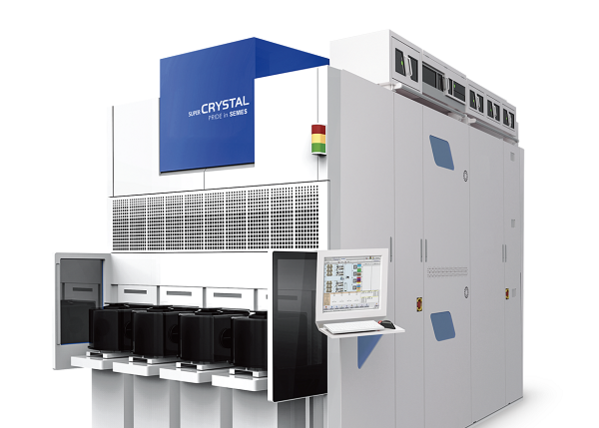
[Asia Economy Reporter Lim Juhyung] Former employees of Semes, a subsidiary of Samsung Electronics, have been brought to trial on charges of leaking core semiconductor equipment technology to China. The technology suspected to have been stolen by this group is the 'supercritical cleaning equipment,' which was developed for the first time in the world in Korea and plays a role in reducing the defect rate of fine semiconductors. It is a technology that supports the competitiveness of the Korean semiconductor industry. The government also recognized its importance and designated it as a 'national core technology.'
Cleaning equipment is a facility that cleans semiconductor substrates thoroughly. Typically, modern semiconductor industries operate at the nanometer (nm) scale, which corresponds to one hundred thousandth the thickness of a human hair. Even the smallest particles of dust or contaminants can cause fatal defects. Cleaning equipment is a key device that minimizes semiconductor defect rates by eliminating such variables.
In the past, cleaning was done using 'ultrapure water,' which is extremely refined water, but the problem was that water splashing during this process could damage semiconductor circuits. There was a risk that semiconductors could be damaged during the cleaning process.
As an alternative, cleaning equipment using 'supercritical carbon dioxide' was devised. 'Supercritical' refers to a state that is neither liquid nor gas, and this equipment removes impurities from semiconductor substrates using supercritical carbon dioxide, minimizing the impact on the circuits.
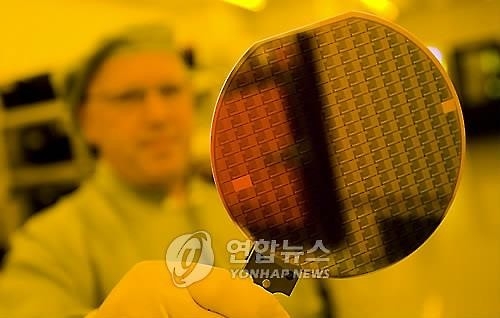 Supercritical cleaning equipment can wash the substrate without damaging the semiconductor circuit. / Photo by Yonhap News
Today, supercritical cleaning equipment is considered a core facility used in 10nm-class DRAM (RAM) and foundry semiconductor processes of Samsung and SK Hynix. Last year, the Ministry of Trade, Industry and Energy designated the design of supercritical cleaning equipment as a 'national core technology' and is protecting and managing it at the national level according to related laws.
Semes, the company to which the suspects under investigation belonged, was established in 1993 as a semiconductor equipment specialist company. It surpassed global competitors such as Lam Research and Tokyo Electron to commercialize supercritical cleaning equipment for the first time in the world.
Originally, it started as 'Korea DNS,' a joint venture between Samsung and Japan's Dainippon Screen (DNS), but changed its name to Semes after 2005. Currently, Samsung has purchased all shares of DNS and made it an affiliate.
According to last year's business report, Semes recorded annual sales of 3.128 trillion won and an operating profit of 353.3 billion won, becoming the only domestic semiconductor equipment company to surpass 3 trillion won in sales.
Meanwhile, on the 16th, the Defense Industry Technology Crime Division of the Suwon District Prosecutors' Office (Chief Prosecutor Lee Chun) indicted four people, including two former Semes researchers and two employees of parts suppliers, on charges of violating the 'Act on the Prevention of Unfair Competition and Protection of Trade Secrets.'
They are accused of manufacturing cleaning equipment identical to the equipment supplied only to Samsung since 2018 and transferring it to China. The prosecution is investigating on the grounds that some companies, which are Semes' partners and Samsung's secondary suppliers, were also involved in this process.
© The Asia Business Daily(www.asiae.co.kr). All rights reserved.













