Last Month's Consumer Price Index Increase Largest in 13 Years
Free Meal Centers Struggle Due to Food Price Hikes
More People Visiting Restaurants as Social Distancing Eases, No Clear Solution in Sight
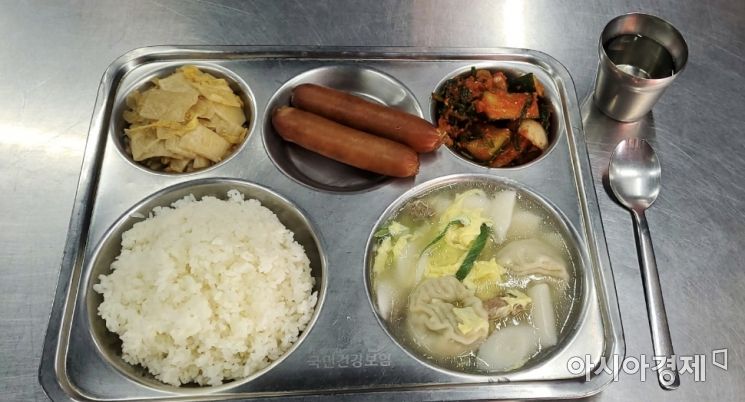
[Asia Economy Intern Reporter Lee Seohee] Amid the direct impact on ‘table prices’ caused by Russia’s invasion of Ukraine, free sharing restaurants for underprivileged groups are facing operational difficulties. This is due to a series of price increases, from groceries on household tables to non-mainstream beverages. Recently, with the easing of social distancing measures leading to a surge of people in restaurants, their concerns have deepened.
Recently, the steep rise in consumer prices continues. According to the ‘April 2022 Consumer Price Trends’ announced by Statistics Korea on the 3rd, consumer prices last month increased by 4.8% compared to the same month last year. This is the highest rate of increase in 13 years and 6 months since October 2008 (4.8%).
It is especially expected to have a significant impact on table prices. Agricultural, livestock, and fishery products, which had slowed in growth last month, rose by 1.9%, centered on livestock products (7.1%). Specifically, imported beef (28.8%), pork (5.5%), grapes (23.0%), domestic beef (3.4%), chicken (16.6%), and oriental melon (17.2%) saw significant increases.
As food ingredient prices rise, the concern is not only for ordinary households. Free meal centers for socially vulnerable groups have also turned on the ‘red light.’ The situation has become difficult as the burden of rising prices overlaps with limited finances.
The Hope World Welfare Center in Gangdong-gu, Seoul, recently reduced the side dishes provided to elderly living alone from five to three. Previously, a total of five side dishes including soup and meat were served, but now three side dishes such as soup, rolled eggs, and stir-fried anchovies are provided.
Park Se-hwan, team leader of Hope World Welfare Center, said, “The quantity and quality of the menu have significantly declined,” adding, “Previously, even if two bowls were served, it was sufficient, but now those who arrive late just leave.” Park also added, “Donations have decreased due to COVID-19, and with the rising prices, operational difficulties have worsened. We are struggling to operate by removing meat side dishes and adding other side dishes.”
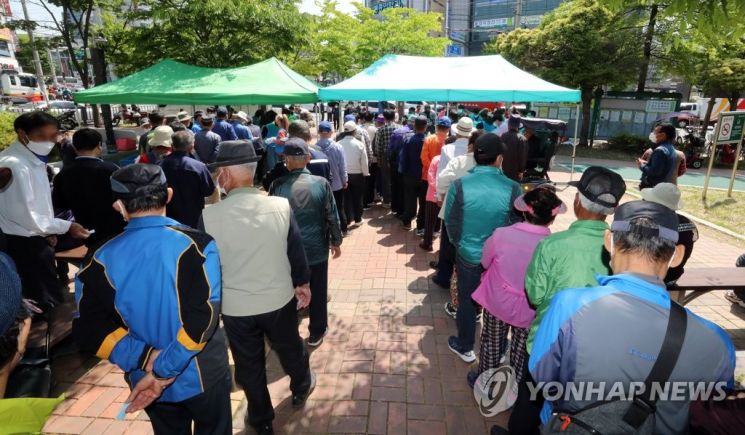 As social distancing measures have been fully lifted, free on-site meal services, which had been suspended for a long time, are resuming at Usan Neighborhood Park in Buk-gu, Gwangju. [Image source=Yonhap News]
The situation is similar at ‘Thomas’s House,’ a free meal center in Yeongdeungpo-gu, Seoul. Before COVID-19, Thomas’s House was bustling with about 360 visitors per day on average. However, during the COVID-19 period, the sharing method was changed to providing substitute meals such as Choco Pie and bananas, and from the 2nd, they resumed lunch service as before COVID-19.
Ms. Park Kyung-ok, who has been in charge of purchasing food ingredients and menu planning for 27 years at this place, said in response to a reporter’s question about feeling the price increase, “It seems that all food ingredients, including vegetables and Choco Pie, have increased by more than 30% in perceived terms.” Park said, “The most popular side dish is stir-fried pork, but due to the significant rise in beef and pork prices, it is difficult to prepare it generously. I am worried about how to organize the menu as more people will flock to the meal center in earnest.”
© The Asia Business Daily(www.asiae.co.kr). All rights reserved.












