[Seoul District News] Gwangjin-gu to Operate 131 Sunshades Early from the 18th; Enhancing Safety and Convenience through Smart and Parasol-Type Sunshade Maintenance... Forest Education and Recreation Programs Offered from April 1 to November at Gwanaksan Urban Natural Park for Physical and Mental Healing with Forest Program Instructors... Mapo-gu's Greening Project Resumes Daily Life with 'Citizen-Led Urban Greening Resident Proposal Project'... Geumcheon Urban Agriculture Experience Center Opens... Three Dongdaemun-gu Cooperatives Selected as Final 2022 Ministry of the Interior and Safety Village Enterprises
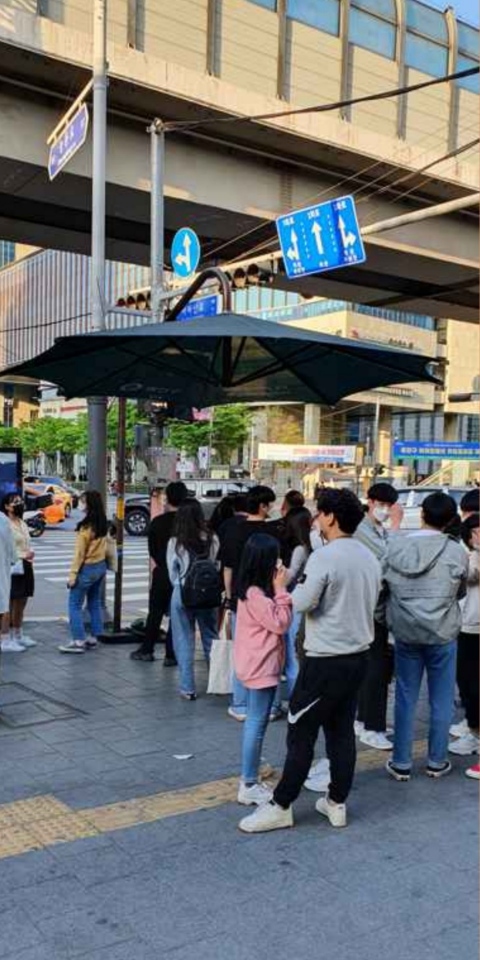
[Asia Economy Reporter Park Jong-il] Gwangjin-gu has advanced the operation of shade shelters to prepare for the heatwave starting April 18.
Originally, Gwangjin-gu planned to operate the shade shelters from May 15, but due to the Korea Meteorological Administration's forecast of early summer weather in April this year and expected higher-than-average summer temperatures, the operation was moved forward by about a month.
Accordingly, Gwangjin-gu conducted inspections for shade shelter operation, including ▲ checking the automatic opening/closing and any abnormalities of smart shade shelters ▲ collecting protective covers of parasol-type shade shelters and checking their open status ▲ inspecting the condition of shade shelters for bending, torn canopies, and damaged chairs.
Additionally, a service contract for maintenance and management of parasol-type shade shelters was also signed.
The shade shelters consist of a total of 131 locations, with 46 smart-type and 85 parasol-type. The smart-type includes 32 general types and 14 village bus IoT types, among which 4 general types and 2 village bus IoT types were newly installed last year to enhance residents' safety and convenience.
The heatwave-prepared shade shelters are scheduled to operate until September 30, and until the end of operation, management will continue through updating the SNS band of the person in charge, inputting and inspecting shade shelter status in NDMS (Disaster Management Portal), and other measures.
Um Eui-sik, Acting Mayor of Gwangjin-gu, said, “We aimed to enhance residents' safety and convenience during summer by starting shade shelter operation early,” adding, “We will continue to act proactively and respond for the residents to make Gwangjin a better place to live.”
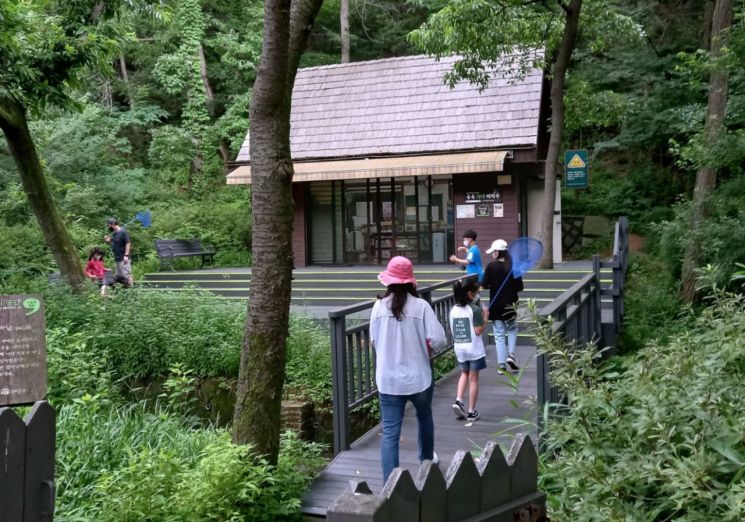
These days, as the immune-boosting power of nature and mental healing become more emphasized, not only hikers but also parents tired from daily life and children wanting outdoor activities are visiting Gwanaksan Urban Natural Park in family units.
Accordingly, Gwanak-gu simultaneously opened the ‘Gwanaksan Healing Center’ and ‘Forest Ecology Experience Center’ within Gwanaksan Urban Natural Park on April 1, offering various forest education and forest recreation programs every month until the end of November so that all generations can engage in forest activities.
The ‘Forest Ecology Experience Center’ has instructors on-site who run programs such as ‘Talking Trees, Reading the Forest’ for adults to understand and empathize with the forest by observing trees and wildflowers, and ‘Gwanak Forest Kids’ Forest Exploration Life’ for elementary students to observe forest plants. The center also stocks many forest-related books available for reading.
At the ‘Gwanaksan Forest Healing Center,’ various programs are provided for different age groups, including ‘Forest Touch’ for 4th graders and above, ‘Forest Pat’ for medical workers exhausted by COVID-19, and ‘Forest Soft’ for seniors aged 60 and above.
Especially, the non-face-to-face forest healing program ‘HOLO’ reduces concerns about disease transmission through interpersonal contact, leading to steadily increasing participation.
The outdoor program ‘Forest Interpretation,’ where participants stroll Gwanaksan and enjoy the forest, is open to all ages and operates as the ‘Forest Trail Walking Program’ themed on Gwanaksan’s barrier-free forest trails, valley forest trails, and Seoul Dulle-gil, and the ‘Forest Tiering Program’ where participants engage in ecological missions themselves.
Additionally, a ‘Gwanaksan Visiting School Forest Experience’ program is offered to local elementary schools to observe the ecology around the school.
To ensure smooth program operation, forest education experts such as forest interpreters and forest healing instructors are deployed on-site to provide greater enjoyment to participants.
Participation is available freely after applying through the Seoul Metropolitan Public Reservation Service (Education Courses → Nature/Science → search ‘Gwanaksan’), and for more detailed information about the programs, inquiries can be made to the Forest Ecology Experience Center, Forest Healing Center, or Forest Interpretation.
A district official said, “We hope residents exhausted by COVID-19 can enjoy psychological stability and physical health improvement through the forest education and forest recreation programs offered at Gwanaksan Urban Natural Park.”
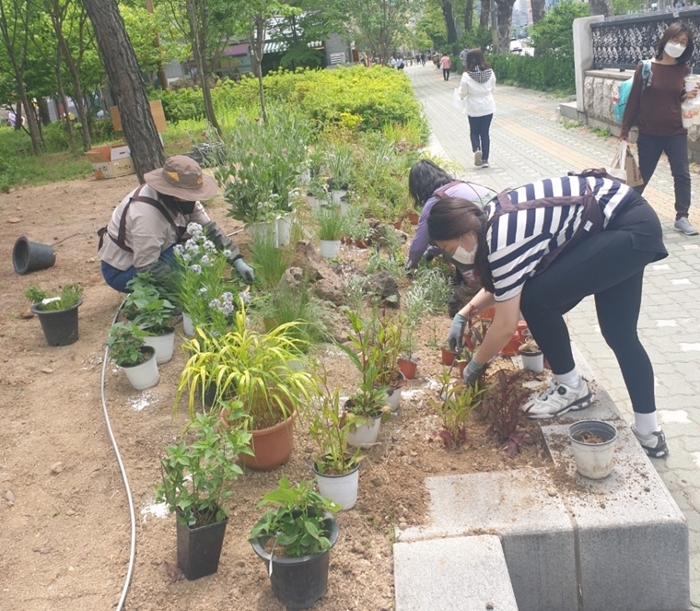
Mapo-gu announced that it will promote the ‘2022 Citizen-led Urban Greening Resident Proposal Project’ starting in April. Following the lifting of COVID-19 social distancing on the 18th, residents can now actively engage in greening projects by gathering in their living spaces to plant flowers and trees.
This greening project is part of Seoul’s ‘Seoul Blooms with Flowers’ campaign and supports residents within Mapo-gu to create gardens in neighborhood alleys, vacant spaces in apartment complexes, commercial areas, and schools by providing greening materials and subsidies.
To participate in this project, 40 resident communities applied in February, and after Seoul city’s review, 23 groups were finally selected.
The district supports a total of 116 million KRW, providing greening materials to 15 groups including Mapo Xi and subsidies to 8 groups including Bando Yubora Island. The project runs until November this year, with 362 residents participating to cultivate 9,155㎡ of gardens.
The representative of Bando Yubora Island, selected for subsidy support, said, “We look forward to residents voluntarily planning and participating in creating gardens,” adding, “We plan to expand the gardens we create into community communication spaces such as flea markets.”
A district official said, “We hope residents’ voluntary participation will transform living spaces throughout the area into beautiful gardens,” and added, “This greening project is expected not only to create gardens but also to break down barriers between neighbors that have grown distant due to COVID-19.”
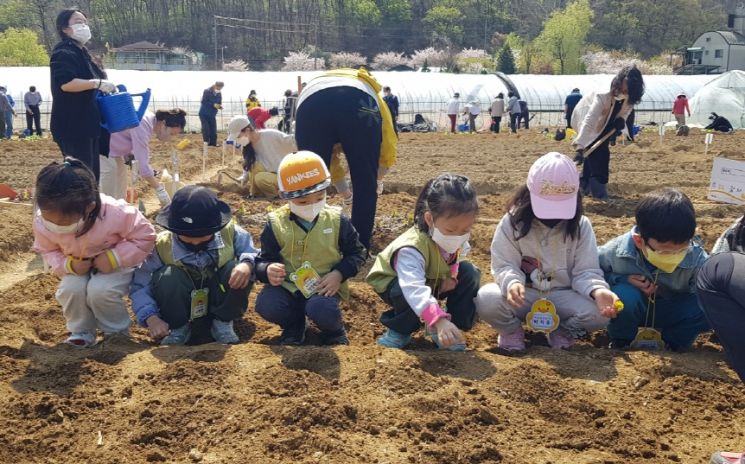
Geumcheon-gu (Mayor Yoo Sung-hoon) opened the ‘Geumcheon Urban Agriculture Experience Center’ over two days on the 15th and 16th.
Geumcheon-gu operates urban agriculture experience centers along the Anyangcheon Geumcheonhan-naegyo area (719-5, Doksan-dong, left bank) and 332 Ha-an-dong, Gwangmyeong City, allowing residents to cultivate and grow crops by hand and experience agriculture within the city.
The opening ceremony included a declaration, field inspection, drafting of operating regulations and guidance on precautions, agricultural education, and distribution and planting of seedlings. Notably, the operating regulations prohibit the use of heavy metal fertilizers and highly toxic pesticides, laying the foundation for eco-friendly urban agriculture experience center operation.
For residents unfamiliar with agricultural activities, urban agriculture experts from the Seoul Agricultural Technology Center were invited to provide on-site education on seedling planting methods, sowing, and vegetable management.
With warm weather continuing, residents who received allotments gathered in family units from elders to children to till the soil and plant seedlings.
The Anyangcheon Urban Agriculture Experience Center consists of 250 plots, each 10㎡ in size, allocated to 250 residents through a public lottery held in March. The Gwangmyeong Urban Agriculture Experience Center specially allocated 50 plots for daycare children and seniors at Hoam Senior Welfare Center.
A resident who received a plot said, “Winning was as hard as winning the lottery,” expressing excitement about the fun of growing food by hand in the garden.
Yoo Sung-hoon, Mayor of Geumcheon-gu, said, “I hope the Geumcheon Urban Agriculture Experience Center becomes a place where residents tired in body and mind regain vitality by planting and cultivating vegetables,” adding, “We will continue to strive to provide various agricultural experience opportunities to residents.”
Dongdaemun-gu (Mayor Yoo Deok-yeol)’s village enterprises ‘DDM Maker Cooperative,’ ‘Cultural Platform Siminnaru Cooperative (photo),’ and ‘Kkumasi Cooperative’ were selected as village enterprises designated by the Ministry of the Interior and Safety for 2022.
This is the highest number among village enterprises in Seoul’s autonomous districts selected this year.
In particular, ‘DDM Maker Cooperative,’ which educates and nurtures career-interrupted women and young job seekers as makers, and ‘Cultural Platform Siminnaru Cooperative,’ which collects and preserves records of Dongdaemun-gu using media such as magazines, videos, and podcasts, were designated as Seoul preliminary village enterprises in July 2020, new village enterprises in February 2021, and this year were finally selected as Ministry of the Interior and Safety re-designated village enterprises.
Also, ‘Kkumasi Cooperative,’ established by parents of people with developmental disabilities to provide care services, was selected as a new village enterprise by the Ministry of the Interior and Safety. It was designated as a Seoul preliminary village enterprise in June last year. The three village enterprises each receive 50 million KRW in project funds and consulting support including management counseling and sales channel support.
‘DDM Maker Cooperative’ was formed by participants of the Dongdaemun-gu maker training program conducted in 2019. Members who had difficulties in employment and entrepreneurship, such as career-interrupted women and young job seekers, established the cooperative in January 2020 to educate and nurture people facing similar challenges as makers. In 2021, it provided educational services to more than 20 public institutions and led innovative education in local educational institutions.
‘Cultural Platform Siminnaru Cooperative’ is a cooperative that records Dongdaemun-gu ‘by residents, of residents, for residents’ using media. Designated as a new village enterprise in 2021, it developed and produced media content such as ‘Interview, Village People’ and ‘Small Cultural Salon.’ Notably, the village media ‘Interview, Village Connection’ completed its first three-year season and published a book through crowdfunding.
‘Kkumasi Cooperative’ was established in June 2021 by parents of people with developmental disabilities after participating in the social economy learning club ‘Alumni Association’ organized by the Dongdaemun-gu Social Economy Support Center in May 2020. Although less than a year old, since starting regular child care in August 2021, it has provided a total of 117 hours of care and 42 external instructor programs within four months, steadily establishing its position.
Yoo Deok-yeol, Mayor of Dongdaemun-gu, said, “I am pleased that our efforts to solve common local problems using local resources and create jobs have borne good fruit,” adding, “We will continue to focus on fostering social economy through nurturing village enterprises.”
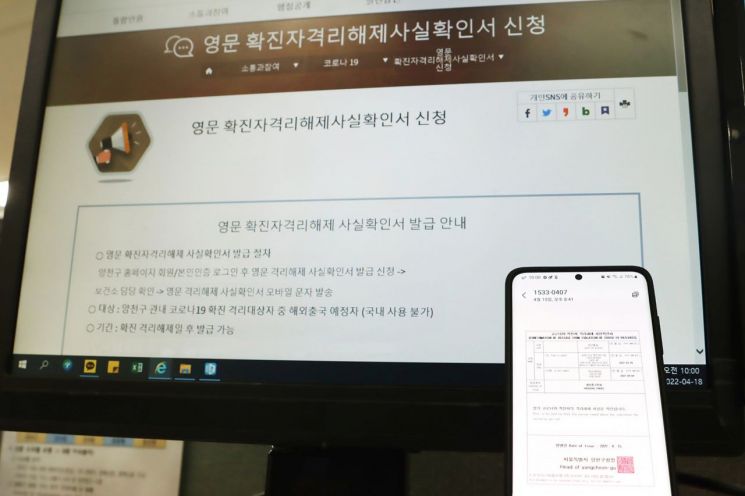
Yangcheon-gu (Mayor Kim Soo-young) has been operating the ‘COVID-19 English Quarantine Release Confirmation Online Application and Issuance Service’ in full swing since the 15th.
As COVID-19 stabilizes recently and demand for overseas travel increases, the number of civil complaints for issuing English quarantine release confirmation letters (hereafter ‘English confirmation’) required for overseas entry and exit has surged.
In response to the increasing demand for English confirmation issuance, the district greatly improved the existing procedure, which was only available by visit application, and established a non-face-to-face online application and issuance system.
The English confirmation is issued only to confirmed COVID-19 quarantine subjects within the district who plan to travel abroad and cannot be used domestically.
The issuance method is ▲ access the English confirmed patient quarantine release confirmation issuance guide section on the district office website ▲ log in as a member or verify identity as a non-member on the district office website and apply for issuance. When applying, the English name must be entered exactly as it appears on the passport, and quarantine information and address must be accurately provided.
The health center verifies confirmation status through the COVID-19 management system and sends the English confirmation via text message to the applicant within 1-2 working days.
Additionally, for digitally vulnerable groups who find online application difficult, visit applications are also accepted. Proxy applications by guardians are possible through guidance links provided when calling the Yangcheon-gu COVID Integrated Call Center.
The district expects that establishing a non-face-to-face online issuance system without visiting the health center will greatly reduce residents’ inconvenience.
Prior to this, since the 6th, the district has been operating ‘24-hour automatic text message sending’ and ‘online issuance’ services for COVID-19 quarantine notices. So far, over 5,600 cases have been issued, greatly contributing to improving convenience for residents regarding COVID-19 documentation.
A health administration official said, “We established a non-face-to-face online issuance system so that residents can easily apply for necessary documents in line with the increasing demand for overseas travel,” adding, “We will continue to do our best to implement convenient administrative services from the user’s perspective.”
© The Asia Business Daily(www.asiae.co.kr). All rights reserved.














