It Costs 485,000 Yuan (91.55 Million KRW) to Raise a Child Until 18 in Chinese Households
7 Times Per Capita GDP... Higher Than 4.11 Times in the U.S. and 4.26 Times in Japan
[Asia Economy Reporter Kim Hyunjung] A study has found that allowing foreign nannies in China could increase the birth rate by 2 percentage points.
On the 24th, Hong Kong's South China Morning Post cited a recent report by YuWa Population Research, stating, "If regulations are relaxed to allow the employment of 3 million foreigners as nannies, China could increase its annual number of newborns by 200,000." The report estimated that family living expenses could be reduced by 200 billion yuan (approximately 37.756 trillion KRW), and the savings could raise China's birth rate by 2 percentage points.
The report estimated based on Hong Kong's situation, where the minimum wage for domestic helpers is 4,630 Hong Kong dollars (about 700,000 KRW) per month. It analyzed that hiring foreign nannies could reduce family living expenses by 60% in China, where the average monthly salary for nannies in major cities is around 10,000 yuan. According to 2019 statistics from the Hong Kong government, this city of 7.5 million people has 400,000 foreign domestic helpers, most of whom are from the Philippines and Indonesia. Their numbers decreased to 373,884 last year.
China is encouraging parents to have up to three children amid a growing population crisis caused by rapid low birth rates and aging. However, the report explains that financial burdens such as education and housing, which are among the highest in the world in China, are dampening these 'birth encouragement' efforts. According to the report, the average cost to raise one child until age 18 in a Chinese household is 485,000 yuan, which is seven times the per capita gross domestic product (GDP). In comparison, it is 4.11 times in the U.S., 2.08 times in Australia, and 4.26 times in Japan. Costs are much higher in major cities, exceeding 1 million yuan on average in Shanghai. Beijing is around 970,000 yuan, and Zhejiang Province about 720,000 yuan.
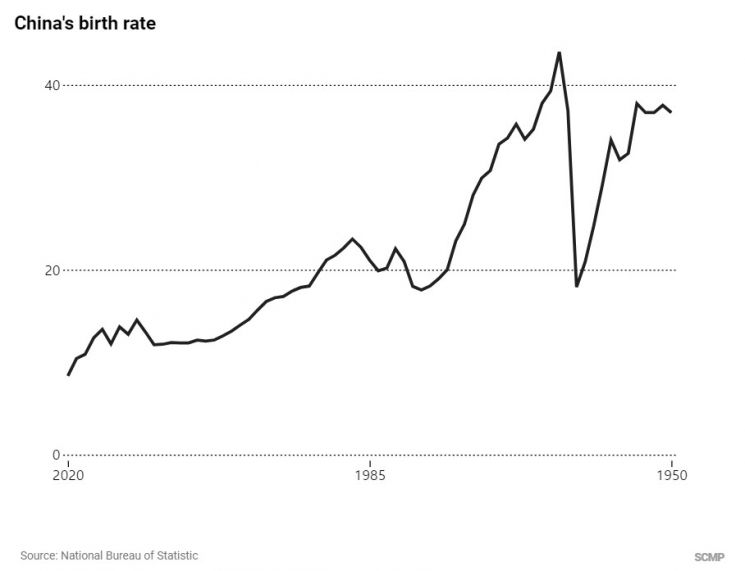
Last year, Chinese women gave birth to 10.62 million children, a decrease of 11.5% from 12 million in 2020. The crude birth rate, which indicates the number of newborns per 1,000 people, dropped to 7.52 last year from 8.52 in 2020, marking the lowest level since statistics began in 1978.
Additionally, the report suggested supporting assisted reproductive technologies such as artificial insemination and protecting the rights of children born out of wedlock. Unlike the U.S. or Europe, China does not disclose birth rates for children born to unmarried women.
© The Asia Business Daily(www.asiae.co.kr). All rights reserved.












