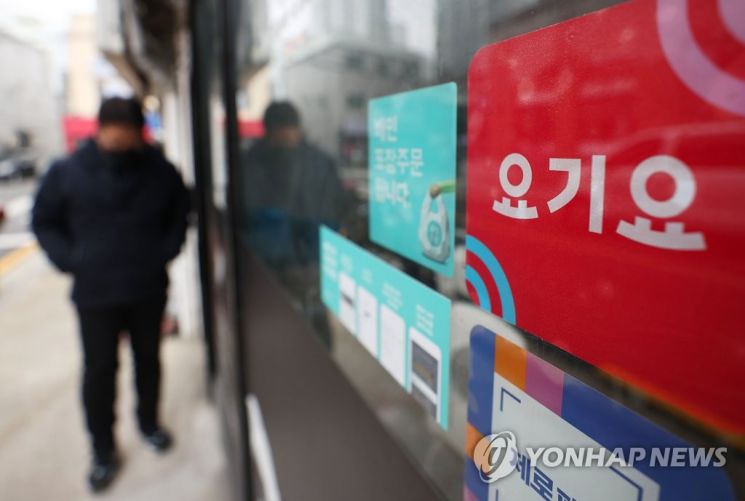
 In 2019, Germany's Delivery Hero complied with the Fair Trade Commission's request by selling its existing delivery service 'Yogiyo' in Korea and acquiring the industry leader 'Baedal Minjok'.
 [Photo by Yonhap News]
[Asia Economy Reporter Kwon Seo-young] Delivery Hero, a German company that has been expanding its business by acquiring South Korea's food delivery service 'Baedal Minjok,' has reportedly withdrawn its services in its home country.
On the 22nd (local time), foreign media including Bloomberg reported that Delivery Heroes would discontinue its food delivery service under the brand 'Foodpanda' in six German cities including Frankfurt, maintaining only a trial service in Berlin. They also added that the subsidiary that started operations in Japan last September is expected to be sold or closed within the first quarter of next year.
Delivery Hero started as a food delivery service venture in 2011. In 2019, they sold their delivery service in Germany to the Dutch 'Just Eat' group and acquired South Korea's delivery service 'Baedal Minjok,' marking the beginning of their full-scale overseas market expansion. However, this year, with the entry of other delivery services such as the American Uber and Finnish Wolt into the German market, competition in the home country’s delivery service industry has intensified.
The challenging environment in Germany, where it is difficult for delivery services to establish themselves stably, has also been a problem. On the 11th, The Economist cited strict labor laws, strong unions, high wages for unskilled workers, and customer culture as reasons why Germany has become a tough market for food delivery services. Since policies to protect delivery workers are stringent, delivery costs are rising, and consumers are losing willingness to pay high prices for delivery services, making it inevitable for delivery companies to struggle.
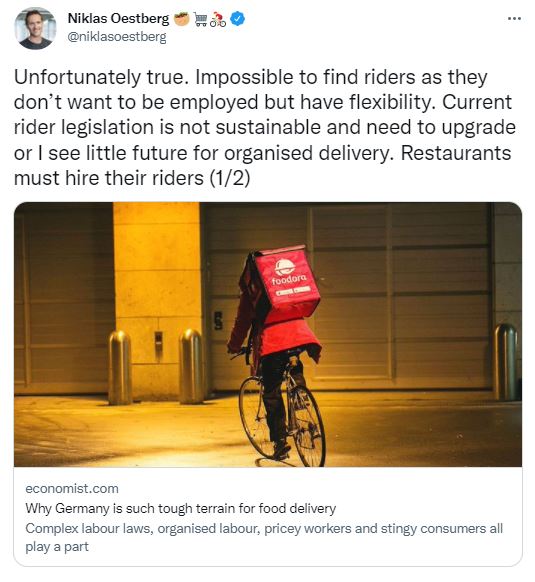 Niklas Ostberg, CEO of Delivery Hero, criticized the reality of the German delivery service industry. He pointed out that the laws applied to delivery workers are acting as barriers to the industry.
 [Photo by Social Networking Service (SNS) capture]
Delivery Hero’s business performance was also affected. In the first half of this year, Delivery Hero’s deficit reached 918 million euros (approximately 1.26 trillion KRW), double that of the previous year. Until now, Delivery Hero had focused on increasing the number of delivery orders rather than boosting profits, but under pressure from shareholders for actual earnings, business withdrawal became unavoidable.
Regarding the withdrawal of Foodpanda, Niklas ?stberg, CEO of Delivery Hero, explained the reason, saying, "Although the Foodpanda teams in Germany and Japan have shown excellent performance, it is becoming increasingly difficult to create real value in our ecosystem in these two countries." On the 10th, he also tweeted, "It is difficult to find delivery riders in Germany, and related laws are unsustainable, making it hard for the delivery industry to settle. While 120 million deliveries are made monthly in South Korea, deliveries in Germany barely reach 2 million."
The Financial Times reported this, interpreting that the intensified competition in the German market and the increased cost of securing delivery workers were the main reasons for Foodpanda’s withdrawal.
Delivery Hero is expected to focus more on delivery businesses in the Asian region in the future. More than half of its sales already come from Asian countries including South Korea, and the delivery market in Southeast Asia is rapidly growing.
© The Asia Business Daily(www.asiae.co.kr). All rights reserved.












