Dr. Jin Hee-sun, who passed the 1987 Technical High Civil Service Exam and served 32 years in Seoul city government until retiring as Seoul Deputy Mayor for Administration in 2020, publishes another major work, "Professor Jin Hee-sun's Analysis of Black Hole Gangnam Apartment Nation," following "Real Estate Trends in Korea as Told by the Seoul Deputy Mayor."
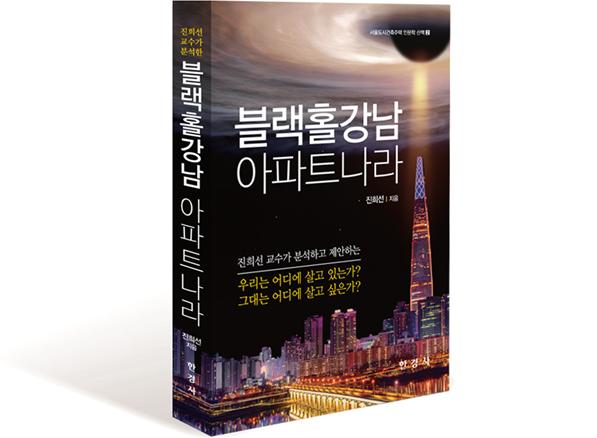
[Asia Economy Reporter Jong-il Park] Dr. Jin Hee-seon, who served in public office in Seoul for 32 years from passing the 1987 Technical High Civil Service Examination to retiring as the 2nd Deputy Mayor of Seoul in 2020, has published another major work titled Black Hole Gangnam Apartment Nation Analyzed by Professor Jin Hee-seon, following her previous book Real Estate Trends in Korea as Told by the Deputy Mayor of Seoul.
After retirement, Dr. Jin has been serving as a special professor in the Department of Urban Engineering at her alma mater, Yonsei University. She worked with the belief that public officials are “people who lay the foundation for society to move in a good direction.” Throughout Korea’s era of rapid growth, she was at the forefront of policy formulation and implementation encompassing housing and urban architecture?from housing supply through reconstruction and redevelopment projects like New Town developments, to urban planning and management for global city growth, and people-centered urban regeneration.
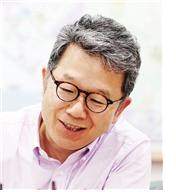
As a doctor of urban planning with a background in architectural engineering, she has been dedicated to nurturing future scholars by passing on her academic knowledge and field experience. She believes that urban development and the real estate market, which are among the biggest issues in our society today, ultimately connect to human desires, and thus solutions require a prior understanding from the humanities perspective. Based on this, she has authored the series Seoul Urban Architecture and Housing Humanities Walk.
This book, Black Hole Gangnam Apartment Nation, analyzes the causes of real estate problems focusing on three key issues: concentration in Gangnam, apartment demand concentration, and the low rate of homeownership.
She emphasizes that now is the time to clearly expose these problems and improve the instability factors in the housing market that cause great public concern whenever housing prices fluctuate.
As the economic impact of the financial crisis recovered, real estate prices began to rise significantly from 2015 and continued without pause even in 2021, six years later. Although the government announced 25 real estate stabilization measures over the past four years, the real estate market remains unstable. Since July 2021, pre-subscription for apartments in the 3rd New Towns has been underway, showing some results in housing supply policies, but the public still worries greatly about housing prices.
The author, after completing 32 years of public service in Seoul, spent the past year deeply studying the trends and future prospects of Korea’s real estate prices. Based on her direct and indirect experience in housing policy during her public service, she collected data and researched related papers and news articles.
The amount of real estate data was overwhelming. Simply entering keywords like “real estate” or “housing prices” into portal search bars yields an enormous amount of related information. Having so much data was both a blessing and a curse. Reading through vast materials and sorting out the necessary threads was a great ordeal. Establishing a logical framework based on her experience and organizing it into writing was an even greater challenge. When her thoughts dulled from typing all day in the university lab, she would pack her bags and live alone in Jeju for dozens of days or stay in a mountain temple for weeks to soothe her mind and body.
Housing prices have maintained an upward trend despite three major crashes over the past 30 years
The author sought to understand the real estate market trends over a broader framework by examining housing policies and price trends from the Roh Tae-woo administration to the Moon Jae-in administration over the past 30 years. Although there were three major price drops during this period, housing prices repeatedly recovered and continued to rise. Following the government’s announcement in 1988 of a policy to build 2 million homes, the first phase of New Town apartments was completed and occupied starting in 1991, leading to a decline in Seoul Gangnam housing prices and maintaining stability for eight years. The 1998 IMF foreign exchange crisis caused a housing price crash, but prices recovered by 2001 after overcoming the crisis and then rose for eight years.
In 2008, the global financial crisis caused prices to fall again, but they bottomed out in 2014 and began rising from 2015. Although the upward trend seemed to slow in 2021, it is still ongoing and the housing market remains unstable.
Over the past 30 years, despite the extraordinary supply of 2 million homes and two external shocks?the foreign exchange crisis and the financial crisis?that caused three price drops, Seoul apartment prices have increased sixfold after recovery periods. Some areas have seen increases of more than tenfold, but overall, the average apartment price in Seoul rose six times.
However, a detailed look at recent housing price trends reveals a peculiar fact: the epicenter of price increases has always been Gangnam, with the highest rate of price growth. Apartments priced over 100 million KRW per pyeong (3.3 square meters) have surged, making comparisons with prices in provincial cities or even northern Seoul impossible. The gap between Gangnam and northern Seoul prices continues to widen. Gangnam has become a black hole that absorbs everything in Korea.
Another unique phenomenon is the concentration of housing demand on apartments. To cope with the annual increase of 40,000 to 50,000 household splits, the government and Seoul city have converted hotels and neighborhood facilities into studio apartments and purchased multi-family and multi-household units around 20 pyeong to provide public rental housing for 2-3 person families. However, the housing market response was lukewarm. Everyone wants apartment complexes with good living environments. Although over 70% of newly built housing each year are apartments, supply still falls short of demand. Why has Korea become a nation of apartments?
Black Hole Gangnam Apartment Nation Korea
Along with rising housing prices, monthly rent and deposit prices have also surged recently. To stabilize the rental market and strengthen tenant rights, the government implemented the “3 Lease Laws.” However, opposition parties and some experts criticize these laws for further driving up rent prices. Temporally linked to this, the conversion rate from jeonse (lump-sum deposit lease) to wolse (monthly rent) increased, sparking debates over whether jeonse is “good” and wolse is “evil.” Some media even likened homeowners to tenant farmers and renters to sharecroppers, criticizing the government’s public rental housing policies. Since many people rent others’ homes, rising housing prices make owning a home seem unattainable, causing pain, and rising rents mean immediate additional costs, leading to despair.
【Three Key Issues】 Low homeownership rate, Gangnam concentration, apartment demand concentration
Through her 30 years of real estate research, the author focused on three key issues: Gangnam concentration, apartment demand concentration, and the homeownership rate. She examined why these unique phenomena occur in Korea, unlike other countries, analyzed the problems, and sought solutions. These phenomena stem partly from Korea’s division history and partly from inertia in systems established during the development era. They are also results of rapid growth over recent decades. Since these three issues arose during Korea’s growth and development, they must be clearly exposed and improved now. Otherwise, they will become obstacles to Korea’s future development and remain sources of housing market instability, causing great public concern whenever housing prices fluctuate.
[Issue · Low Homeownership Rate] The Three Major Functions of Housing (Residence, Asset, Pension)
The first issue is the homeownership rate?the proportion of people living in their own homes. Nationwide, 6 out of 10 people live in their own homes, while 4 rent. In Seoul, the ratio is reversed: 4 out of 10 own their homes, and 6 rent. Homeownership can be subdivided into ownership rate and occupancy rate, since some people own homes but rent elsewhere. Thus, ownership rate is higher than occupancy rate by about 3% nationwide and 5% in Seoul. Interestingly, since detailed housing statistics began in 2006, the homeownership rate has hardly changed.
Especially since 2005, 7.7 million households were added nationwide and 500,000 in Seoul, yet the homeownership rate remained fixed at 6:4 nationwide and 4:6 in Seoul. What happened? It means multi-homeowners increased proportionally. Housing supply became good prey for multi-homeowners. As of 2020, there were 2.28 million two-homeowners nationwide and 390,000 in Seoul. Many registered as housing rental business operators under the government’s December 2017 plan to activate rental housing registration, receiving tax benefits on capital gains, property tax, rental income tax, and health insurance premiums.
The author focused her research on raising the homeownership rate to reduce housing market instability and promote residential stability for the public. Housing has three major functions: living, property, and pension. Owning one’s home increases residential stability and reduces anxiety even when prices fluctuate. Over the past 30 years, housing prices have generally risen with economic development and income growth, thus housing serves as an asset accumulation tool. Owners can expand their homes and increase assets. Statistics show housing price increases outpace economic growth and inflation. Retirees can use reverse mortgages to receive monthly housing pensions. Renters must pay monthly rent, but homeowners receive monthly housing pensions, improving their economic conditions. Therefore, the author advises readers to buy a home within their means at an appropriate time. The government should also focus policies on increasing homeownership rates.
[Issue · Gangnam Concentration] Gangnam, a Cold War Legacy, Now Korea’s Black Hole
The second issue is Gangnam concentration. Recent housing price trends show Gangnam prices far outpace other regions. Developed during the 1970s as a Cold War measure to address military security and Seoul’s population concentration, Gangnam has become a black hole absorbing everything in Korea. Starting with the 1970 South Seoul Plan, Gangnam’s development was completed over 30 years, and by 2000 it had become Korea’s economic, financial, and cultural center. Farmland turned into residential land, subway Line 2 stations opened, and commercial zones were designated, causing Gangnam real estate prices to skyrocket. The movie Gangnam 1970 depicts the fierce human desires racing toward Gangnam land. Gangnam symbolizes modern Korean history and concentrates Korea’s power and desire. It is both an object of envy and aspiration. Our desires are dualistic.
Until 2000, housing prices in Gangnam and northern Seoul were similar. After overcoming the 2001 foreign exchange crisis, prices rose, and the gap between Gangnam and northern Seoul began to widen. Even after the 2008 financial crisis, Gangnam prices surged ahead from 2015. Now, even middle-class people find it nearly impossible to buy homes in Gangnam.
Why did this happen? Gangnam was developed with full political and administrative support for 30 years from 1970, reaching near parity with northern Seoul by 2000. After 2000, development continued along the Gyeongbu Expressway axis centered on Gangnam, expanding the city and connecting metropolitan infrastructure, accelerating Gangnam concentration. Gangnam has become not just Seoul’s center but Korea’s black hole.
Gangnam, which absorbs all political, economic, cultural, and educational resources in Korea?blessing or curse? How should we deal with the accelerating black hole that is Gangnam? Housing prices rise accordingly. Without solving the Gangnam black hole problem, it is difficult to resolve housing issues centered on Gangnam.
[Issue · Apartment Demand Concentration] The Evolution of Apartments and the Decline of Low-rise Residential Areas
The third issue is the concentration of housing demand on apartments. Apartments are not a traditional Korean housing form but an imported foreign style. The first complex apartment was built in 1964 in Mapo-gu, Seoul. Initially unpopular due to rumors of coal gas poisoning in high-rise buildings, apartments quickly became a mass housing supply method from the 1970s alongside Gangnam development. Apartments efficiently accommodated Seoul’s growing population. In 1984, joint redevelopment involving construction companies was introduced to renovate northern Seoul’s slums, demolishing all slums and replacing them with apartments. Through Gangnam new town development and northern slum redevelopment, apartments became Seoul’s representative housing type. Detached houses (including multi-family) accounted for 88.4% of Seoul housing in 1970 but only 30% in 2020, while apartments rose from 4.1% in 1970 to nearly 50%. One in two Seoul citizens lives in an apartment.
In provincial areas, apartments often suddenly appear in the middle of farmland. Korea has become an apartment nation, an apartment republic. Until the 2000s, apartment prices were similar to detached or row houses. After the foreign exchange crisis and from 2001’s housing price rise, apartments pulled ahead in price. Large construction companies entered the apartment market competing on scale, branding, and specialized designs, upgrading apartments to luxury status.
Parking moved underground, and above ground, elegant parks with trees, benches, ponds, and waterfalls were created. Children’s playgrounds, resident health centers, coffee shops, and study rooms exclusive to residents were added. Large apartment complexes even have swimming pools and golf practice ranges. CCTV ensures privacy, security, and crime prevention. Air purification systems combat fine dust, and AI technology integrates smart home features. Apartment living environments have become extremely convenient, safe, and pleasant. Over the past 20 years, apartments have evolved to become the “king of housing.”
Conversely, low-rise residential areas transformed as multi-family and multi-household systems were introduced, replacing single-family houses with villas housing 5-8 families. Living environments deteriorated due to lack of parking, parks, privacy, ventilation, sunlight, and weak security. Small-scale builders constructed villas cheaply, causing conflicts with owners and neighbors. While apartments were built to accommodate Seoul’s population concentration, multi-family houses were also built, resulting in contrasting outcomes over time. Now, low-rise residential environments must be innovatively improved to disperse apartment demand and encourage diverse housing types. People seek apartments not because they prefer them, but because there is nowhere else to go.
The author believes these three housing issues in Korea must be resolved now and offers alternatives. Without solving them, housing market instability cannot be eased, nor can the Gangnam-centered apartment demand problem be addressed.
This book is best read alongside the first volume of the Seoul Urban Architecture and Housing Humanities Walk series, Real Estate Trends in Korea as Told by the Deputy Mayor of Seoul. While the first volume discusses overall real estate trends, this second volume delves deeply into the three core contentious issues in Korea’s real estate.
Structure of the Book
【Chapter 1: Where Do We Live?】 Overview of housing residence types such as ownership and renting, analysis of the trend and reasons for the shift from jeonse to wolse, discussion of the 3 Lease Laws amendment debate, and examination of foreign rental systems.
【Chapter 2: Korea’s Black Hole Gangnam】 Exploration of how Gangnam, born as a Cold War product, became Korea’s center and the epicenter of housing price rises, and discussion of the problems and solutions of “Korea’s Black Hole Gangnam.”
【Chapter 3: Apartment Nation Korea】 Overview of apartment development history, diagnosis of the causes of concentrated apartment demand, examination of poor living conditions in low-rise residential areas, and proposals for improving residential environments.
【Chapter 4: New Towns?Light and Shadow】 Analysis of the positive impact of New Town projects on northern Seoul’s residential environment from a regional balanced development perspective, and review of problems and remediation processes. The “Three Faces of New Towns” looks at the development processes of three types: Gireum, Eunpyeong, and Wangsimni New Towns.
【Chapter 5: Where Do You Want to Live?】 Proposals to solve the three major real estate market issues in Korea. First, measures to reduce market instability and promote middle-class residential stability by increasing homeownership rates. Second, national and regional balanced development strategies to solve the Gangnam black hole problem. Third, dreams of reviving low-rise residential areas to diversify housing types and resolve apartment demand concentration.
◆Publisher’s Review
The Three Core Issues of Korea’s Real Estate Problem
Black Hole Gangnam, Apartment Demand Concentration, and Rental Market Predicament
Clear Solutions Presented
Korea’s Black Hole Gangnam Absorbing Everything
Surging Apartment Demand and Deteriorating Low-rise Residential Areas
Despite Increased Housing Supply, 6 out of 10 People Remain Renters
In an era where fairness and justice are widely discussed, these three core issues must be resolved now to alleviate polarization.
The recent surge in housing prices has become one of the most sensitive issues facing Korean society. Especially the rise centered on Gangnam apartments far outpaces other regions. Developed during the 1970s as a Cold War measure to address military security and Seoul’s population concentration, Gangnam has become a black hole absorbing everything in Korea. Gangnam symbolizes modern Korean history and concentrates Korea’s power and desire. It is both an object of envy and aspiration. Dual desires coexist in Gangnam and apartments.
The real estate problem symbolized by Gangnam apartments is stuck between the capitalist market logic advocating supply and deregulation as solutions and the moral argument emphasizing blocking speculative demand. Meanwhile, the younger generation, represented by youth, finds homeownership a symbol of polarization that cannot be achieved through fair opportunity and effort.
To cope with the annually increasing household splits, the government and Seoul city converted hotels and neighborhood facilities into studios and purchased multi-family units around 20 pyeong to provide public rental housing for small families, but the market response was poor. Instead, ridicule such as “hotel beggars” proliferated. Everyone wants apartment complexes with good living environments. Yet, although over 70% of newly built housing each year are apartments, supply falls short of demand. Since detailed housing statistics began in 2006, the homeownership rate has remained almost unchanged for 15 years at 6:4 nationwide and 4:6 in Seoul. Even with 7.7 million new homes nationwide and 500,000 in Seoul since 2005, the homeownership rate remains fixed. What is happening in Korea’s real estate?
Now is the time for all participants in society to establish and implement desirable policies based on a sober recognition of reality to move away from the abnormal inequality and polarization caused by unprecedented housing price rises in history and return to a normal path.
The author, through 30 years of real estate research, focused on three key issues: Gangnam concentration, apartment demand concentration, and homeownership rate. She examined why these unique phenomena occur in Korea, analyzed the problems, and sought solutions.
These three unique phenomena stem partly from Korea’s division history and partly from inertia in systems established during the development era. They are also results of rapid growth over recent decades. Since these three issues arose during Korea’s growth and development, they must be clearly exposed and improved now. Otherwise, they will become obstacles to Korea’s future development and remain sources of housing market instability, causing great public concern whenever housing prices fluctuate.
Through this book, the author hopes to shed a small ray of light on Korea’s current real estate policies, which are filled with emotional criticism and blame without alternatives. She poses questions to us and extends her hand to find the future path together.
◆Professor Jin Hee-seon’s Biography
Current Special Professor, Department of Urban Engineering, Yonsei University
Former 2nd Deputy Mayor of Seoul
[Academic Background]
· Completed Advanced Construction Management Program (ACPMP), Seoul National University
· Ph.D. in Urban Engineering, Yonsei University
· Master’s in Urban Planning, Iowa State University, USA
· Bachelor’s in Architectural Engineering, Yonsei University
· Graduated Daedong High School, Gwangju
[Career]
· Born in Hampyeong, Jeollanam-do (1964)
· Passed 23rd Technical High Civil Service Examination (1987)
· Certified Professional Engineer (1998), Registered Architect (1999)
· Awarded Order of Service Merit, Red Stripes (2013)
© The Asia Business Daily(www.asiae.co.kr). All rights reserved.












