Budget Office Analysis... "Need to Secure Special Account Transfers and Expand Independent Revenue Sources"
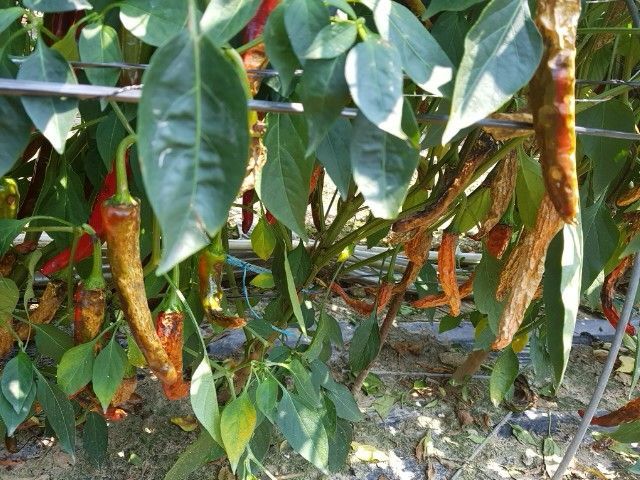
[Sejong=Asia Economy Reporter Kim Hyunjung] The debt ratio of the Agricultural and Fishery Disaster Insurance Fund, which supports farmers and fishermen affected by disasters such as typhoons and floods, was found to exceed 500%. Since 2019, losses of disaster insurance companies have sharply increased due to the occurrence of massive disasters, causing the size of surplus funds to shrink every year. The Ministry of Economy and Finance also evaluated the fund's financial structure as "inappropriate" in terms of adequacy, citing the excessive debt ratio and the difficulty of resolving it in the short term.
According to the "2022 Budget Proposal Committee Analysis - Agriculture, Forestry, Livestock, Food, and Maritime Affairs Committee" published by the National Assembly Budget Office on the 26th, the debt ratio of the Agricultural and Fishery Disaster Insurance Fund (reinsurance) reached 537% as of the end of last year.
The reinsurance system is a mechanism where, when a certain level of disaster damage occurs to agricultural and fishery disaster insurance, the fund accumulated in the reinsurance fund is used to compensate part of the insurance companies' losses. In the past, due to large losses suffered by insurance operators and private insurers caused by typhoons Rusa and Maemi in 2002-2003, private insurers withdrew from reinsurance in 2003, and insurance operators also began to avoid the insurance business itself. To establish a stable foundation for the crop disaster insurance business and support management stability, the system was introduced in 2005. Since then, reinsurance payments made to insurance companies have amounted to 830.1 billion KRW as of last year.
The problem is that insurance payments due in the current year are not fully executed, resulting in unpaid amounts every year, which are deferred to the next year or the following year's budget for payment.
The Ministry of Agriculture, Food and Rural Affairs reduced the reinsurance payment project plan from the original 119.3 billion KRW to 50 billion KRW through the second supplementary budget in 2020. However, due to damages from typhoons and heavy rains, the required reinsurance payment amount reached 224.2 billion KRW by the end of 2020, resulting in unpaid amounts of 174.2 billion KRW. Including the unpaid amount of 174.2 billion KRW at the end of 2020 and an additional 75.8 billion KRW in reinsurance payments arising from 2020 contracts, the total required reinsurance payment reached 250 billion KRW. However, the 2021 reinsurance payment project plan was only 150 billion KRW, leaving unpaid amounts of 100 billion KRW as of June 2021.
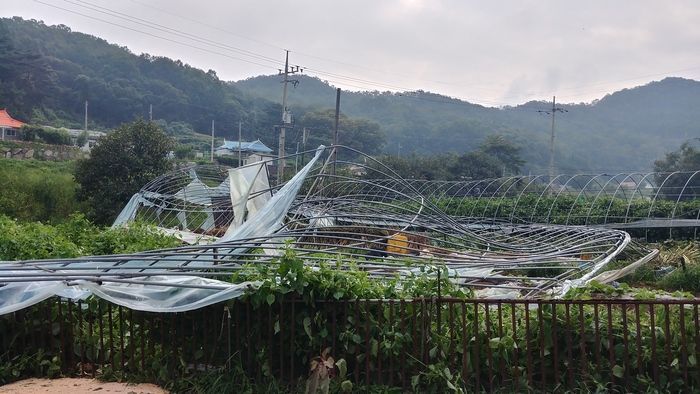
However, the 2022 project plan for this business only allocated 100 billion KRW to pay unpaid amounts, including 76.44 billion KRW accumulated unpaid as of June 2021 from 2020 contracts and an estimated 23.56 billion KRW for remaining 2020 contracts. Reinsurance payments for crops and aquaculture products with payment obligations arising in 2022 are not accounted for, meaning that reinsurance payments for 2021-2022 must either use contingency funds or be deferred again to the budget after 2023.
The fund's soundness has also deteriorated significantly. The fund is financed by government contributions, borrowings, transfers from the Special Rural Tax Account, and reinsurance premiums received from insurance companies. Since 2018, the fund has been in a negative state. The reinsurance premiums, which can be considered the actual independent revenue source, amounted to only 5.788 billion KRW in 2020, accounting for just 4.9% of total receipts (approximately 119.3 billion KRW). The majority of independent revenue is the recovery of government deposits, with surplus fund recoveries at about 61.7 billion KRW.
The size of surplus funds has also been decreasing annually. The surplus funds of the reinsurance fund, which were 177.2 billion KRW in 2016, sharply declined by 65.2% to 61.7 billion KRW in 2019, and as of August this year, shrank further to 27.2 billion KRW, only 15.3% of the 2016 level. This is due to the sharp increase in losses of disaster insurance companies and the surge in reinsurance payments from the fund following massive disasters since 2019. In 2019, surplus funds of 128.1 billion KRW were used to cover reinsurance payment requirements of 351.4 billion KRW caused by typhoons Lingling, Tapah, and Mitag.
The Ministry of Economy and Finance also pointed out this issue in the "2021 Fund Retention Evaluation." At that time, the Ministry noted that the debt-to-asset ratio of the reinsurance fund was 537.9%, indicating excessive debt, and that without diversification and expansion of independent revenue sources, it would be difficult to resolve the excessive debt situation in the short term, resulting in an "inappropriate" evaluation of the financial structure.
The Budget Office pointed out, "The Ministry of Agriculture, Food and Rural Affairs should make efforts to improve the financial condition by securing special account transfers to meet national reinsurance payment demands and expanding independent revenue sources."
© The Asia Business Daily(www.asiae.co.kr). All rights reserved.













