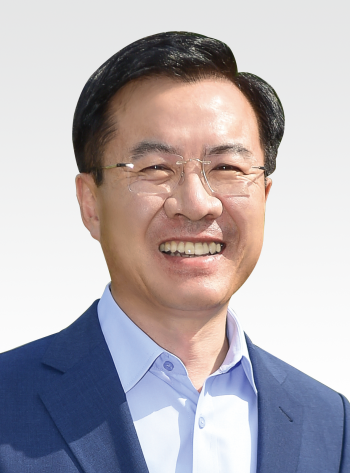
[Asia Economy Honam Reporting Headquarters Reporter Yoon Jamin] Congressman Yoon Young-deok (Democratic Party of Korea·Gwangju Dongnamgap) has published a policy report titled "Financial Diagnosis Report of Local Private Universities."
Recently, with the rapid decline in the school-age population, the issue of under-enrollment in local private universities has become serious, and private universities, which have relied on tuition fees, are facing a severe financial crisis.
As the school-age population is expected to decline further, the voices of local private universities appealing for government financial support are growing louder.
Accordingly, Congressman Yoon diagnosed the financial status of local private universities over the past decade from 2010, before the full-scale university restructuring began, to 2020.
He identified the financial difficulties faced by local private universities and examined how severe the polarization of university finances is in South Korea.
Congressman Yoon stated, "The financial status of local private universities was as expected. Until 2015, before restructuring intensified, income increased regardless of whether the university was in the metropolitan area or local regions, but since then, income has gradually decreased. Compared to 2015, the total income of local university tuition accounts decreased by 504.1 billion KRW in 2020."
He continued, "The biggest cause of the decrease in total income was the decline in tuition revenue. Tuition revenue of local private universities decreased continuously from 4.4305 trillion KRW in 2010 to 4.4064 trillion KRW in 2019, 4.1454 trillion KRW in 2019, and 4.0944 trillion KRW in 2020. Compared to 2010, it decreased by 336.1 billion KRW, a reduction rate of -7.6%," he explained.
Although tuition revenue is decreasing, there are no appropriate alternative funding sources, according to Congressman Yoon.
In 2020, corporate transfers accounted for only 5.0% (377.2 billion KRW) of total income, donations 1.3% (97.9 billion KRW), and tuition income from lifelong education programs was also only 1.3% (100.4 billion KRW).
Congressman Yoon said, "After the introduction of the national scholarship system in 2012 and the expansion of general financial support under the Moon Jae-in administration, government subsidies increased significantly, alleviating the sharp decline in total income. Government subsidies increased more than fivefold from 333.8 billion KRW in 2010 to 1.7008 trillion KRW in 2020," adding, "However, of the 1.7008 trillion KRW, 1.1694 trillion KRW was designated for scholarship payments, and general financial support was only 531.3 billion KRW."
He emphasized that expanding general financial support is more necessary to provide practical help for the financial management of local private universities.
Congressman Yoon stressed, "Universities in South Korea operate relying on tuition fees, so the decline of private universities, especially local universities, is easily anticipated due to the decrease in student numbers. To strengthen higher education competitiveness, prevent the collapse of local universities, and achieve regional balanced development, it is necessary to shift private universities from a tuition-centered system to a government support-centered system."
He added, "Through this policy report, I hope it will help expand financial support for local private universities and prepare plans for fostering local universities."
© The Asia Business Daily(www.asiae.co.kr). All rights reserved.












