Will the Divided Supervisory System Undergo Surgery After 13 Years?
Financial Services Commission → Financial Supervisory Commission Reorganization... Functions Transferred to Ministry of Economy and Finance
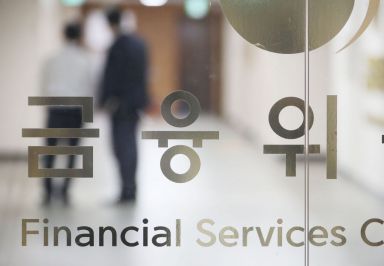
[Asia Economy Reporter Jin-ho Kim] With the presidential election scheduled for March next year, controversy over the financial authorities' plan to reform the financial supervisory system is showing signs of resurfacing. The political sphere is preparing to put the currently bifurcated financial supervisory system on the operating table for the first time in 13 years. This move is aimed at holding parties accountable for large-scale private equity fund scandals and pushing for reform.
According to the National Assembly's legislative information system and financial circles on the 21st, a total of four bills to reform the financial supervisory system have been proposed since the 21st National Assembly convened. Oh Ki-hyung, a member of the Democratic Party of Korea, recently submitted the "Act on the Establishment of the Financial Services Commission, etc. (Complete Amendment)" to the National Assembly. Oh's bill centers on separating financial policy functions from financial supervisory functions.
The proposal is to reorganize the current Financial Services Commission (FSC) into a Financial Supervisory Commission that independently deliberates and resolves financial supervisory tasks, while transferring the financial policy functions currently performed by the FSC to the Ministry of Economy and Finance. Oh pointed out, "The current financial supervisory system concentrates both financial policy and supervisory authority within the FSC, resulting in a loss of checks and balances between the two functions," adding, "It is necessary for financial policy and supervision to operate in a balanced manner through legislative adjustments."
With Oh's bill submission, discussions on reforming the financial supervisory system are expected to resume after 13 years in the political arena. As the presidential election phase intensifies, the supervisory reform plan is anticipated to emerge as a key topic in the financial sector. Oh has effectively reignited public interest that had been dormant.
Lee Yong-woo, another financial expert within the National Assembly and a member of the Democratic Party of Korea, is also reportedly preparing to propose a bill related to the "reform of the financial supervisory system" soon. Lee's reform plan similarly focuses on absorbing and integrating the FSC into the Ministry of Economy and Finance. The aim is to unify the currently bifurcated domestic and international financial policies. The financial supervisory sector would be bifurcated into the "Financial Supervisory Commission" and the "Financial Consumer Protection Commission."
This aligns with the financial pledges made during the inauguration of the Moon Jae-in administration. President Moon had pledged to separate the three functions of "financial policy, supervision, and consumer protection" to ensure mutual checks and balances.
On the opposition side, Yoon Chang-hyun of the People Power Party is pushing for a reform plan of the financial supervisory system. Yoon's plan focuses on reducing the supervisory functions of the Financial Supervisory Service (FSS) and strengthening parliamentary control. In particular, Yoon believes that to allow the FSS to concentrate on supervisory duties, all disciplinary authority above severe sanctions over banks and other financial institutions should be returned to the FSC. This implies that the National Assembly would hold authority over the financial supervisory system.
However, it appears realistically difficult for the current administration to implement demands for reforming the financial supervisory system immediately. Issues like government organizational restructuring typically require momentum early in an administration, but the current situation is more likely to prioritize stability over change.
In fact, President Moon had insisted on appointing a private-sector head of the FSS as part of the financial supervisory system reform, but recently nominated Jeong Eun-bo, a career bureaucrat, as the new head. Financial Services Commission Chairman Ko Seung-beom is also focusing on maintaining the status quo. A financial sector official said, "Given that this is the final phase of the administration, there are many uncertainties about whether the financial supervisory system can be reformed," adding, "However, if strong public opinion forms around the National Assembly, discussions on this issue could intensify with the change of administration next year."
Meanwhile, the National Assembly Research Service, which supports lawmakers' legislative activities, also reinforced calls for reform in its November last year report titled "The Necessity and Legislative Tasks for Reforming Korea's Financial Supervisory System." The report stated that "independence and efficiency should be secured through the separation of financial industry policy and financial supervisory policy, and the responsibility of financial supervisory agencies should be strengthened."
The Research Service argued that under the current system, financial policy could overwhelm supervisory policy, and supervisory policy might be used as a tool to support economic measures. Therefore, all parts of the FSC's duties related to financial supervision should be transferred to financial supervisory agencies, and the FSC's guidance and supervisory regulations should be deleted.
© The Asia Business Daily(www.asiae.co.kr). All rights reserved.












