[Asia Economy Reporter Hwang Sumi] As cases of COVID-19 vaccines causing side effects related to women's menstruation continue to emerge, the United States has launched related research.
Recently, The New York Times (NYT) reported that since the start of COVID-19 vaccinations earlier this year, some women have been complaining about menstrual-related side effects after vaccination through social networking services (SNS) and other platforms.
The main side effects reported include 'menstrual irregularities,' 'increased menstrual pain,' and 'changes in menstrual flow.' Some women even reportedly resumed menstruation after menopause, according to the NYT.
In response, the U.S. National Institutes of Health (NIH) announced it will provide $1.67 million (approximately 2 billion KRW) over the next year to study COVID-19 vaccines and menstrual-related side effects.
The NIH stated, "Some women have reported symptoms such as menstrual irregularities and amenorrhea after receiving the COVID-19 vaccine," and added, "We plan to support research to determine whether these changes are directly related to the vaccine and how long the symptoms persist."
In the UK, local media reported that more than 30,000 cases of abnormal symptoms such as menstrual irregularities and unexpected bleeding have been reported following COVID-19 vaccination.
According to the BBC on the 15th (local time), approximately 47 million doses of vaccines have been administered to women in the UK so far. Among these, over 30,000 cases of abnormal symptoms, including unexpected bleeding, increased menstrual flow, and prolonged duration, have been reported after vaccination.
The UK's Medicines and Healthcare products Regulatory Agency (MHRA) reviewed the reports and stated that a definite link between COVID-19 vaccines and menstrual abnormalities cannot be confirmed.
However, Dr. Victoria Male, a renowned immunologist at Imperial College London (ICL), urged in an article for the British Medical Journal (BMJ) that the relationship between vaccines and menstrual irregularities should be investigated more precisely.
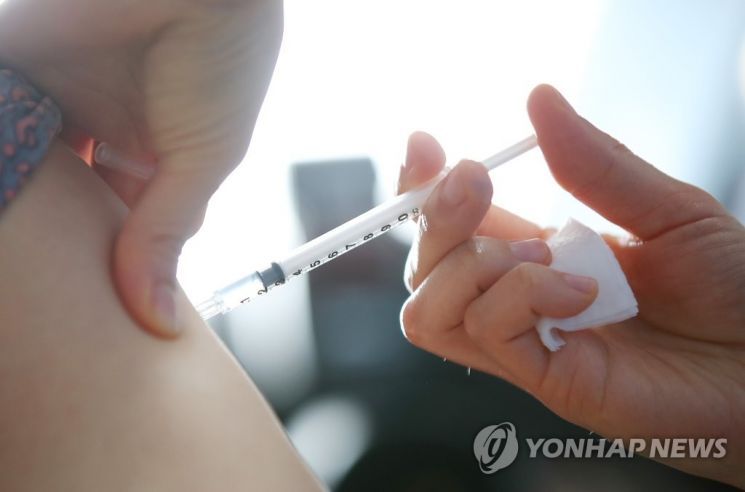 A citizen is receiving a COVID-19 vaccination. The photo is unrelated to specific expressions in the article. [Image source=Yonhap News]
Dr. Male said, "If there is a connection, it is more likely to be an immune response to the vaccine rather than a specific component of the vaccine," and added, "There are also studies showing that some women infected with the COVID-19 virus experienced menstrual irregularities."
However, Dr. Male pointed out, "There is no evidence that the vaccine affects pregnancy or childbirth," and warned, "False claims that the vaccine could affect future pregnancy opportunities cause hesitation among young women regarding vaccination."
She added, "Robust research on this topic will help counter misinformation related to vaccines."
Scientists have not yet precisely determined how the vaccine causes changes in the menstrual cycle, the BBC reported.
Meanwhile, in South Korea, cases of menstrual-related side effects after COVID-19 vaccination have also been reported. On the 31st of last month, a post titled "Please allow reporting of female abnormal bleeding (metrorrhagia) as a side effect of the COVID-19 vaccine" was uploaded on the Blue House's public petition board.
In response, Jo Eun-hee, head of the Safety Vaccination Management Team at the COVID-19 Vaccination Response Promotion Team, said during a briefing on the 1st, "There has been no official indication abroad of a link between vaccination and menstrual side effects," but added, "Authorities are collecting data and reports, and if a causal relationship is found, we will provide guidance as soon as possible."
She emphasized that all adverse reactions, including menstrual-related side effects, can be reported. Jo stated, "There is no standard that excludes certain symptoms from being considered adverse reactions to vaccination," and explained, "All signs, symptoms, and diseases are accepted regardless of causality after vaccination."
© The Asia Business Daily(www.asiae.co.kr). All rights reserved.













