Decrease in Purchase of Ingredients for Jesuyongpum, Increase in Sales of Ready-to-Eat Foods
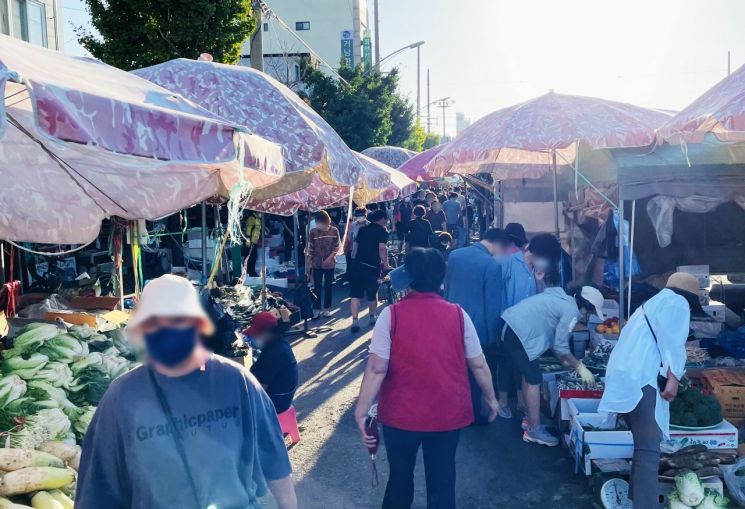 On the 20th, around 7:30 a.m., the old Cheongho Market in Mokpo was bustling with the footsteps of customers. Photo by Seunghyun Jeong
[Asia Economy Honam Reporting Headquarters Reporter Seung-hyun Jeong] As the Chuseok holiday season officially begins, the traditional market in Mokpo is bustling with visitors.
Although the number of visitors appears similar to the pre-COVID-19 period, which is welcome news for merchants, there have been significant changes in consumer patterns.
Due to fewer visits from family members living in other regions during the Chuseok holiday because of COVID-19, the amount of food prepared has relatively decreased.
As a result, consumption of ready-made foods such as jeon (Korean pancakes) and namul (seasoned vegetables) has increased rather than purchasing raw ingredients, and the overall purchase ratio of ancestral ritual items has decreased by about 20-30% compared to before COVID-19.
On the other hand, with the large-scale distribution of the national support fund before Chuseok, the purchase ratio of daily necessities and general food ingredients has relatively increased, and sales of fresh seasonal items such as blue crabs, king prawns, yellow croakers, and fruits are also on the rise.
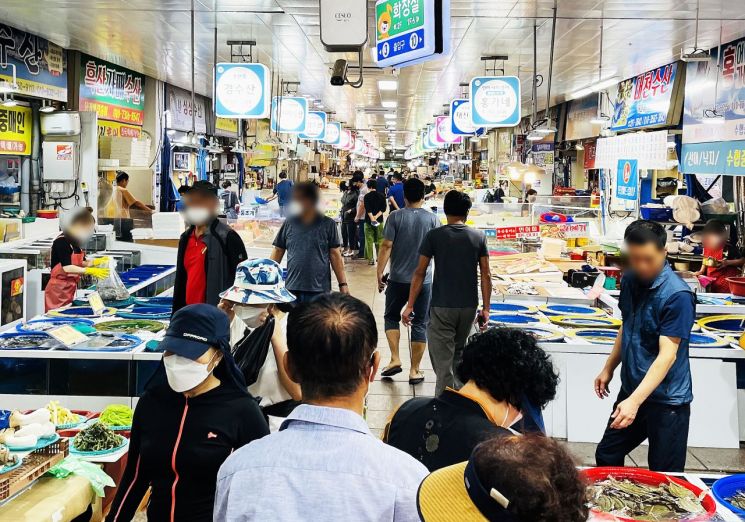
Kim Hyun-il, CEO of Baekje Hanwoo Handon located in Cheongho Market, said, “As the vaccination rate has recently increased, the number of elderly visitors to the market has grown, bringing significant changes in sales. However, the economic downturn caused by COVID-19 is not only affecting peak seasons but is also becoming a long-term economic burden, increasing the pressure on merchants.”
© The Asia Business Daily(www.asiae.co.kr). All rights reserved.













