Despite Interest Rate Hikes and Loan Restrictions, Housing Prices Continue to Rise
Government Eases Regulations on Officetels and Improves Price Ceiling System
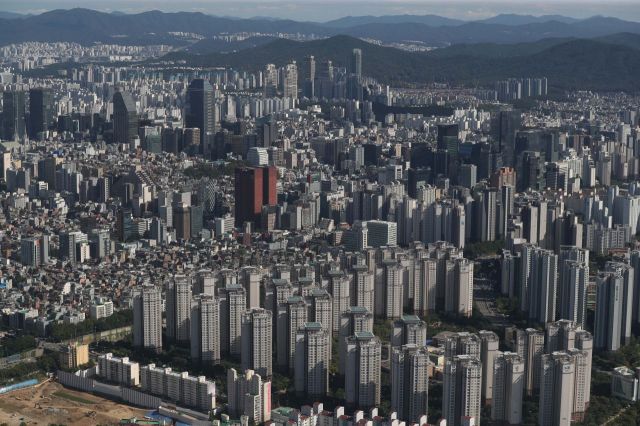
[Sejong=Asia Economy Reporter Kim Hyunjung] The government has expressed its intention to focus on expanding private supply to stabilize the real estate market. Following successive tax law revisions that increased the tax burden on homeowners, the government has also implemented interest rate hikes and loan restrictions, but housing prices have continued to rise. The plan includes allowing officetels up to about 40 pyeong in size and revising the price ceiling system, which has been identified as a major cause of market distortion.
According to the Korea Real Estate Board on the 18th, the apartment sale prices in the metropolitan area rose by 0.4% compared to the previous week (as of the 13th of September), marking a 0.4% increase for five consecutive weeks. Seoul increased by 0.21%, Gyeonggi by 0.49%, and Incheon by 0.45%. Except for Incheon, the five major metropolitan cities rose by 0.2% compared to the previous week, expanding the rate of increase. The eight provinces, excluding Gyeonggi, also saw a larger increase of 0.26%.
This upward trend continued despite the government's warnings about real estate market adjustments and the implementation of interest rate hikes, which is significant. While the government had emphasized a cautious approach rather than chasing purchases, it has recently shifted its focus to 'supply' in an attempt to stabilize the market.
Deputy Prime Minister and Minister of Economy and Finance Hong Nam-ki, at the real estate market inspection meeting with related ministers on the 15th, stated, "The role of the private sector is very important to expedite the supply of already announced housing units and to secure additional supply capacity." He added, "We have repeatedly collected and accumulated opinions from experts and industry, and we will strive to resolve the raised difficulties through two approaches: expanding urban housing supply and accelerating apartment supply speed."
In particular, the government plans to expand the supply of 'apartments,' where demand is concentrated in the real estate market, and focus on responding to housing demand for one- to two-person households. To this end, the government plans to revise the Housing and Urban Guarantee Corporation (HUG)'s price ceiling system, which has been criticized for distorting market prices through physical regulations.
First, to activate the supply of urban lifestyle housing, the government will reorganize the 'studio type' into 'small type' and significantly ease regulations. The allowable area limit for studio types will be expanded from the current 50㎡ or less to 60㎡ or less. Currently, if the area is 30㎡ or more, the space can only be divided into two rooms: a bedroom and a living room, but going forward, it will be possible to partition into four spaces, such as three bedrooms and one living room. This will allow the demand for larger housing to be met through non-apartment housing as well. Officetels, classified as quasi-housing, will have their floor heating allowable exclusive area expanded from 85㎡ to 120㎡, enabling the construction of officetels up to about 40 pyeong in size (based on apartment supply area).
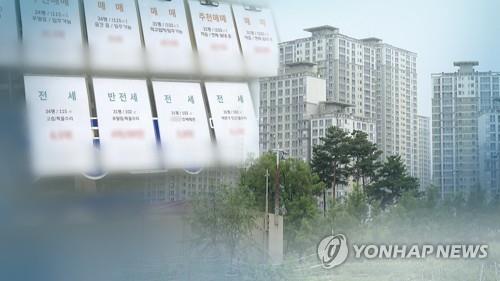
Additionally, the government will improve the method of calculating sale prices by reflecting only the prices of similar projects considering complex size and brand, instead of averaging prices from all nearby projects. The criteria for selecting comparable projects will also be relaxed. Detailed review standards will be disclosed. Previously, the price ceiling system caused many disputes between local governments and project owners due to differences in recognized price items and review methods by local governments. Going forward, detailed price items will be clearly refined to reduce excessive discretionary power of local governments and increase predictability.
Deputy Prime Minister Hong said, "To accelerate apartment supply speed, we will improve unreasonable parts of HUG's high-priced housing management system and price ceiling system for price reviews," adding, "The integrated permit review for administrative procedure simplification will be made mandatory in principle, moving from optional application." He further explained, "To activate urban housing supply that can respond to housing demand for one- to two-person households and contribute to short-term housing supply, unnecessary regulations such as area standards and floor heating for non-apartments will be boldly eased, and financial and tax support for developers will be strengthened."
The government also plans to reduce the gap between renewal contracts and new contracts by additionally responding to the continuously increasing monthly rent reporting information.
In the second week of September, the jeonse (long-term deposit lease) price for apartments in the metropolitan area rose by 0.25% for four consecutive weeks, with Seoul increasing by 0.17% during the same period. Although the increase in Gyeonggi decreased from 0.3% to 0.29%, Incheon expanded its increase from 0.24% to 0.25%. Amid the ongoing shortage of jeonse listings, prices are rising mainly in mid- to low-priced complexes in areas with relocation demand such as reconstruction zones and areas with favorable living conditions.
Regarding this, Deputy Prime Minister Hong stated, "We plan to devise multifaceted measures to stabilize jeonse prices and alleviate market difficulties by the end of the year after collecting opinions from market experts and research institutions."
© The Asia Business Daily(www.asiae.co.kr). All rights reserved.












