Payment of penalties instead of achieving target recycling rate
19.7 billion KRW last year, more than double compared to 5 years ago
Coupang, 1.5 billion KRW, 50 times increase since 2019
[Asia Economy Reporter Lim Hye-sun] While companies are strengthening ESG (Environmental, Social, and Governance) management, the number of companies settling for paying fines instead of achieving their target recycling rates is increasing. There are calls to raise the standards of the Producer Responsibility Recycling System (EPR), introduced in 2003 and never revised since, to encourage companies to consider recycling from the manufacturing stage when selecting materials.
According to data submitted by the Ministry of Environment to Rep. Noh Woong-rae of the Democratic Party on the 22nd, the total recycling fines paid last year by 1,316 companies and 2 mutual aid associations amounted to 19.7 billion KRW. The amount of fines increased by 22% compared to the previous year and more than doubled compared to five years ago. Recycling fines are a type of penalty imposed when obligated producers fail to meet their target recycling rates.
The entity that paid the most fines was the Korea Packaging Recycling Business Mutual Aid Association, totaling 6.9 billion KRW, an increase of 2.4 billion KRW (54%) from the previous year. The Korea Packaging Recycling Business Mutual Aid Association is entrusted with the collection and recycling obligations of products and packaging materials from about 5,000 companies, including Lotte Chilsung and LG Household & Health Care.
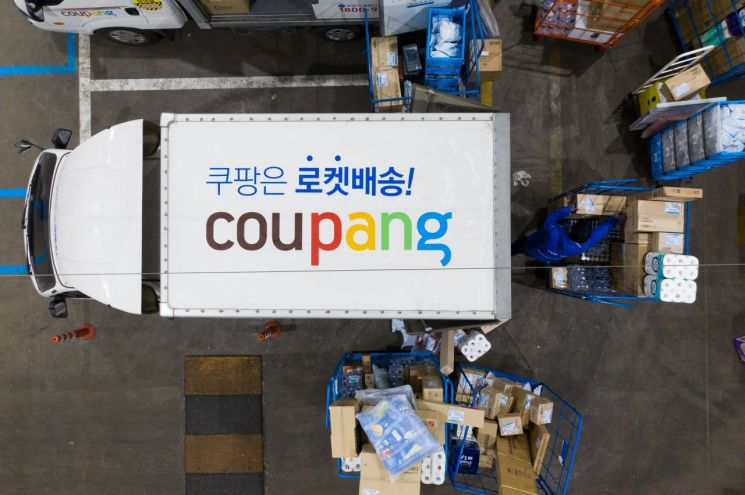
The individual company that paid the highest fines was Coupang. Coupang paid 1.5 billion KRW in fines last year, a 50-fold increase from 29.26 million KRW in 2019. Following Coupang were Kolon Plastics (240 million KRW), S-Oil (230 million KRW), Jayjun Cosmetic (210 million KRW), Kakao Commerce (100 million KRW), and Zara Retail (98.95 million KRW), among others.
Imported car companies such as Korea Toyota and Mercedes-Benz Korea also paid fines ranging from 5 million KRW to a maximum of 170 million KRW. Among fashion companies, Cowell Fashion (57.77 million KRW), Acushnet Korea (25.59 million KRW), and Fashion Group Hyungji (7.25 million KRW) paid fines, while in the food sector, Orion (22.31 million KRW) and Haitai Garubi (51.19 million KRW) were fined. Most of these fines increased compared to the previous year. Luxury brands such as Hermes, Chanel, Louis Vuitton, and Gucci also pay hundreds of thousands of KRW in fines annually.
A food industry official explained, "The fundamental problem is that while the recycling obligation rate increases every year, the recycling infrastructure does not keep pace with that level."
Companies stated that some products are inherently difficult to recycle depending on their characteristics, and policies considering this are necessary. Currently, the cosmetics and beverage industries have failed in the recycling ease category. In particular, over 75% of cosmetic packaging is plastic, making recycling itself difficult.
According to the Ministry of Environment, an evaluation of about 8,000 cosmetic packaging items showed that 64% of cosmetic packaging distributed domestically received a "difficult to recycle" rating. By company, LG Household & Health Care, Amorepacific, and Aekyung Industrial received difficult ratings for 69%, 74%, and 69% of their packaging, respectively, indicating that these are mostly discarded rather than recycled.
The ease of recycling packaging materials for beverage and liquor companies is also low. For Lotte Chilsung Beverage, 58% of packaging received a difficult-to-recycle rating, while Hite Jinro and OB Beer received 58% and 42%, respectively.
A cosmetics industry official said, "In line with the ESG management trend, we are making various efforts such as searching for new materials to increase recycling rates, but many products, including cosmetics and beverages, are inherently difficult to recycle depending on their contents. When establishing policies, it is necessary to combine methods that increase fines with incentives for improving recycling rates."
Rep. Noh Woong-rae said, "The amount of microplastics unknowingly ingested by Koreans annually through seafood ranks third in the world at 187,000 particles," adding, "To recycle waste plastics as resources, it is necessary to design and select materials with recycling in mind from the manufacturing stage."
© The Asia Business Daily(www.asiae.co.kr). All rights reserved.












