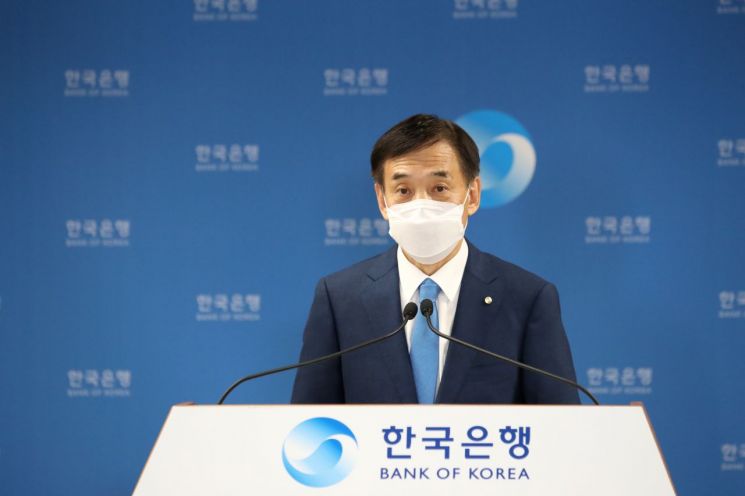
 Lee Ju-yeol, Governor of the Bank of Korea, is speaking at an online press conference immediately after the Monetary Policy Committee meeting on the 15th.
[Asia Economy Reporter Kim Eunbyeol] Lee Ju-yeol, Governor of the Bank of Korea, stated on the 16th that the prolonged low interest rates since COVID-19 and the expectation that low interest rates will continue have resulted in funds flowing into the asset market.
Governor Lee appeared before the National Assembly's Planning and Finance Committee on the same day and said, "The prolonged period of low interest rates and the market's expectation that they will continue have been one of the factors causing funds to flow into the asset market." However, he added, "We need to consider whether supply was sufficient in the areas people wanted." He explained that not only low interest rates but also insufficient housing supply clearly contributed to the rise in housing prices.
He also explained that many people took out loans to purchase homes, which increased household debt. Governor Lee said, "The higher the housing prices rise, the more significant the impact on household debt will be."
Regarding concerns that raising interest rates within the year could shock vulnerable groups, Governor Lee stated, "If the economic situation improves, we are communicating with the market in advance about plans to begin normalization to mitigate the side effects of prolonged low interest rates."
He said, "I understand that self-employed individuals and small business owners in face-to-face service industries, as well as those with unstable employment, may face difficulties in repaying interest if they have borrowed," but added, "I think it would be more effective to address this through fiscal policy rather than monetary policy going forward." He also mentioned, "We will consider possible measures at the Bank of Korea level, such as financial intermediary support loans."
© The Asia Business Daily(www.asiae.co.kr). All rights reserved.












