Prosecutors' Investigation Deliberation Committee Allows Involved Parties to Request Summons... Likely Preempting Criticism of 'Time-Dragging'
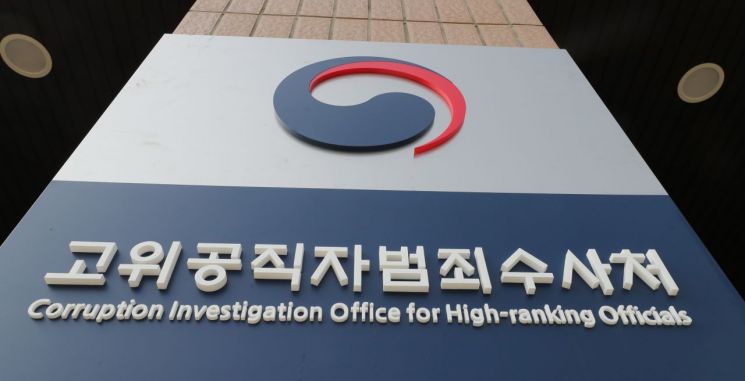
[Asia Economy Reporter Baek Kyunghwan] The High-ranking Officials' Crime Investigation Office (HCIO) is expected to face controversy for limiting the conditions for convening the Investigation Deliberation Committee to "upon the request of the HCIO Chief." Although modeled after the prosecution's Investigation Deliberation Committee, which was introduced to hear opinions from external experts for fair investigation and prosecution, it differs from the prosecution system where related parties can also apply for convening. Some view this as reflecting the impact of distrust in the investigation deliberation committee.
According to the legal community on the 8th, the HCIO recently established the "Guidelines on the Operation of the High-ranking Officials' Crime Investigation Office Investigation Deliberation Committee," stipulating the convening condition as "The chairperson convenes the committee meeting upon the request of the chief." The core is that "the chief reviews matters submitted to the committee deemed necessary."
Once these detailed regulations became known, criticism arose that the HCIO had blocked the function of an external oversight system. The prosecution's investigation deliberation committee was introduced and operated with the purpose of reflecting the opinions of external experts on cases where public suspicion arises or social attention is focused, to eliminate controversies over fairness and neutrality of investigations.
In particular, the prosecution's investigation deliberation committee allows complainants, institutional accusers, victims, suspects, their representatives, and lawyers to apply for convening through the Prosecutor's Office Citizen Committee. The subjects of deliberation are also specified, including whether to continue the investigation, whether to prosecute or dismiss, and the appropriateness and legality of investigations in prosecuted or dismissed cases.
On the other hand, the HCIO's investigation deliberation committee, when convened upon the chief's request, only discusses ▲ whether to initiate a direct investigation ▲ the direction of investigation progress in cases attracting public suspicion or social attention ▲ whether to request or re-request an arrest warrant. Apart from the HCIO chief, related parties effectively have no way to apply for the investigation deliberation committee.
However, there is also analysis that the HCIO preemptively blocked potential controversies that may arise during the future operation of the investigation deliberation committee. The prosecution's investigation deliberation committee has been criticized for being abused as a means to influence public opinion or prosecution, contrary to its original purpose of checking prosecutorial authority.
Recently, Lee Seong-yoon, Chief Prosecutor of the Seoul Central District Prosecutors' Office, was suspected of applying for the convening of the investigation deliberation committee to avoid prosecution before the Prosecutor General Candidate Recommendation Committee meeting was held. This claim reflects the phenomenon of excessive applications for convening the committee to delay investigation and prosecution timing.
In fact, Chief Lee brought up the investigation deliberation committee card just hours before the schedule of the Candidate Recommendation Committee was announced. This sparked controversy as the head of the largest prosecutor's office in the country opposed the investigation and prosecution policy of the investigation team.
There were also suspicions that the prosecution did not accept the recommendations of the investigation deliberation committee convened upon the application of related parties. The Seoul Central District Prosecutors' Office did not accept the committee's recommendations in investigations of the Samsung illegal succession of management rights case and the Channel A source coercion attempt case last year.
Because of this, there have been continuous calls inside and outside the prosecution to improve the investigation deliberation committee system. The aim is to enhance the system's integrity so that the committee's recommendations do not become meaningless.
Strengthening expertise is also pointed out. Currently, the prosecution's investigation deliberation committee includes figures from religious circles, media, civic groups, and cultural arts, which has drawn criticism for lacking expertise. The deliberations are not thorough enough for laypeople to understand the cases, so opinions of legal experts have a significant influence on the meetings.
A lawyer with a prosecution background said, "Since the prosecution introduced this system themselves, they should empower the investigation deliberation committee through increased transparency," adding, "If the HCIO also restricts its operation on the grounds that its investigation targets differ from the prosecution, continuous fairness controversies will follow."
© The Asia Business Daily(www.asiae.co.kr). All rights reserved.












