Five Local Governments Selected for 2021 Smart Town Development Project
Gwangju Buk-gu, Jeju Seogwipo-si, Gyeonggi Uijeongbu-si, Gyeongbuk Seongju-gun, Gyeongnam Gimhae-si
[Asia Economy Reporter Lim Cheol-young] The Ministry of the Interior and Safety announced on the 6th that it is promoting the ‘2021 Smart Town Development Project’ contest and has finally selected five local governments: Buk-gu, Gwangju; Seogwipo-si, Jeju; Uijeongbu-si, Gyeonggi; Seongju-gun, Gyeongbuk; and Gimhae-si, Gyeongnam.
The ‘Smart Town Development Project’ is a project that builds services using information and communication technology (ICT) in urban or rural fishing villages to solve regional problems such as aging and support the revitalization of the local economy. It supported two local governments in 2019 and four in 2020.
This year, as a result of promoting the contest in March, a total of 30 local governments applied, and among them, five local governments were finally selected through document screening and presentation screening by a judging committee composed of private experts.
The Ministry of the Interior and Safety plans to provide a total of 2.4 billion won in national funds to the selected local governments (conducted on a scale of 4.8 billion won including 2.4 billion won in local funds), and the local governments are expected to start the project from the second half of this year.
This year’s project will be promoted mainly focusing on lifestyle services for local residents such as the elderly and chronic patients and support services for creating a job foundation.
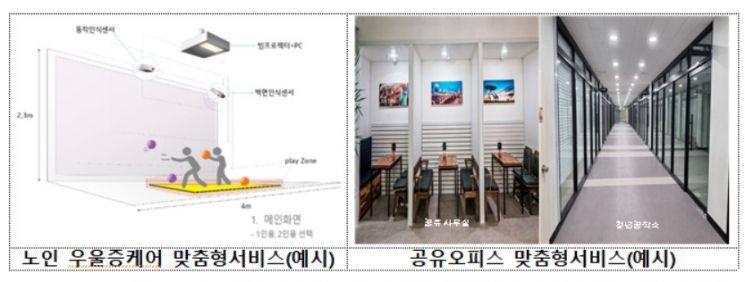
Buk-gu, Gwangju Metropolitan City, will create a ‘Digital Welfare Administration Integrated Care Specialized Village using City Map-AI.’ Customized services such as ‘Emergency Safety Care’ for the elderly, middle-aged, and youth, ‘Virtual Reality Exercise Space Depression Care,’ and ‘Youth Startup Support Shared Office’ will be introduced, and a digital welfare administration platform that integrates and manages services will be established to prepare a data collection and analysis base.
The ‘Daejeong-eup Digital Nomad Space’ project promoted by Seogwipo-si, Jeju-do, is a project to help urban youth settle in rural areas and enable the region to take the lead. Using ICT, it plans to implement a digital live commerce studio connecting producers and consumers, a digital urban-rural exchange platform, and other local youth job ecosystems.
Uijeongbu-si, Gyeonggi-do, is promoting the ‘Smart Basecamp Heungseon’ project and plans to apply Internet of Things technology to abandoned underground spaces in the region to create a remote cultivation environment for specialized crops such as mushrooms and establish an unmanned quarantine system based on indoor air quality data.
Gyeongsangbuk-do’s Seongju-gun, through the ‘ICT Intelligent On-Tact Generation Convergence’ project, will distribute elderly mental and physical health monitoring equipment such as dementia psychological tests and prevention programs to village halls and promote a mentoring linkage project between young entrepreneurs and the elderly. In addition, Gimhae-si, Gyeongsangnam-do’s ‘Smart Town Daebak-dong-ne’ project, which coexists through smart care, supports services closely related to residents’ lives, such as elderly health management through biometric information monitoring and early detection smart cultivation environment construction for growth environments.
The Ministry of the Interior and Safety plans to support local governments with regionally tailored consulting through the Korea Local Information Research & Development Institute so that the smart town service models promoted by local governments become exemplary cases and encourage expansion to other local governments.
Jung Seon-yong, Director of the Digital Government Bureau, said, “We will actively support ICT-based smart services that reflect local conditions and demands to become solutions to regional issues and contribute to closing the regional digital divide.”
© The Asia Business Daily(www.asiae.co.kr). All rights reserved.












