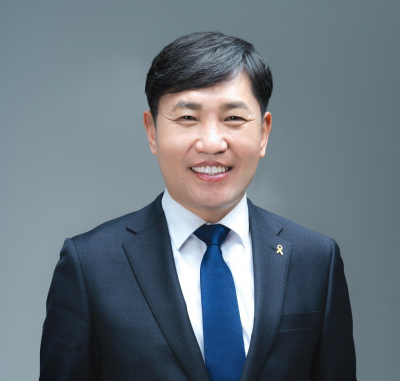
[Asia Economy Honam Reporting Headquarters Reporter Yoon Jamin] Jo Oseop, a member of the National Assembly (Democratic Party of Korea, Gwangju Buk-gu Gap), announced on the 18th that he has taken the lead in proposing a revision to the National Basic Livelihood Security Act, which is the ‘Self-Support Enterprise Support Act’ aimed at sustainable and systematic support for self-support enterprises, one of the four major social economy enterprises.
The current law allows recipients and near-poverty groups to establish and operate self-support enterprises and receive various support through guarantee institutions, the Korea Self-Support Welfare Development Institute, and metropolitan and regional self-support centers, but there is no legal obligation, so the state or local governments do not establish systematic support plans.
Accordingly, voices have emerged emphasizing the need to establish more systematic and efficient support plans to foster and expand successful self-support enterprises, as support for self-support enterprises can simultaneously realize the effect of encouraging entrepreneurship among low-income groups and creating employment opportunities.
This revision bill provides the basis for the state or local governments to be obligated to establish support plans for self-support enterprises, enabling the establishment of sustainable and efficient support measures for self-support enterprises.
Representative Jo said, “Although the government announced a self-support enterprise revitalization plan in July 2018 to increase self-support enterprise jobs by more than 20,000 by 2022, most efforts are concentrated before startup,” adding, “The state and local governments must make greater efforts to create an environment where job expansion for the impoverished, income redistribution, and inter-class mobility for low-income groups are possible to realize inclusive welfare.”
Meanwhile, self-support enterprises are companies established and operated by recipients of basic livelihood security and near-poverty groups who have acquired skills by participating in self-support work projects, with major industries including cleaning, home repair, waste resource recycling, and care services.
© The Asia Business Daily(www.asiae.co.kr). All rights reserved.