Publication of Report on Restoration of Hat Painting Production Techniques Excavated from Naju Jeongchon Tumuli
 The self-portrait on the hat painting excavated from Jeongchon Tumuli in Naju (after preservation treatment)
The National Naju Cultural Heritage Research Institute announced on the 12th that it has published a report documenting the research on the manufacturing techniques of the Mojado (Mother and Child Sword) excavated from the Jeongchon Tomb in Naju, as well as the process of creating a replica.
The report is titled "Restoration of the Manufacturing Techniques of the Mojado Excavated from the Jeongchon Tomb in Naju." It includes ▲excavation circumstances and scientific analysis ▲restoration of manufacturing techniques ▲the process of making the replica, along with papers on 'Regional Characteristics of Korean Mojado and Naju Area Mojado' and 'Lineage and Significance of Large Mojado Excavated from the Japanese Archipelago.' An official explained, "The 300-page appendix 'Compilation of Korean Mojado Data' contains a catalog of 98 Mojado pieces excavated from 5th to 6th-century tombs, including site locations, excavation contexts, excavation circumstances (photos and drawings), and artifact photos, enhancing its practical value."
Mojado is a decorative sword. The scabbard of the large sword, Modoo (Mother Sword), is attached with up to six smaller swords called Jadoo (Child Swords). They are mainly excavated from tombs of the Three Kingdoms period. The institute explained, "Most are elaborately made with precious materials such as gold, silver, and gilt bronze, demonstrating the status and prestige of the person buried."
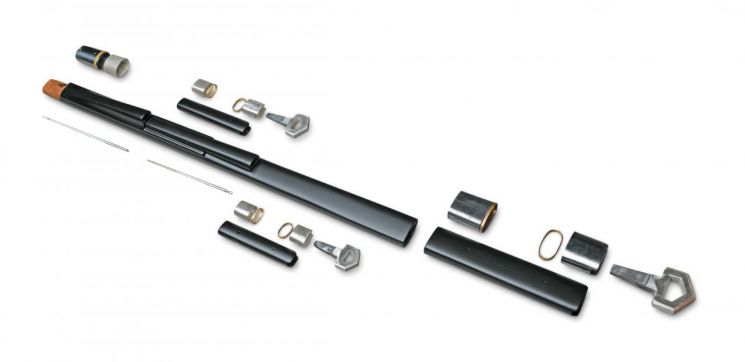
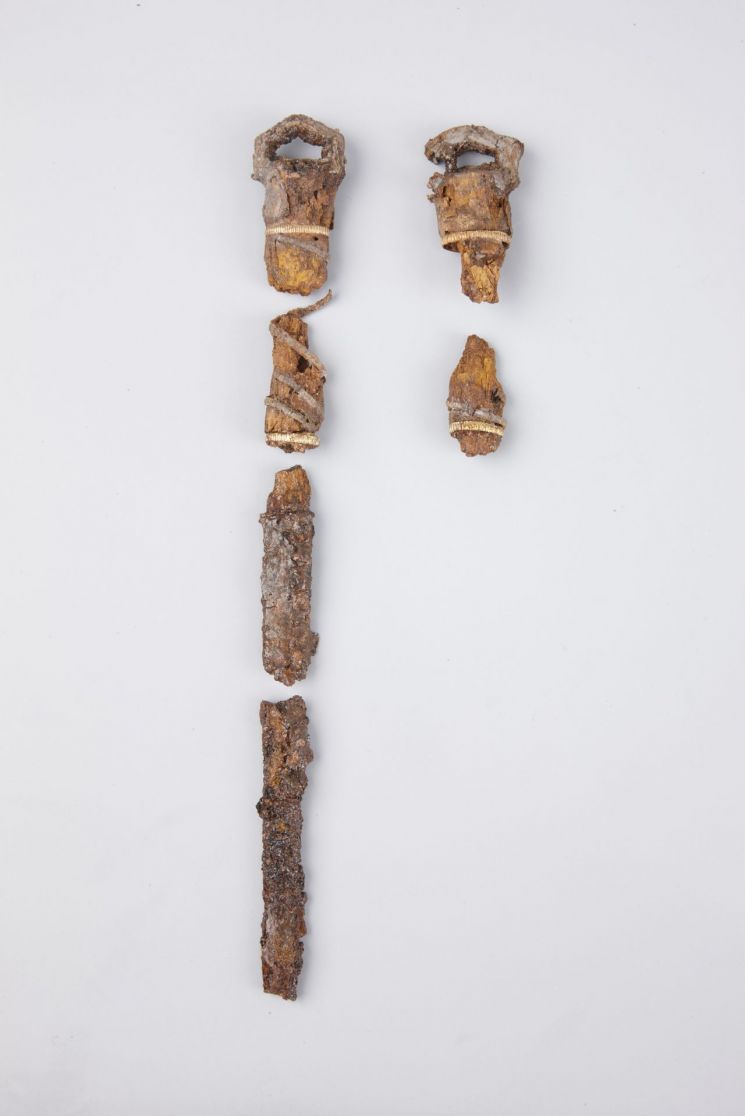
The Jeongchon Tomb Mojado belonged to a woman in her 40s who wore gilt bronze shoes. At the time of excavation, corrosion was so severe that it was difficult to determine the original form. Since 2015, the institute conducted X-ray radiography, X-ray computed tomography, and X-ray fluorescence analysis over five years to understand the materials and internal structure. Through this, they discovered that the pentagonal ring handle was made by covering an iron core with a thin silver sheet, soldered with silver thread on the contact surfaces, and that the ring-shaped gold band decoration was made of copper covered with a thin gold plate.
The institute stated, "Based on this, we were able to create a blueprint to restore the manufacturing technique." They added, "Hansangbong, a National Intangible Cultural Property swordsmith (No. 60), reproduced the sword, and Park Gangyong, a Jeonbuk Intangible Cultural Property lacquer craftsman (No. 13), participated in completing the replica." The institute plans to exhibit the Mojado alongside the gilt bronze shoes excavated from the Jeongchon Tomb, which are scheduled to be designated as a treasure around June.
© The Asia Business Daily(www.asiae.co.kr). All rights reserved.












