Silk-Related Upstream and Downstream Industries Including Food Manufacturing
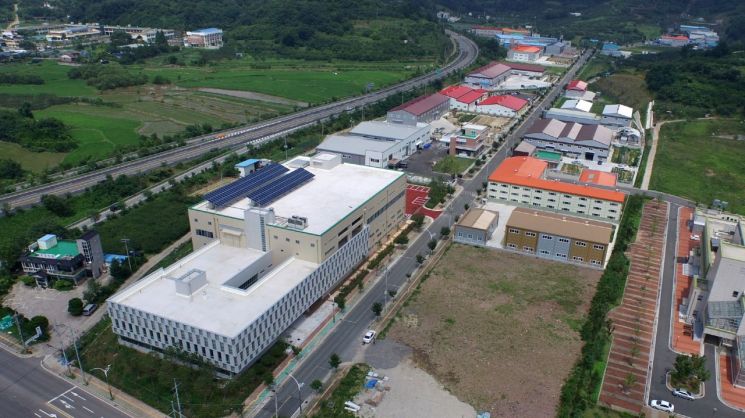
[Asia Economy Yeongnam Reporting Headquarters Reporter Choi Soon-kyung] With the addition of permitted industries for tenants in the 'Jinju Silk Specialized Agricultural and Industrial Complex' in Munsan-eup, Jinju-si, Gyeongnam, the traditional local silk industry is expected to regain vitality.
Jinju-si announced on the 12th that the Basic Management Plan (amendment) for the Jinju Silk Specialized Agricultural and Industrial Complex, mainly adding permitted tenant industries, was recently approved and announced by Gyeongnam Province.
The tenant companies of the Silk Agricultural and Industrial Complex formed a tenant company council in April 2019 to find answers for the revival of the silk industry on their own. They proposed to the city to relax the previously limited tenant industries to silk textiles and silk clothing, leading to the addition of permitted industries.
With this addition of permitted tenant industries, manufacturing industries producing silk-related food products, beverages, detergents, cosmetics and polishes, medical substances and pharmaceuticals using raw materials such as mulberry fruit, mulberry leaves, and silkworm cocoons, which are upstream and downstream industries of silk textiles and clothing, as well as specialized design businesses, can now move in.
The city expects this to contribute to the upgrading and high value-added development of products.
A city official said, "This approval is expected to restore the reputation of the silk industry, which is a pride of our region, greatly help revitalize the local economy, and serve as a stepping stone for Jinju to advance as a city leading the agricultural food bioindustry."
Meanwhile, Jinju's silk industry, which gained fame until the 1980s as seen in 'Jinju Newttong', operated about 160 companies and played a leading role in the local economy. However, since the 2000s, due to yarn imports and the influence of low-priced Chinese products, market competitiveness has continuously declined, reducing the number of companies to about 60, making a resurgence urgently needed.
© The Asia Business Daily(www.asiae.co.kr). All rights reserved.












