Western Attack Followed by Eastern Assault Within Three Days... Gradual Offensive
Saudi Arabia: "Attacks Became Bolder After Being Removed from US Terror List"
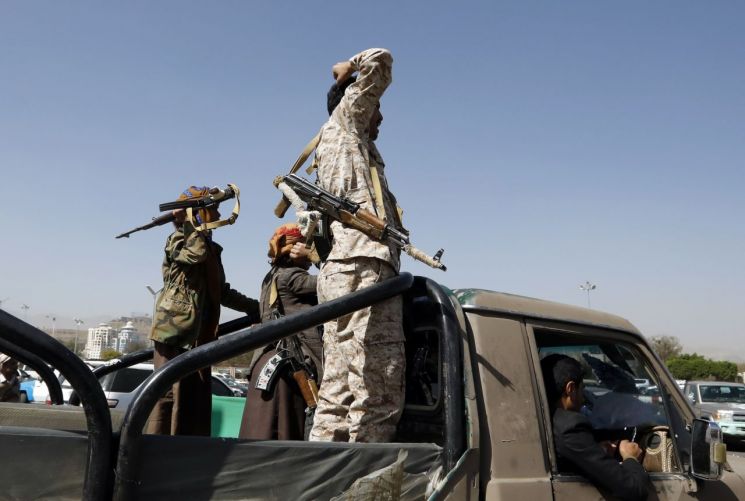
[Asia Economy Reporter Hyunwoo Lee] Yemeni Houthi rebels have launched drone and ballistic missile attacks on oil fields in eastern Saudi Arabia. This marks a resumption of attacks just three days after they targeted oil storage tanks in western Saudi Arabia. The Saudi military immediately retaliated with airstrikes, indicating that clashes between the two sides are expected to intensify. Notably, the eastern Saudi oil fields are densely packed with oil refining facilities as well as export ports and infrastructure, raising concerns over a sharp rise in international oil prices.
According to foreign media including the Associated Press, on the 7th (local time), Yemeni Houthi rebels attacked major Aramco oil facilities in eastern Saudi Arabia, including Ras Tanura, Dammam, Asir, and Jazan. The Houthis claimed to have launched 14 drones and 8 ballistic missiles causing damage. Major foreign news outlets reported that two residents near Dhahran, close to Dammam, reported hearing explosions around 8 p.m. that day, confirming the airstrikes took place.
Following the airstrikes, the Saudi military announced it intercepted 12 drones and 2 ballistic missiles launched by the Yemeni Houthi rebels, and conducted airstrikes with fighter jets on Houthi bases around Sana'a, the capital of Yemen. Saudi state media did not disclose the exact locations of the airstrikes but stated only that "12 armed drones and 2 ballistic missiles targeting civilians and facilities were intercepted."
The Saudi Ministry of Energy stated, "Although the oil storage tanks in Ras Tanura were attacked by drones, there were no casualties or losses." Ras Tanura is home to the world's largest refinery and offshore oil loading facilities. In 2019, when the Houthi rebels attacked this area and the eastern region with drones and ballistic missiles, Saudi Arabia temporarily cut its daily crude oil production to less than half.
Saudi Arabia sharply criticized the U.S. conciliatory policy toward the Houthi rebels. Saudi state media pointed out, "Since the Houthis were removed from the U.S. terrorist organization list, their attacks have become more audacious." Previously, the Biden administration pursued a conciliatory policy by halting support for Saudi attacks on the Houthis and removing the Houthis from the terrorist list, while engaging with the UN for ceasefire negotiations. However, as the Houthis intensified their offensives, the U.S. announced sanctions on some Houthi leaders, leading to a renewed escalation of the conflict.
© The Asia Business Daily(www.asiae.co.kr). All rights reserved.












