ECB Deposit Rate at -0.5% Threshold
Depositors Must Pay Interest to Banks
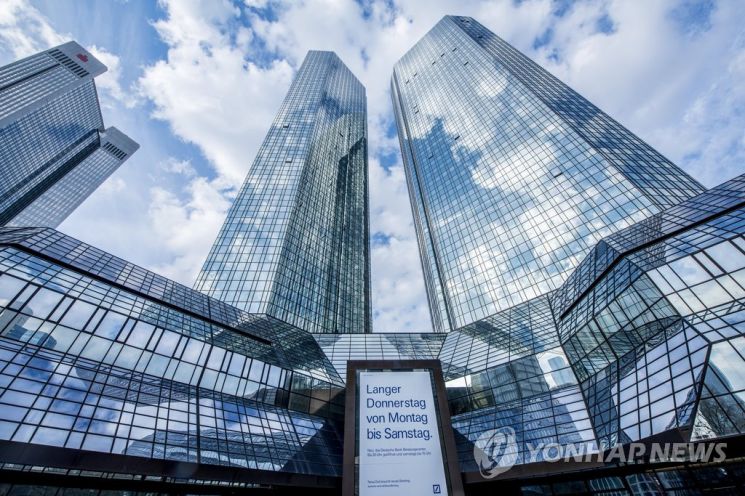
[Asia Economy Reporter Lim Juhyung] Major German banks are reportedly advising customers to deposit their funds in other banks due to the impact of so-called 'negative interest rates,' drawing significant attention.
According to the Wall Street Journal (WSJ) on the 1st (local time), prominent German banks such as Deutsche Bank and Commerzbank have been applying an annual negative interest rate of -0.5% on new customer deposits exceeding a certain amount since last year. In other words, bank depositors have to pay interest to the bank instead of receiving it.
This is due to the benchmark interest rate policy of the European Central Bank (ECB), which serves as the central bank for the Eurozone. Germany, a member of the Eurozone that uses the euro, follows the ECB's interest rate policy, and the ECB has maintained the deposit rate applied to bank deposits at -0.5% for several years.
However, German retail banks have responded by raising fees rather than directly applying negative interest rates to deposits, fearing backlash from customers.
But as liquidity released due to the COVID-19 pandemic starting last year began to flood into banks, the burden of interest costs increased, and eventually, the number of German banks applying negative interest rates on deposits has grown, WSJ reported.
According to the price comparison site 'Verivox,' the number of German banks charging negative interest rates on personal customer deposits was only 57 as of March last year, but it has now surged more than fourfold to 237.
As a result, there have even been unusual scenes where banks outright advise customers to move their deposits to other banks. In fact, Deutsche Bank is known to provide an online interest rate comparison service to make it easier for customers to transfer deposits to other banks.
© The Asia Business Daily(www.asiae.co.kr). All rights reserved.












