US Begins Supply Chain Review Including Electric Vehicle Batteries
Expected to Mediate Dispute with LG
High Risk of Trade Conflict with China
Urgent Need for Cooperation with Korean and Japanese Companies
[Asia Economy Reporter Choi Dae-yeol] SK Innovation's repeated announcement of additional local investment plans to the U.S. administration appears largely aimed at appealing not only the immediate employment and economic effects but also the enhancement of the relatively weak competitiveness of the U.S. battery industry compared to rival countries.
Batteries are the most spotlighted next-generation power source in the post-oil era, with only countries like South Korea, China, and Japan standing out, while others lag far behind. The Biden administration is actively addressing the climate change crisis and has begun reviewing supply chains in key sectors, including electric vehicle batteries. Amid ongoing disputes following the U.S. International Trade Commission's (ITC) 10-year import restriction on SK Innovation, there are prospects that the White House, holding the key, will mediate between SK Innovation and LG Energy Solution.
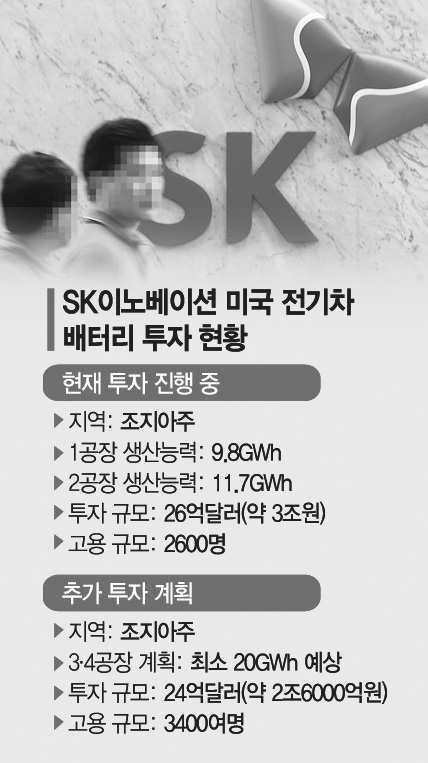
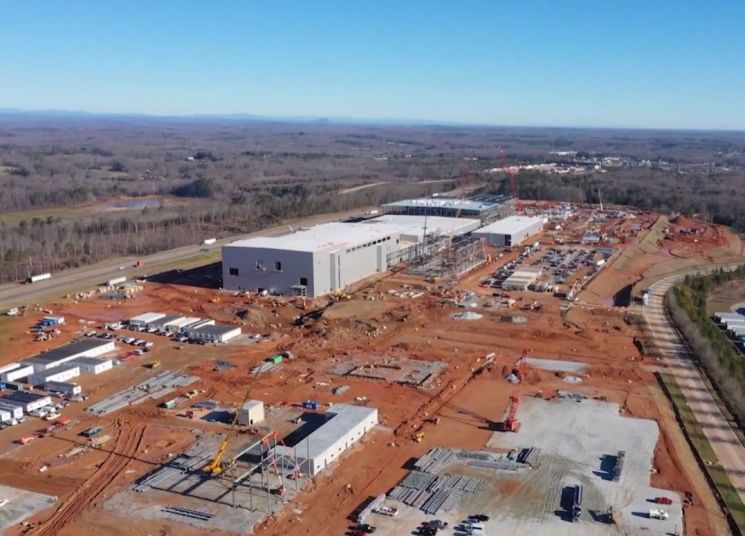
According to a report by the Wall Street Journal (WSJ) on the 1st (local time), SK Innovation and LG Energy Solution recently submitted their opinions to the U.S. administration regarding the battery dispute. This is part of a procedure during the 60-day presidential review following the ITC's final decision. SK reportedly emphasized its plan to invest an additional $2.4 billion on top of the $2.6 billion already spent building two plants in Georgia. The first Georgia plant, completed, is set to begin commercial production within the year, while the second is currently under construction.
SK plans to double its battery production capacity worldwide to 125 GWh by 2025. It has also been considering additional investments in the U.S., where electric vehicle demand is expected to increase. Although the ITC allowed some exceptions, if the 10-year import restriction imposed last month is finalized, SK would have to shut down its U.S. operations, including the battery plants it has already invested in. On the other hand, LG reportedly conveyed that the existing ITC decision should be upheld, according to WSJ.
There has been no precedent of a president vetoing an ITC import restriction imposed due to intellectual property (IP) infringement such as workforce or technology theft. However, President Biden's active stance, including ordering a review of supply chains over concerns about future electric vehicle battery shortages in the U.S., remains a variable. This is also the slender hope SK is pinning on.
President Biden has previously proposed increasing the electric vehicle adoption rate to 25% by 2026, including converting 3 million government vehicles to electric. Batteries, the core of electric vehicles, are dominated by Asian countries such as CATL and BYD (China), LG Energy Solution, Samsung SDI, SK Innovation (South Korea), and Panasonic (Japan).
Especially since trade disputes with China can erupt at any time, cooperation with Korean or Japanese companies is crucial. Electric vehicle battery manufacturing capabilities cannot be built quickly, and considering the material and component supply chains each company has established, investment by Korean companies in the U.S. is difficult to reject. However, as LG argues, if the president exercises veto power, it would be burdensome as it would appear to disregard IP rights.
While each company has conveyed its position, they have also left open the possibility of a settlement including financial compensation. The ITC decision can be withdrawn if the two companies reach an agreement. With the ball now in President Biden's court, including veto power, there are prospects for a dramatic settlement under the mediation of the U.S. administration.
© The Asia Business Daily(www.asiae.co.kr). All rights reserved.












