Registered as Science and Technology History No. 3-2 and No. 7, respectively
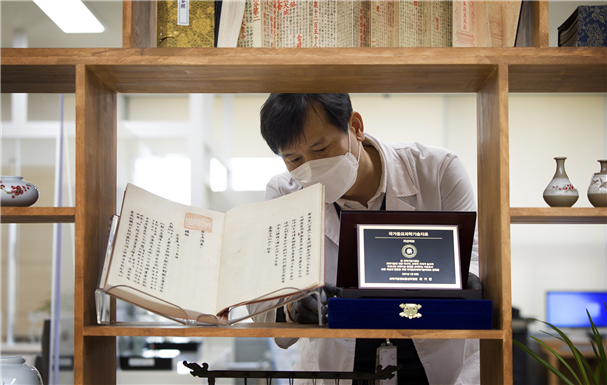
Heo Jun (1539?1615)'s Donguibogam and Jeong Yak-jeon (1758?1816)'s Jasaneobo have been classified and managed as National Important Scientific and Technological Data. The National Library of Korea announced on the 1st that its collections of 25 volumes of Donguibogam and one manuscript volume of Jasaneobo have been registered as National Important Scientific and Technological Data, Science and Technology History Nos. 3-2 and 7, respectively.
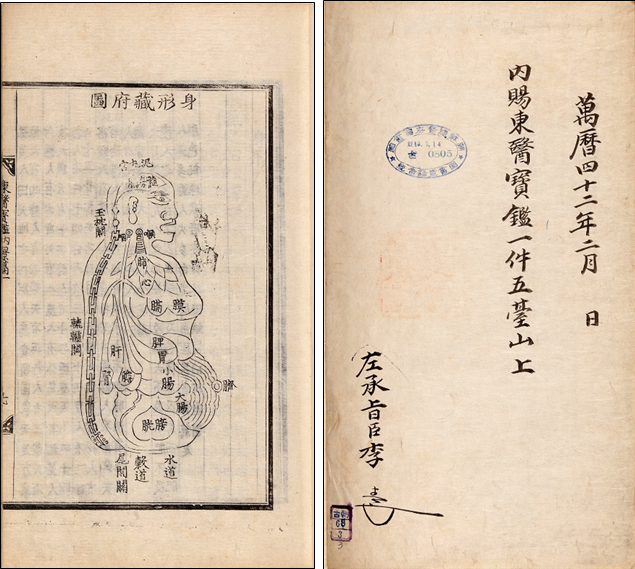
The National Library of Korea's Donguibogam is an internal royal copy (Na-sa-bon, a book bestowed by the king to officials) preserved at the Odaesan Archive since February 1614. It is intended for permanent preservation, thus retaining its original form almost intact. This book was compiled in 1610 by Heo Jun under King Seonjo's command, synthesizing over 200 medical texts from Korea, China, and other East Asian countries. It covers not only disease treatment but also prevention and health promotion, earning high international acclaim as a medical text. It was registered as a UNESCO Memory of the World in July 2009 and was elevated to National Treasure No. 319-1 in 2015.
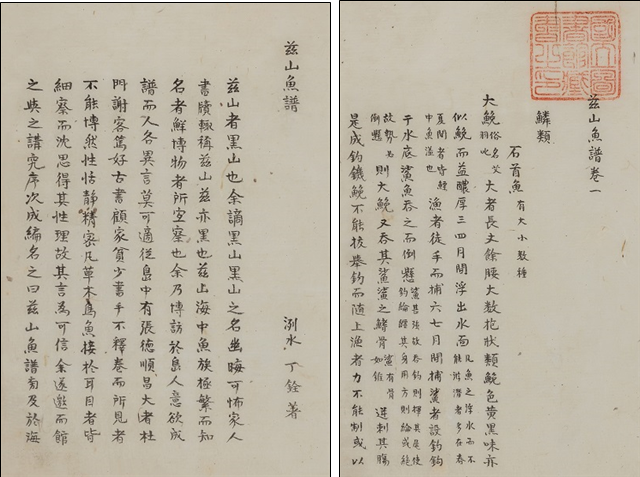
The original Jasaneobo has not been preserved. The National Library of Korea's copy is a 1946 manuscript. The names of the original owner, the copyist, the proofreader, and the date of transcription are clearly recorded. A library official stated, "It holds great historical and educational value regarding science and technology." This book is Korea's first ichthyological encyclopedia, compiled in 1814 by Jeong Yak-jeon, who investigated the fish species along the coast of Heuksando Island during his exile. It explains fish with scales, fish without scales, hard marine creatures, and miscellaneous species. Although it does not meet modern scientific classification standards, it reveals a scientific attempt to classify fish according to certain criteria for better understanding.
© The Asia Business Daily(www.asiae.co.kr). All rights reserved.

![Clutching a Stolen Dior Bag, Saying "I Hate Being Poor but Real"... The Grotesque Con of a "Human Knockoff" [Slate]](https://cwcontent.asiae.co.kr/asiaresize/183/2026021902243444107_1771435474.jpg)
















