During the Week, Korean Cultural Center's 13-Year-Running Exercise Causes Controversy Claim
Chinese Media's Weak Logic Wrapped by Netizens' Comments
[Asia Economy Beijing=Special Correspondent Jo Young-shin] Chinese media have criticized the "Correct Understanding of Korea" campaign, citing the voices of Chinese netizens. They appear to be picking fights over various aspects of Korean culture, including statements by BTS, the nationality of poet Yun Dong-ju, and the origins of Kimchi.
China's state-run Global Times published a provocative article on the 1st regarding the "13th Recruitment Announcement for Korean Correct Understanding Ambassadors" by the Korean Cultural Center in China, stating that the announcement has sparked controversy among Chinese netizens.

The Korean Cultural Center issued the recruitment announcement to disseminate information and culture about Korea. They are recruiting 50 people who will be active for eight months from April to December. Now in its 13th year, this Correct Understanding of Korea campaign aims to correct misinformation about Korea and improve the country's image.
The Global Times reported that the campaign has stirred controversy among Chinese netizens. Chinese netizens claim that the campaign unilaterally demands corrections to inaccurate history and culture.
The media outlet stated that Korean netizens are accusing China of stealing Korean culture such as Kimchi and Hanbok, and recently, a Korean professor (Seo Kyung-duk) has been demanding that the nationality of the famous Chinese poet (Yun Dong-ju) be changed to Korean.
The article included a comment from a Chinese netizen saying, "Isn't the Correct Understanding of Korea campaign about enforcing their claims by correcting what the country believes to be wrong?"
The Global Times, known for its strong nationalist stance, also reported that the Korean Cultural Center in China has been conducting related events for 13 years and is recruiting not only Koreans but also foreigners.
The Global Times claimed, "The conflict between the two sides stems from misunderstandings," and argued, "Such campaigns will harm cultural exchanges between the two countries."
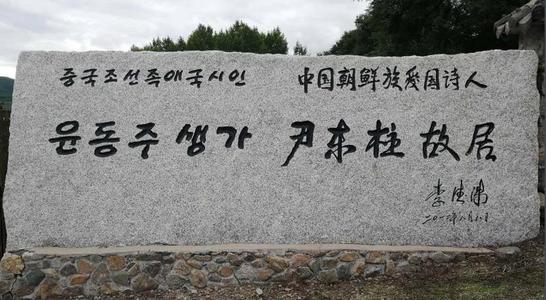 Monument of poet Yun Dong-ju at the entrance of Yongjeong Village, Yanbian Korean Autonomous Prefecture, Jilin Province, China. (Photo by Baidu capture)
Chinese media previously reported that Big Hit Entertainment, BTS's agency, used a map in its performance report that marked South Tibet as Indian territory rather than Chinese, drawing criticism from Chinese netizens.
They also advocated that experts from both countries should verify and analyze the nationality of poet Yun Dong-ju.
© The Asia Business Daily(www.asiae.co.kr). All rights reserved.













