"Let's Aim for Resident Priority Supply"
Pre-Subscription Demand Expected to Surge Significantly in 2023
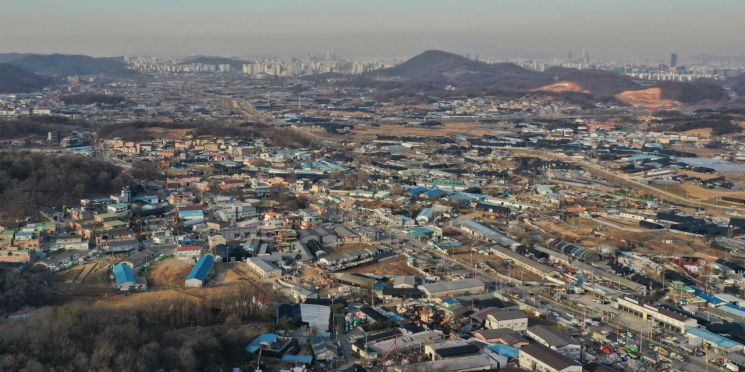
[Asia Economy Reporter Onyu Lim] Concerns over a rental housing crisis triggered by the ‘Gwangmyeong-Siheung District’ are spreading in the southwestern metropolitan area. Following last year’s rental shortage caused by relocation demand due to large-scale redevelopment and reconstruction, there is a forecast that if relocation demand aiming for the 2023 pre-subscription in the Gwangmyeong-Siheung District surges, it could stimulate the rental markets not only in Gwangmyeong and Siheung but also in surrounding areas such as Anyang and the southwestern part of Seoul.
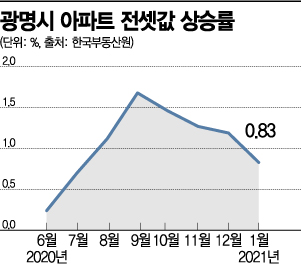
According to the Korea Real Estate Board on the 26th, the apartment rental price increase rate in Gwangmyeong last month was 0.83%. This is the first time since July last year that the monthly increase rate, which had consistently been above 1%, dropped to the 0% range.
The surge in rental prices in the Gwangmyeong area in the second half of last year was due to concentrated relocation demand in redevelopment zones within the New Town and reconstruction complexes, as well as the implementation of the contract renewal request system and the rent and lease ceiling system, which caused a severe shortage of available rental properties. The rental shortage was severe enough to stimulate rental prices in the adjacent Seoul districts of Guro and Geumcheon.
Fortunately, with the moving demand for the new semester winding down and entering the off-season, and relocations due to redevelopment projects nearing completion, the rental market in the Gwangmyeong area has recently shown some signs of stabilization. A representative from real estate agency A in the area explained, "Relocations in Gwangmyeong New Town districts 1, 2, 4, 5, and 10, as well as Cheolsan Jugong complexes 8 and 9, have ended or are nearing completion, and from this year, rental listings are gradually accumulating." According to apartment transaction data from the real estate big data company Apartment Real Transaction, rental listings in Gwangmyeong apartments have increased by more than 36% from 794 three months ago to 1,082.
However, the announcement of the selection of the mammoth-scale Gwangmyeong-Siheung District, with 70,000 households, is raising concerns as a new source of instability in the rental market of the area that had just begun to calm down. Since the pre-subscription is scheduled for 2023 and the main subscription for 2025, there is a high possibility that relocation demand aiming for priority supply to ‘residents of the relevant area’ will surge. Considering that the population of Gwangmyeong City is only 290,000, the number of eligible non-homeowner household heads is expected to be limited. Given that public and private supply accounts for about 46,000 households, or 60% of the total, the chances of local residents winning the lottery are relatively higher.
The impact of subscription waiting demand on the rental market was already confirmed last year through Hanam. Hanam recorded the highest rental price increase rate nationwide last year as the extension of Subway Line 5 improved access to Seoul, and a large number of subscription waiting demand for the 3rd New Town Gyosan District moved there. According to KB Real Estate, the apartment rental price in Hanam rose sharply by 50.2%, from 11.685 million KRW per 3.3㎡ in January last year to 17.554 million KRW in December.
Yang Ji-young, head of R&C Research Institute, said, "As the population moving to the area to apply for the Gwangmyeong-Siheung District subscription increases, severe rental shortages due to waiting demand, similar to Hanam, are inevitable."
© The Asia Business Daily(www.asiae.co.kr). All rights reserved.













