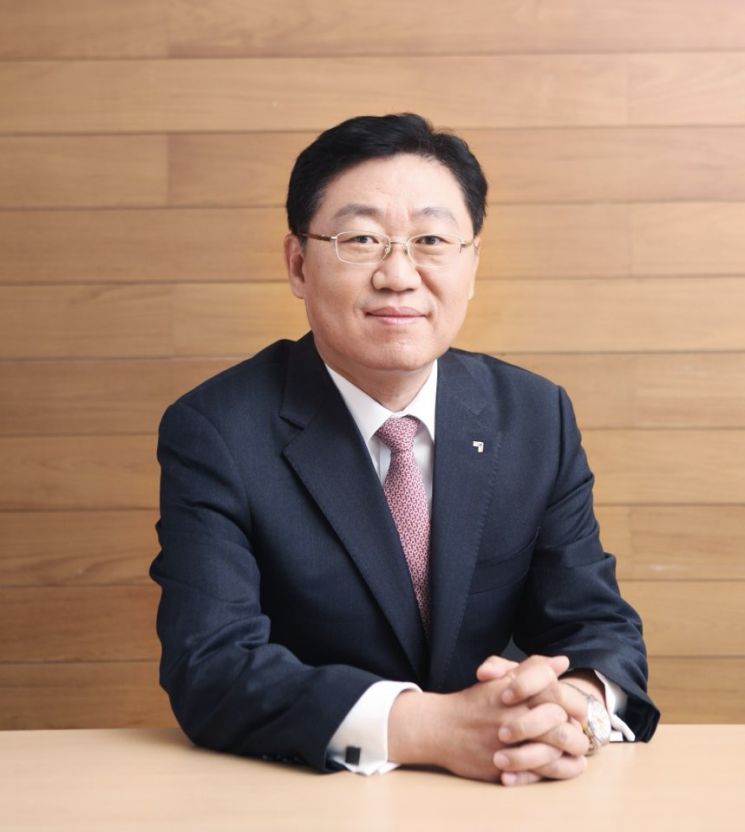
[Asia Economy reporters Junho Hwang and Minji Lee] "It is not good to continue carrying the uncertainty of short selling to firmly establish the KOSPI 3000 era."
On the 21st, when asked about the resumption of short selling at an online New Year's meeting, Na Jae-cheol, chairman of the Korea Financial Investment Association, responded that the government should promptly decide whether to resume short selling.
The government has banned short selling until March 15. Last year, as the market declined due to the COVID-19 pandemic and short selling forces concentrated, short selling was banned to prevent a stock price crash. Short selling is a profit technique where stocks expected to fall are borrowed and sold, and if the actual stock price drops, the stocks are repurchased to return them. Recently, as concerns about stock price declines have lessened with the KOSPI maintaining the 3000 level, the resumption of short selling is being reviewed.
Chairman Na said, "While everyone agrees on the positive functions of short selling, such as preventing excessive market bubbles and improving price discovery efficiency, what we need to consider now is that market participants have very different perspectives on the impact of short selling on the market." He added, "Foreigners and institutions highly value the positive functions of short selling, but individual investors see many problems and unfairness in the current short selling system. Since fairness among investors is important and global consistency is also crucial, market participants should respect each other's opinions and narrow their differences."
A Financial Investment Association official interpreted this as "the uncertainty over the resumption of short selling acts as a source of instability in the stock market, so they want a quick decision."
Additionally, Chairman Na called for an expanded role of institutional investors such as pension funds. He said, "For the KOSPI to grow steadily, participation from institutional investors and foreigners is necessary," and added, "We will attract their funds to create a solid demand base for the stock market."
He also mentioned that K-New Deal funds are being prepared with member companies, aiming to provide various K-New Deal funds as investment alternatives. Regarding ESG (Environmental, Social, and Governance), he stated, "We are promoting mandatory ESG disclosures, and securities firms will lead the release of ESG analysis company reports and private ESG indices," adding, "We will form an ESG consultative body to respond to policy changes and understand the difficulties of member companies to promote related system improvements."
Finally, Chairman Na advised individual investors that it is time to engage in effective asset management through diversification. He cautioned, "Hasty and reckless investments such as Yeongkkeul (borrowing to the limit) and Debt Investment should be avoided," and emphasized, "A thorough evaluation of investment targets and using funds according to one's investment style are necessary."
© The Asia Business Daily(www.asiae.co.kr). All rights reserved.












