Biden's Core Economic Policies Focus on 'Eco-Friendliness' and 'Free Trade'
Positive Impact on Key Manufacturing and Export Companies: "Busan-type New Deal Must Be Accelerated"
Opportunities for Renewable Energy Companies in Eco-Friendly Au
[Asia Economy Yeongnam Reporting Headquarters Reporter Kim Yong-woo] What direction should Busan's economy prepare for in the Biden era?
The dawn of the Biden era signals the restoration of free trade and the growth of eco-friendly related industries. There is a growing voice that Busan must lead the future growth engine of regional industries through a ‘Busan-type New Deal’ in response.
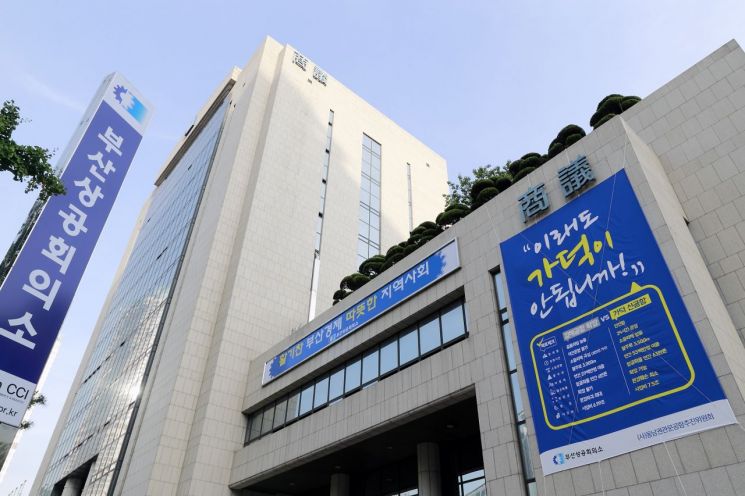
The Busan Chamber of Commerce and Industry (Chairman Heo Yong-do) announced the results of a survey of experts in various fields from the advisory professor group of the Busan Chamber regarding the direction Busan’s economy should take in line with the upcoming Biden era, ahead of U.S. President Joe Biden’s inauguration on the 20th.
According to the survey results, all seven advisory professors pointed to the most important economic policy change of the Biden administration as the promotion of a strong industrial policy based on eco-friendliness.
This means a return to free trade based on the restoration of multilateral trade agreements, abandoning the protectionist stance pursued by the Trump administration.
The large-scale economic stimulus measures that the Biden administration will promote to overcome COVID-19 are expected to accompany a decline in the value of the dollar, making it highly likely that global investment funds will shift to emerging countries with relatively higher investment returns. Therefore, it is analyzed that this will be an opportunity for Busan, which has strengths in parts and materials industries.
Also, even with the change to the Biden administration, it is expected that the U.S. will continue to check China’s ‘technological rise.’ As the existing supply chain system is expected to be reorganized from China to countries such as Korea, Taiwan, and Vietnam, companies equipped with future technologies such as solar power, wind power, hydrogen, secondary batteries, and 5G are anticipated to have an excellent opportunity to grow into global brands.
On the other hand, the strengthening of U.S. industrial reconstruction policies aimed at countering China’s advanced industry pursuit may cause a decrease in parts exports to China in the regional economy, so companies with a high proportion of exports to China are expected to prepare for diversification of export destinations.
Looking at major industries, in the case of automobile parts, good business opportunities are expected to be provided to parts and electronic component companies related to future eco-friendly vehicles such as electric cars.
The shipbuilding equipment industry is also expected to increase its market share in the LNG carrier and LNG-powered ship markets based on the growth of the eco-friendly ship market, and the order backlog of related equipment companies is expected to gradually increase.
Since the government’s Green New Deal policy and the Biden administration’s eco-friendly policy directions are similar, benefits are also expected for local wind power companies and companies equipped with hydrogen transportation and storage technologies.
Overall, the weak U.S. dollar and expansion of free trade are likely to create a favorable export environment for the region’s leading manufacturing industries, raising expectations for improved performance in the local shipping industry, which has suffered from a decrease in volume.
However, the implementation of the U.S.’s strong carbon neutrality policy and rejoining the Paris Climate Agreement will lead to the imposition of carbon taxes, which may cause an increase in manufacturing costs for industries such as steel and petrochemicals that are far from eco-friendly, so special caution is needed.
The tourism industry, which is facing an industrial collapse crisis due to a sharp decline in tourists, is also expected to show gradual recovery if herd immunity is quickly achieved worldwide through COVID-19 vaccination.
In particular, whether herd immunity is achieved in the ASEAN economic zone, which is expected to grow by the mid-6% range this year, is seen as the key to the revival of the local tourism industry.
A representative of the Busan Chamber of Commerce and Industry explained, “If President Biden, a moderate free trader, drives eco-friendly policies after taking office, leading manufacturing companies facing growth limits may have the opportunity to challenge high value-added renewable energy-related businesses.”
He added, “The local business community will also actively play a role in monitoring these changes in the global trade environment and ensuring that innovative industrial policies such as the Busan-type New Deal can be prepared.”
© The Asia Business Daily(www.asiae.co.kr). All rights reserved.












