[Asia Economy Reporter Moon Hyewon]As below-freezing temperatures continue, heating products that can warm up the home are gaining popularity.
According to Gmarket, an online shopping mall operated by eBay Korea, sales of foot warmers from the 26th of last month to the 1st of this month increased about threefold compared to the same period last year. Sales of radiators and heaters also rose by 34% and 29%, respectively.
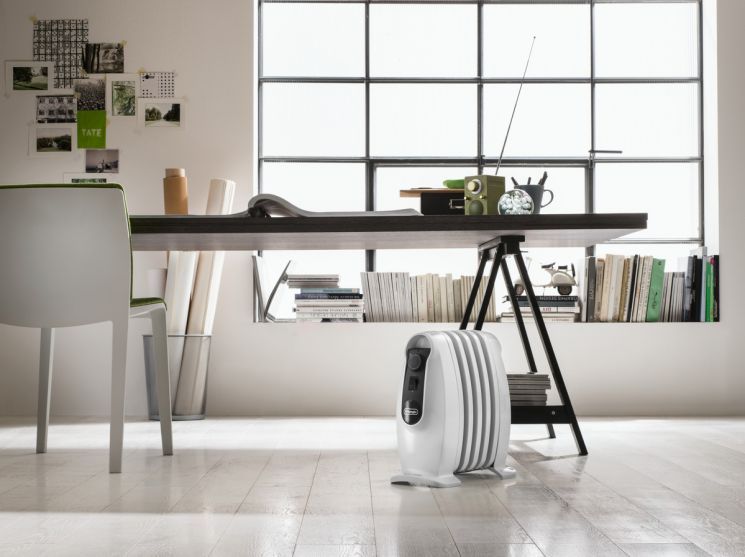
Recently, with the increase in single- and two-person households, small heating products for efficient heating are becoming popular. The De'Longhi radiator ‘Nano S’ uses real energy technology to reach the desired temperature faster and maintain an even temperature, enabling efficient heating without unnecessary energy consumption.
Its internal oil heating method, which does not directly burn air, allows comfortable use without dry or stuffy air, and the wide, rounded fin design quickly and evenly transfers radiant heat.
Since it operates without noise from fans or motors, it can be used comfortably in homes with children or office spaces.
The De'Longhi ‘Capsule Heater’ offers fast and even heating with a powerful 1800W output and features efficient and safe ceramic heating technology that controls the heating level of the ceramic heating element according to the indoor temperature setting. Heat is delivered directly from the heating element through a fan, providing warmth immediately after turning on the power.
The capsule heater, which attracts attention with its sleek and compact design, weighs only 1.3kg, making it usable in any space such as on a table or in a small room, and it has a handle for easy portability. It offers two-stage power adjustment, includes an overheating prevention function, maintains a minimum temperature of 5°C to prevent freezing, and has a safety power cut-off device to prevent fire in case it tips over during use.
Recently released by Kiturami, the ‘Kiturami Carbon Mat Ondol’ is characterized by applying a special carbon heating wire instead of using water like conventional water mats.
Early heating mats used electric heating wires, which generated harmful electromagnetic waves. To solve this, water mats with water circulation pipes were introduced, but drawbacks such as electricity bills, bacteria, water refilling, noise, and heat efficiency gradually appeared.
Kiturami’s carbon mat addresses these drawbacks of existing electric and water mats.
It has received Electromagnetic Field (EMF) certification to eliminate concerns about electromagnetic waves, and unlike water mats that only warm the body parts in contact with the mat, the carbon mat emits a large amount of far-infrared radiant heat to deliver warmth throughout the entire body.
The average monthly electricity cost when used 8 hours a day is 1,130 KRW, which is about one-quarter of that of conventional water mats.
© The Asia Business Daily(www.asiae.co.kr). All rights reserved.












