Social Distancing Level 2 in Seoul Metropolitan Area... Clubs Closed and Restaurant Operating Restrictions
Younger Generation Avoiding Bars, Sometimes Going to Party Rooms
Experts "Younger Generation Must Be Alert to COVID-19"
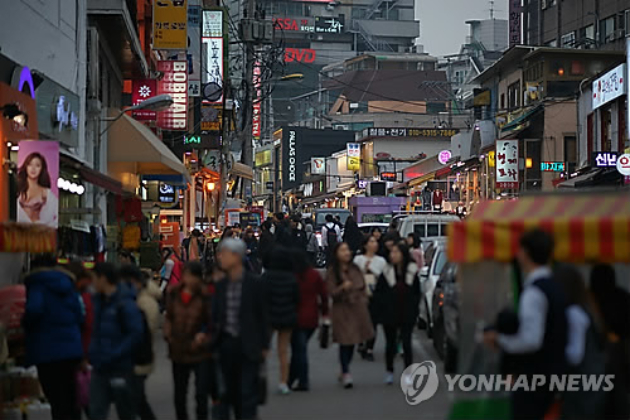
[Asia Economy Reporter Heo Midam] "You can't hang out at bars until dawn...", "But wouldn't party rooms be safer?"
As social distancing in the Seoul metropolitan area has been raised to level 2, some young people are flocking to party rooms instead of entertainment venues. Due to stricter social distancing measures, bars and similar establishments must close after 9 p.m., leading to various restrictions. As a result, a kind of 'balloon effect' is occurring where people are turning to party rooms, which are virtually unregulated.
However, since party rooms are indoor spaces used by many people, they are vulnerable to the risk of COVID-19 infection. Experts emphasize the importance of refraining from outings and events and strictly following personal quarantine rules.
With the social distancing level in the metropolitan area raised to level 2 from the 24th, quarantine measures have been significantly strengthened, especially for multi-use facilities. Under these measures, restaurant operating hours are limited to 9 p.m., and both franchise and small neighborhood cafes are restricted to takeout and delivery only. Entertainment facilities such as clubs and room salons have been completely banned from operating.
Consequently, some people are turning to party rooms instead of entertainment venues with restrictions. Party rooms are spaces rented out for various parties or small gatherings, offering advantages such as lower prices compared to hotels and allowing outside food to be brought in.
Kim (25), a university student, said, "Because of COVID-19, we can't hang out at bars until late at night. I booked a party room to have a more comfortable time." He added, "I think party rooms are safer than bars where there are many strangers. I'm worried about COVID-19, but since none of my acquaintances have been infected yet, I'm not too concerned."
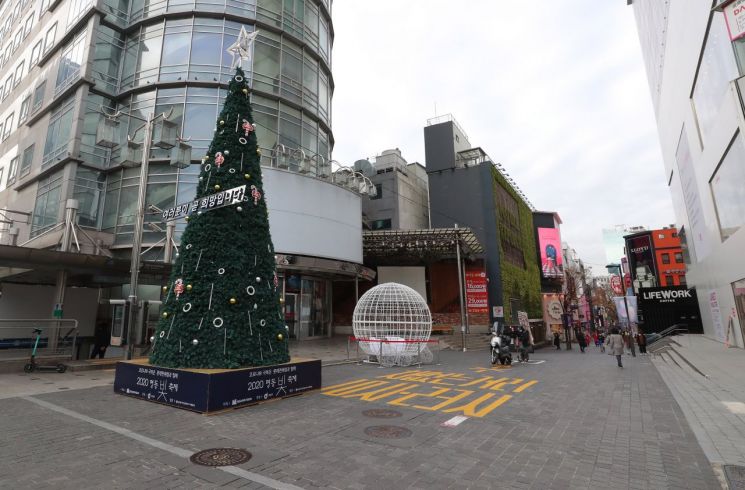 On the afternoon of the 24th, when social distancing in the metropolitan area was raised to Level 2, the streets of Myeongdong, Seoul, appeared quiet. [Image source=Yonhap News]
Like Kim, a considerable number of people have recently been booking party rooms. On social media platforms such as Twitter and Facebook, photos of gatherings with acquaintances in party rooms are steadily being posted. Especially on Instagram, searching for 'party room' yields about 395,000 posts as of the 26th. Posts about 'party room rentals' have also exceeded 30,000.
One netizen posted a photo taken in a party room with the caption, "It's been a while since I came to a party room, and I'm having fun. The season of parties is finally back," along with hashtags like #PartyRoomRecommendation.
The problem is that party rooms are somewhat of a 'blind spot' in quarantine measures. Except for cases where motels or hotels provide accommodation spaces as party rooms, most party rooms are classified as service businesses rather than lodging businesses. Therefore, they are practically free from government quarantine guidelines or regulations.
As a result, citizens are raising concerns and criticism that party rooms could become another infection route. While many people are refraining from going out and canceling appointments as confirmed cases increase, it is pointed out that insisting on gatherings by renting party rooms is inappropriate.
Office worker Lee (26) said, "Today alone, there are nearly 600 confirmed COVID-19 cases. The virus survives longer in winter, making it much more dangerous than in summer. At times like this, individuals must strictly follow quarantine rules." He added, "I think the social distancing level needs to be raised further. Because the COVID-19 situation has dragged on for so long, people's awareness seems to have dropped compared to before."
He continued, "I don't understand why people would rent party rooms at a time like this," and said, "Cluster infections keep happening because of the complacent attitudes of some citizens."
In fact, young people are highly active, which increases the risk of virus transmission, and since many are asymptomatic or experience mild symptoms, they may unknowingly spread the virus to high-risk groups such as the elderly with weaker immune systems. According to the Central Disease Control Headquarters, in the past week, new confirmed cases among people in their 20s numbered 367 (17.8%), the highest among all age groups. This was followed by ▲50s with 359 cases (17.4%) ▲40s with 324 cases (15.7%) ▲60s with 298 cases (14.4%).
Experts suggest that young people, who have a wide range of activities, need to raise their awareness of COVID-19.
Professor Kim Woojoo of Korea University Guro Hospital said, "Young people are less cautious compared to the elderly," explaining, "Because there have been no deaths among those under 20 in Korea due to COVID-19."
He added, "However, when young people get infected with COVID-19, the risk of infection to family members living with them also increases, so caution is necessary," emphasizing, "We must be careful to prevent one infection from leading to 'Nth infections.' It is important to continuously follow personal quarantine rules, not just wash hands and wear masks when necessary."
© The Asia Business Daily(www.asiae.co.kr). All rights reserved.













