Kia Motors Files Dispute Mediation Request with Central Labor Relations Commission
Next Negotiations Expected After Securing Right to Strike
Hankook GM and Renault Samsung Face Difficulties in Wage and Collective Bargaining Talks
Union Holding Strike Rights May Launch Full-Scale Strike
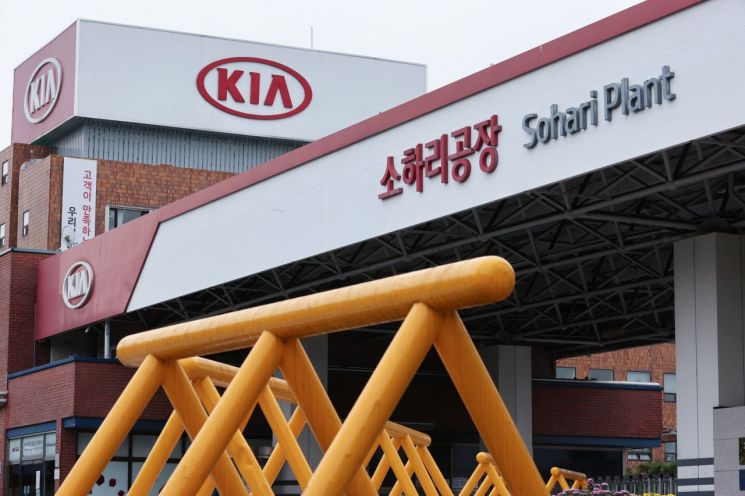
[Asia Economy Reporter Woo Su-yeon] The Kia Motors labor union, which is facing difficulties in this year's wage and collective bargaining negotiations, is applying for dispute mediation with the Central Labor Relations Commission to secure the right to strike. Meanwhile, the Korean GM and Renault Samsung Motors unions, which have already secured the right to strike, are weighing the timing of their strikes, indicating that strike risks are spreading throughout the automotive industry.
According to industry sources on the 26th, the Kia Motors union will hold an extraordinary delegates meeting to discuss countermeasures for the dispute and apply for dispute mediation with the Central Labor Relations Commission. Applying for dispute mediation is the first step toward a strike; after about ten days of mediation by the commission, if a decision to suspend mediation is made, the union will obtain a legal right to strike. This reflects the union’s calculation that securing the right to strike first and then continuing the main negotiations will give them a favorable position.
Previously, during the 9th main negotiation held on the 22nd, Kia Motors labor and management reportedly failed to make any significant progress and only confirmed their differences in position. The union demanded a comprehensive proposal from management, but management insisted on continuing practical negotiations, leading to a breakdown in talks.
Moreover, with Kia Motors alone setting aside more than 1 trillion won in quality cost reserves and a deterioration in third-quarter performance expected, the labor-management relationship is rapidly cooling. Earlier, Hyundai Motors labor and management reached a no-strike wage and collective agreement by sharing a consensus on the industry's difficulties due to COVID-19, but Kia Motors has encountered the obstacle of quality costs, intensifying labor-management conflicts over responsibility.
Meanwhile, the Korean GM and Renault Samsung unions, which secured the right to strike early on, are also weighing the timing of their strikes, signaling a prolonged wage and collective bargaining negotiation this year. The Korean GM union began passive collective actions by refusing overtime and special work starting from the 23rd. The union demanded a revised proposal from management that included plans to secure new car volumes at the Bupyeong 2 plant, but the management’s revision only contained the existing position to extend the production schedule of the Trax and Malibu currently produced at the Bupyeong 2 plant.
Management emphasized the difficult business situation, stating that losses due to COVID-19 amounted to 60,000 units and 250 billion won in the first half of this year alone, but the union is maintaining a tough stance, keeping the possibility of a full strike open. Attention is focused on whether the two sides can narrow their differences even slightly in the next negotiation scheduled for the 27th.
Renault Samsung, another completed car manufacturer, is unable to set the next negotiation schedule as the union executive election is scheduled for early next month. Previously, the Renault Samsung union applied for dispute mediation, and on the 16th, the Central Labor Relations Commission decided to suspend mediation, thereby securing the legal right to strike. Renault Samsung labor and management plan to continue negotiations after the election.
© The Asia Business Daily(www.asiae.co.kr). All rights reserved.












