Generational Conflicts Among Families Ahead of Holidays
"Must Follow Quarantine Guidelines and Avoid Gatherings" vs "Still a Holiday, We Should Meet"
Experts Say "Efforts Needed to Understand Different Perspectives"
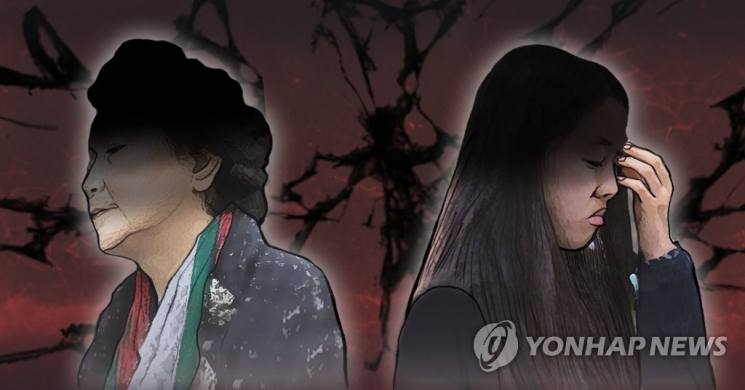
[Asia Economy reporters Seunggon Han and Seulgi Kim] "They tell us not to travel because of COVID-19...", "We have to gather together during the holidays. We want to see the kids' faces..."
As the government announced its 'Chuseok quarantine measures,' intergenerational conflicts have emerged. Opinions are divided between those who believe family gatherings should be avoided to prevent the spread of COVID-19, especially with the social distancing level in the metropolitan area raised to 2.5, and those who feel that families must come together during the national holiday.
Moreover, most participants in the 'Gwanghwamun rally' held on the 15th of last month were reportedly parents in their 50s to 70s, which has led to ridicule and criticism from the younger generations in their 20s and 30s.
On the 6th, the Central Disaster and Safety Countermeasures Headquarters (CDSCH) announced the 'Chuseok quarantine measures,' recommending that people stay home as much as possible for family and relatives during Chuseok and refrain from visiting ancestral graves or memorial facilities.
Son Young-rae, head of the CDSCH Strategic Planning Division, said at the regular briefing, "Given the current trend, it is predicted to be impossible to completely control asymptomatic and latent infections by Chuseok, which is three weeks away," adding, "There is a high possibility of infection spreading during family and relative gatherings involving long-distance travel."
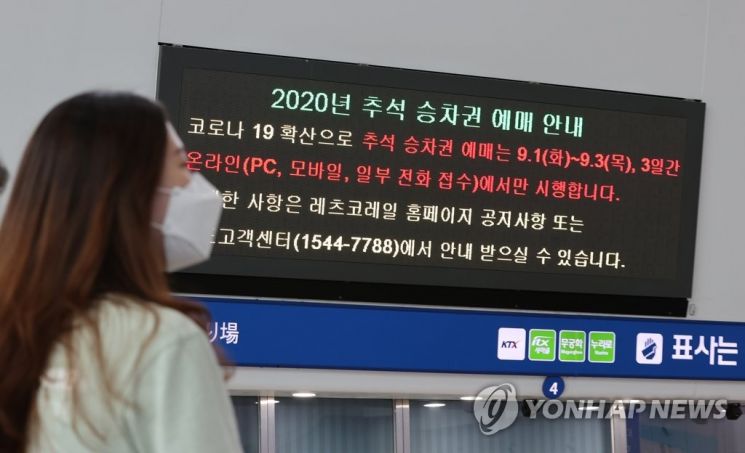 On the 1st, when Korail's Chuseok holiday ticket reservation began, a reservation notice was posted in front of the ticket window at Seoul Station.
 Photo by Yonhap News
Regarding this, the younger generations in their 20s and 30s believe that family gatherings such as ancestral rites should be refrained from in compliance with the quarantine authorities' recommendations. On the other hand, some older generations maintain the stance that "families must gather together during the holidays."
Choi, a man in his 30s who works at a company, said, "This is the first holiday since I got married. So, my in-laws seem to be secretly hoping to gather during the holiday," adding, "With COVID-19 chaos, is it really necessary to meet? They won't properly follow personal quarantine measures or wear masks during the rites or whatever. The recommendation to refrain from Chuseok gatherings should not be just a suggestion but enforced as a mandatory measure."
However, contrary to Choi's claim, the older generation, mainly parents in their 50s to 70s, expressed different views.
Yuk, a man in his 70s with children in their 40s, said, "Still, it's a great national holiday, so shouldn't we gather? We don't see each other often, so if not now, when will I see my children's faces?" He added, "We also have to perform ancestral rites... I think young people tend to dislike the holidays, and now COVID-19 has become a convenient excuse."
Some point out that COVID-19 has further intensified generational conflicts. Recently, the older generation has been at the center of incidents such as not wearing masks, assaulting subway passengers, and the Gwanghwamun rally, which has led younger generations to ridicule and criticize them.
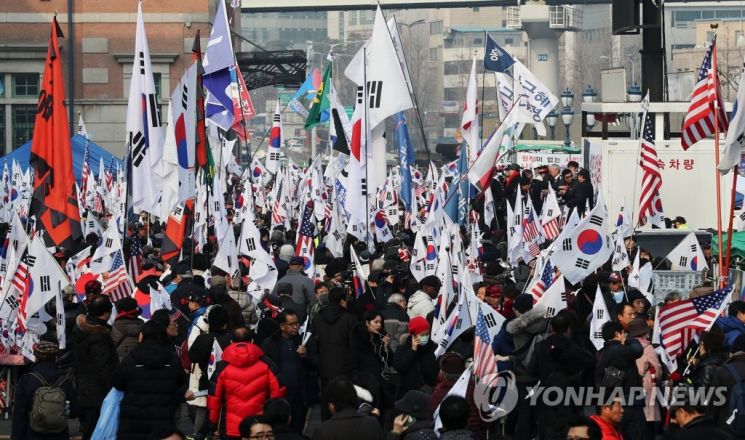 A rally is taking place in downtown Seoul. The photo does not contain specific expressions related to the article.
 [Image source=Yonhap News]
In particular, as cluster infections spread around the Gwanghwamun rally, quarantine authorities reported that among the confirmed cases from Sarang Jeil Church who attended the rally, 250 were in their 50s and 466 were aged 60 or older.
As a result, among people in their 20s and 30s, there were sarcastic remarks like "Please just stay home." On online communities and social networking services (SNS), harsh criticisms toward the older generation continued, with comments such as "They finally gathered and caused trouble," and "Men in their 50s and 60s acting up without masks, really disgusting."
Experts suggest that recognizing the lack of communication arising from different perspectives and understanding each other's positions is necessary.
Lee Dong-gwi, a professor of psychology at Yonsei University, said, "Because the economic losses from social distancing are significant, I believe we should not gather during Chuseok according to the quarantine authorities' recommendations," but added, "However, after the COVID-19 situation improves or depending on circumstances, there is room for flexibility and mutual acceptance. An understanding attitude toward each other is needed."
Professor Lee emphasized, "Rather than viewing this as a simple generational conflict, it is necessary to see it as a communication issue when positions differ. This Chuseok, even if we are far apart, we need a wise attitude and a perspective that allows us to feel family love and understand each other."
© The Asia Business Daily(www.asiae.co.kr). All rights reserved.














