Scientific Proof of Why Wheat Flour Causes Dry Obesity
Metabolic Diseases Like Non-Alcoholic Fatty Liver Triggered by Intestinal Leakage Syndrome from Wheat Starch
 Photo by Asia Economy DB
[Asia Economy Reporter Junho Hwang] A study has found that long-term excessive consumption of wheat flour (wheat starch) induces lean obesity, which in turn causes leaky gut syndrome and non-alcoholic fatty liver disease. Wheat flour foods promote the proliferation of harmful bacteria in the gut, which leads to leaky gut syndrome. As a result, food residues that leak outside the intestines promote the expression of lipid proteins, causing fat accumulation in the body.
Dr. Ho-Young Park of the Functional Materials Research Group at the Korea Food Research Institute recently published a research paper on this topic in the international journal 'Nutrition,' announced on the 19th.
Wheat Flour: Pleasing to the Palate but Straining the Gut
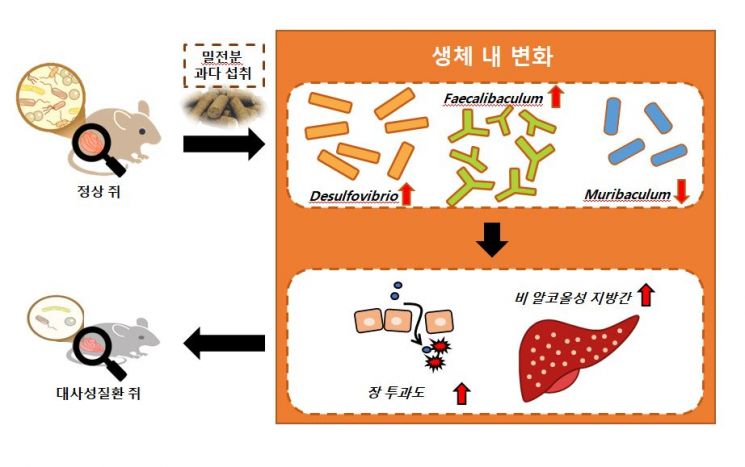
The number of adults with metabolic syndrome in South Korea has steadily increased over the past 20 years, along with a rising per capita wheat consumption. Particularly, there is a strong correlation between dietary habits involving frequent consumption of noodles and bread and the incidence of obesity. The research team scientifically validated this statistical similarity, confirming that continuous excessive intake of wheat starch can induce metabolic diseases.
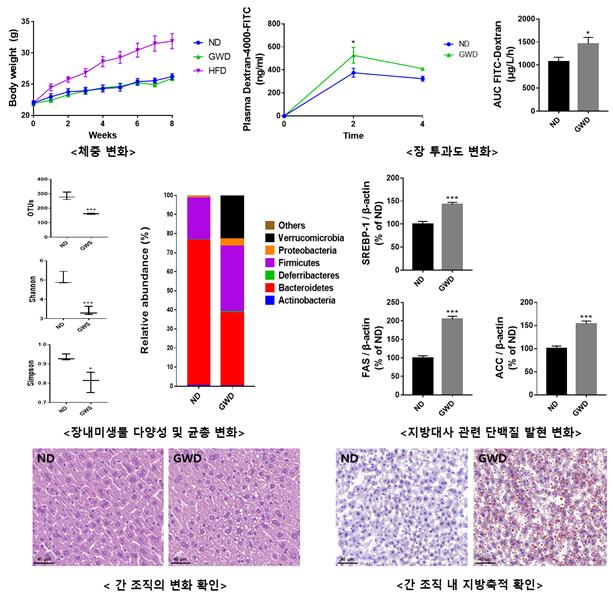
The team fed experimental mice a diet high in wheat starch for eight weeks and observed changes. The body weight of mice fed the wheat starch diet showed no significant difference compared to the control group fed a regular diet.
However, the mice consuming the wheat starch diet experienced a decrease in gut microbial diversity and changes in the microbiota composition. This means the microbial community living in the gut was altered. The proportion of bacteria commonly found in obese patients’ guts, such as Firmicutes and Bacteroidetes, increased significantly. Additionally, Proteobacteria, a gut microbe closely linked to metabolic diseases, increased sixfold.
As harmful bacteria increased in the gut, leaky gut syndrome also developed. The endotoxins released by these harmful bacteria damaged intestinal mucosal cells and weakened the intercellular junctions. Consequently, food residues and microbial components that should have remained in the gut leaked into the body. These substances circulated through the bloodstream and accumulated, promoting the expression of proteins related to lipid metabolism, such as synthetic enzymes, acetyl-CoA carboxylase, and sterol regulatory element-binding proteins. These proteins caused lean obesity, characterized by high body fat levels despite no increase in body weight. The research team confirmed that this process leads to metabolic diseases such as fatty liver.
Further Research on the Impact of High-Salt Diets and Gut Microbiota
The research team stated that they will continue to study the effects of various food components on gut microbiota and intestinal environment. The goal is to verify how high-carbohydrate diets like wheat starch and high-salt diets affect gut microbes and to develop functional food materials that can prevent metabolic diseases through these insights.
Hwang Jin-taek, head of the Functional Food Research Division at the Korea Food Research Institute, said, "The research achievement lies in revealing that specific diets can induce metabolic diseases mediated by gut microbiota. We expect to accumulate research results on how food components affect gut microbes and the intestinal environment, enabling the development of various gut health food materials."
© The Asia Business Daily(www.asiae.co.kr). All rights reserved.













