WHO Reviews Adding Airborne Transmission to COVID-19 Spread Routes
Position to Be Announced Within Weeks
Strengthening Social Distancing Guidelines Inevitable if Airborne
Global Economic Indicators Worsen
Stricter Quarantine Measures Could Pose Additional Risks
[Asia Economy Reporter Naju-seok] The World Health Organization (WHO) has given weight to the possibility of airborne transmission of the novel coronavirus infection (COVID-19). This marks a shift from its stance just a few days ago, when it expressed a negative view, saying the possibility was low. If airborne transmission is confirmed, additional quarantine measures will need to be established to block the risk, which means guidelines such as social distancing are expected to become stricter. The likelihood of another adverse factor for the global economy has also increased.
On the 7th (local time), Benedetta Allegranzi, head of the WHO Infection Prevention and Control Department, acknowledged that "new evidence has emerged in this area" regarding airborne transmission. Director Allegranzi stated, "In public places, especially those that are crowded, enclosed, and poorly ventilated, the possibility of airborne transmission cannot be ruled out," adding, "It is necessary to collect and analyze more data on (additional) increases." Maria Van Kerkhove, head of the WHO Emerging Diseases and Zoonoses Team, said, "We have been discussing the possibility of airborne or aerosol (smaller moisture particles than droplets in the air) transmission, similar to droplet (saliva) infection," and added, "We will hold a briefing within the next few weeks to provide an overall overview."
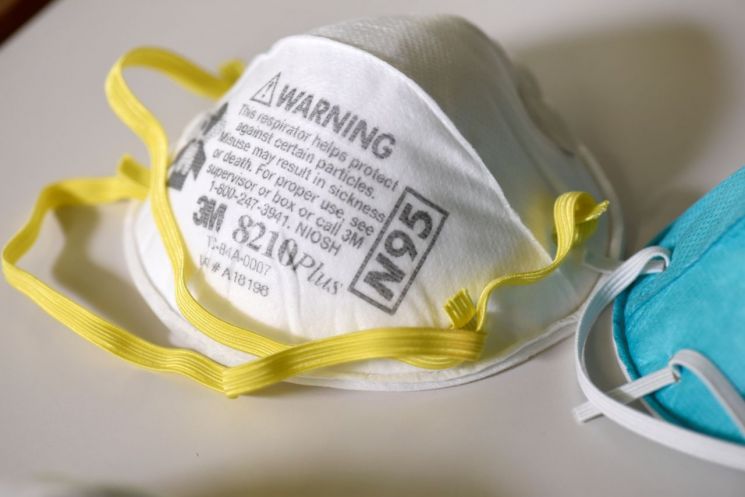
If WHO accepts the possibility of airborne transmission, the level of response in COVID-19 prevention measures will inevitably be raised. Until now, WHO has suggested maintaining a physical distance of about 1 meter to prevent COVID-19 infection. However, considering the possibility of airborne transmission, physical distancing guidelines will inevitably increase. Masks will also require wearing high-density masks such as N95, which filter even the smallest respiratory droplets, rather than masks that only block droplets.
Earlier, 239 scientists from 32 countries around the world issued an open letter stating that preventive guidelines should be revised because airborne transmission of COVID-19 is possible. Until now, WHO has viewed COVID-19 as transmitted through droplets expelled from the nose and mouth during coughing, sneezing, or talking by infected individuals. Droplets float in the air but fall quickly due to their weight, resulting in a short transmission distance. Emphasizing handwashing was also to prevent infection from droplets that have fallen on floors or surfaces.
The reason WHO has been reluctant to readily acknowledge the possibility of airborne transmission is seen by some as due to awareness of the explosive nature of the issue to some extent. Dr. Jose Jimenez, a chemist at the University of Colorado and one of the scientists who demanded revision of preventive guidelines, pointed out that if airborne transmission is adopted as a route of infection, "healthcare workers may refuse to go to hospitals, or people may start hoarding N95 masks." Airborne transmission could trigger further confusion.
The possibility of airborne transmission is expected to further shake an already unstable economy. On this day, the European Commission (EC) predicted that the economic situation would worsen as the lifting of lockdown measures taken to curb the spread of COVID-19 is slow. The European Union (EU) gross domestic product (GDP) growth rate was also revised downward from -7.4% to -8.3%. Raphael Bostic, president of the Federal Reserve Bank of Atlanta, said in an interview with a foreign media outlet, "The economic recovery curve has become bumpy." Mary Daly, president of the San Francisco Federal Reserve Bank, also pointed out at a U.S. Real Economy Association event that "while the U.S. employment situation looks better than initially expected, it is still far from healthy." She expressed concern, saying, "Both the federal and local governments are increasing spending while tax revenues are decreasing," adding, "This is an unsustainable position." The U.S. investment bank Jefferies recently forecasted that "the economic recovery curve is changing from a V shape to repeated W shapes."
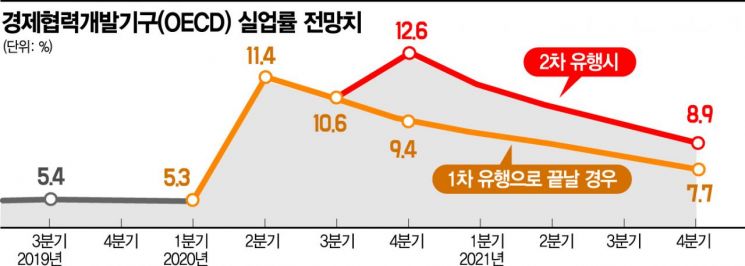
The Organisation for Economic Co-operation and Development (OECD) also predicted that the unemployment rate at the end of this year will be 9.4%, the worst since the Great Depression. However, this forecast assumes no additional COVID-19 outbreaks. If a second outbreak occurs, the unemployment rate is expected to soar to 12.6%.
The speed of COVID-19 infection is also worrisome. In April and May, the average daily new confirmed cases were in the 100,000 range, but now they have increased to the 200,000 range. Michael Ryan, WHO Executive Director for Emergency Preparedness and Response, warned, "There is a time lag between the trends of confirmed COVID-19 cases and deaths," adding, "It would not be surprising if deaths surge sharply."
© The Asia Business Daily(www.asiae.co.kr). All rights reserved.













