Hong Kong Tiananmen Memorial Rally Ban Lifted for the First Time in 30 Years
Boris Johnson UK Prime Minister, "Will Grant Immigration Rights to Hong Kong Citizens"
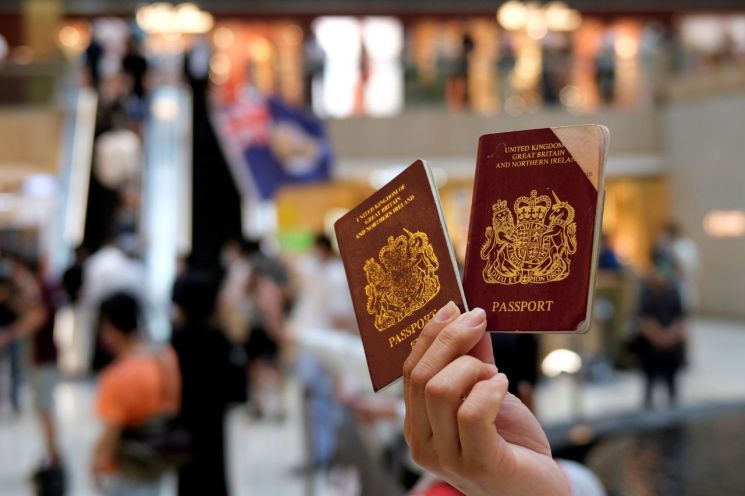
[Asia Economy Reporter Hyunwoo Lee] U.S. Secretary of State Mike Pompeo publicly criticized the Chinese government for banning the annual Tiananmen Square protest memorial held in Hong Kong, calling it an act that violates the "One Country, Two Systems" principle. The British government has declared it will accept Hong Kong residents into the UK even if it means amending immigration laws, intensifying the conflict between the West and China over the Hong Kong situation.
According to foreign media including CNN, Secretary Pompeo tweeted on the 2nd (local time), "For the first time in 30 years, China has denied permission for the Tiananmen memorial held in Hong Kong," adding, "China is rejecting the voices and choices of Hong Kong people and wants to make them the same as mainlanders. This goes against One Country, Two Systems."
Earlier, the Hong Kong police denied permission for the Tiananmen protest memorial scheduled for the 4th in Hong Kong. This memorial has been held annually on June 4th in Hong Kong, and this is the first time in 30 years that the Hong Kong police have denied it. The Tiananmen protest was a demonstration on June 4, 1989, where Chinese university students and citizens demanded democratization and political reform in Tiananmen Square in front of the Forbidden City in Beijing. The Chinese government at the time violently suppressed the protestors using tanks and armored vehicles.
Secretary Pompeo is scheduled to meet privately with Tiananmen protest survivors at the State Department later that afternoon. Since the Chinese government passed the Hong Kong National Security Law at the National People's Congress on the 28th of last month, the U.S. government has continued to confront China over the Hong Kong issue. U.S. President Donald Trump warned that following the passage of the Hong Kong National Security Law, the U.S. might revoke Hong Kong's special status and impose sanctions on Chinese companies and officials as retaliatory measures. China has criticized these U.S. retaliatory actions as interference in its internal affairs and has strongly opposed them.
The British government also warned that China's enforcement of the Hong Kong National Security Law completely violates the internationally agreed One Country, Two Systems principle made at the time of Hong Kong's handover. It indicated it might grant immigration rights to Hong Kong citizens. On the same day, British Prime Minister Boris Johnson wrote in an article for the South China Morning Post (SCMP), "If the Chinese government continues to enforce the Hong Kong National Security Law, the UK will amend immigration laws to allow Hong Kong citizens to enter the UK and be granted immigration rights," adding, "Up to 2.5 million people, including 350,000 Hong Kong residents holding British National (Overseas) passports (BNO), will be able to enter the UK visa-free for six months."
British Foreign Secretary Dominic Raab also appeared before the UK House of Commons that day, stating, "China must step back from the brink of disaster, respect Hong Kong's autonomy, and fulfill its international obligations," emphasizing, "If China still enforces the Hong Kong National Security Law, the UK will form alliances to oppose China."
© The Asia Business Daily(www.asiae.co.kr). All rights reserved.

![Clutching a Stolen Dior Bag, Saying "I Hate Being Poor but Real"... The Grotesque Con of a "Human Knockoff" [Slate]](https://cwcontent.asiae.co.kr/asiaresize/183/2026021902243444107_1771435474.jpg)














