US Semiconductor Industry's Unprecedented Demand for $46 Billion Subsidies
Congress Rolls Up Sleeves to Pass Legislation
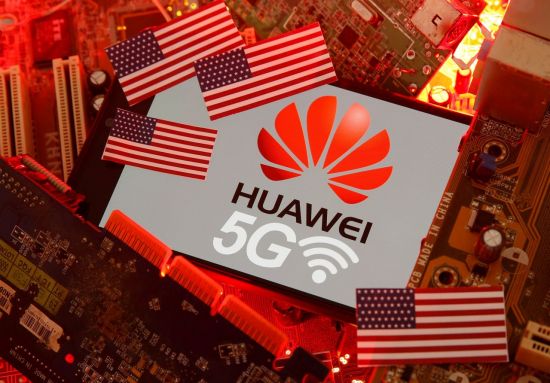
[Asia Economy Reporter Kwon Jae-hee] The US semiconductor industry has begun pressuring Congress to block China's semiconductor rise. This reflects a sense of crisis that the US could lose technological supremacy to China amid the US-China hegemony battle.
According to the Wall Street Journal (WSJ) on the 31st (local time), the Semiconductor Industry Association (SIA) recently demanded that the government and Congress provide subsidies worth $37 billion (approximately 46 trillion won). The subsidies include support for semiconductor factory construction, state government grants to attract semiconductor company investments, and research funding. It is unusual for the US semiconductor industry to request subsidies from Congress.
The reason SIA demanded subsidies is largely based on the logic that to compete with China in the advanced semiconductor industry, dependence on overseas, especially Asian manufacturers, must be reduced. John Neuffer, SIA president, said, "The figure of $37 billion is not insignificant," adding, "But if this is not implemented, the US leadership in the national economy, security, and future core technology sectors will suffer fatal impacts, and costs will increase even more."
The likelihood that SIA's proposal will be accepted as is remains low. However, Congress is also working bipartisanly to prepare legislation to support the semiconductor industry. Supporters include Commerce Secretary Wilbur Ross, Secretary of State Mike Pompeo, and Democratic Senate Minority Leader Chuck Schumer. Republican Senator Todd Young proposed a $110 billion budget to support semiconductor research, and Republican Senator Tom Cotton is reportedly preparing legislation reflecting parts of SIA's proposal.
There is also speculation that Huawei's rapid growth under massive funding and protection from the Chinese government has stimulated the US semiconductor industry. Huawei ranked fifth globally in the AP chip market, a core component of smartphones, last year. In the first quarter of this year, it captured 43.9% of the Chinese market, surpassing Qualcomm (32.8%) for the first time. Huawei also ranked among the top 10 in sales in the fabless (semiconductor design specialist) sector last year. This is why the US, which possesses world-class semiconductor technology companies such as Intel and Qualcomm, is keen to check China.
Semiconductor technology is considered the core of the 4th industrial revolution. If iron was the "rice of the smokestack industry" in the past, semiconductors are called the "rice of advanced industries." Semiconductor technology is essential across all industrial sectors, including 5G, artificial intelligence (AI), big data, autonomous vehicles, and the Internet of Things, where the Trump administration aims to maintain global superiority.
Robert Atkinson, president of the Information Technology and Innovation Foundation (ITIF), a US public policy research institute in the technology sector, said, "National industrial strategies have evolved dynamically," adding, "In the past, it was about protecting the steel industry, but now there is more consensus on supporting emerging industries."
According to SIA estimates, semiconductor production capacity of companies headquartered in China, including Chinese firms, is expected to account for 28% by 2030, about twice the current capacity. During the same period, the US is projected to have only 12%.
© The Asia Business Daily(www.asiae.co.kr). All rights reserved.












